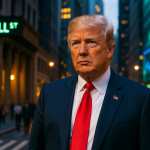
In recent developments, the U.S. Treasury Department, led by Secretary Scott Bessent, has articulated its commitment to aiding Argentina in its economic challenges. The conversation around Argentina’s financial turbulence has intensified following a political upset in Buenos Aires, hinting at potential shifts in the approaching midterm congressional elections. The Treasury is now evaluating multiple measures to provide assistance. Notably, alternative economic support structures have been hinted at by the department, with potential implications for both countries. Meanwhile, the international community watches closely, underscoring the geopolitical importance of these decisions.

 ETH
ETH
 SOL
SOL
 BSC
BSC
 ROBINHOOD
 USDT
USDT
 AAPL
AAPL
Scott Bessent emphasized Argentina’s critical role as a U.S. ally in Latin America. Historically, U.S.-Argentina relations have experienced fluctuations, affected by political, economic, and institutional dynamics over the decades. In previous engagements, discussions focused on trade and investment. Currently, Treasury’s strategies indicate a broadened approach concentrating on economic stabilization which suggests a shift from earlier dialogues.
What Actions is the Treasury Department Considering?
The Treasury Department is exploring various options to stabilize Argentina’s economy in light of its downturn. Suggested interventions include establishing swap lines, direct currency acquisitions, and purchasing government debt through the Exchange Stabilization Fund. These actions are being considered in response to the country’s pressing economic issues. The approach is comprehensive as ongoing challenges demand robust support frameworks to energize Argentina’s fiscal landscape.

Will Political Changes Influence Economic Strategies?
Recent political developments have introduced complexities to Argentina’s economic situation. The administration under Argentine President Javier Milei had initially focused on fiscal discipline by reducing government expenditure and removing trade barriers. However, the upcoming elections and rising unemployment cast uncertainty on the effectiveness of these reforms. Balancing economic measures with political stability remains the focus.
Bessent emphasized the necessity of fiscal and pro-growth reforms, asserting the need to redirect Argentina from its historical economic setbacks.
“We remain confident that [Argentine President Javier Milei’s] support for fiscal discipline and reforms are necessary,”
he noted. Argentina’s governance aims to secure stronger legislative backing this October, and this might reinforce economic strategies already implemented. Nonetheless, potential political shifts could recalibrate priorities.
Following a meeting between President Milei, Scott Bessent, and President Donald Trump scheduled for September 22, further details will emerge regarding the ongoing support from the U.S. Treasury. Milei acknowledged gratitude for the support provided, expressing the importance of collective efforts moving forward.
“Those of us who defend the ideas of freedom must work together,”
Milei affirmed, underscoring international cooperation.
The interaction between the U.S. Treasury and Argentina epitomizes a focused attempt to recalibrate economic policies holistically, addressing both immediate impacts and long-term challenges. Careful consideration of assisting measures offers insight into the delicate balance of financial policy and political reality affecting reform outcomes.
• The U.S. Treasury explores strategies to stabilize Argentina economically.