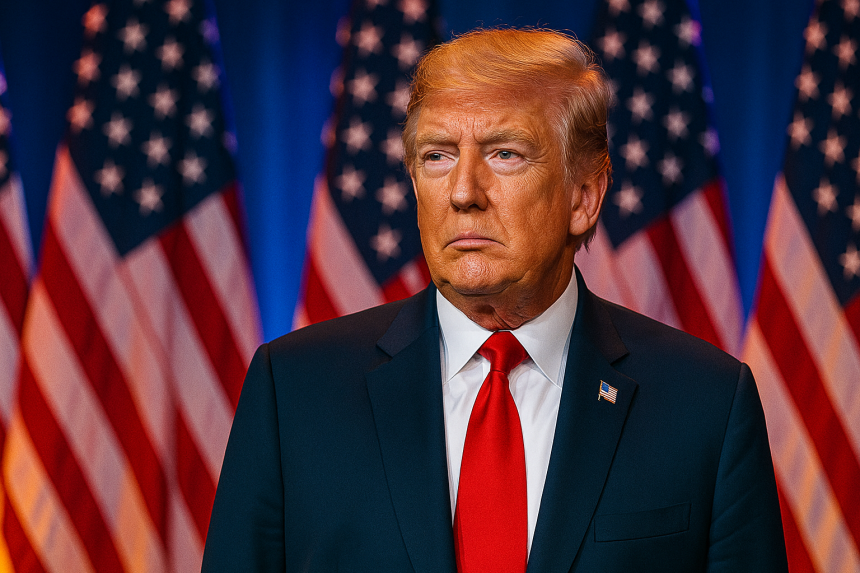
In a move that underscores the delicate balance between innovation and regulation, President Donald Trump has deferred signing an executive order designed to grant the U.S. government more control over the AI industry. The decision reflects the administration’s apprehension about potentially hindering the country’s competitive edge in the global AI race, particularly against China. This hesitation comes at a critical time as AI technologies advance rapidly, prompting discussions about security implications and regulatory frameworks.

 ETH
ETH
 SOL
SOL
 BSC
BSC
 ROBINHOOD
 USDT
USDT
 AAPL
AAPL
In recent months, AI has been a hot topic in the corridors of power, as technological advancements continue to accelerate. Previously, the focus was largely on fostering innovation and maintaining the U.S.’s leadership in cyber technologies. However, the emergence of advanced AI models, capable of identifying software vulnerabilities, has shifted the conversation towards national security and potential cyber threats. Businesses, government officials, and tech leaders have been increasingly concerned about how these developments might outpace current regulatory measures.
Why Did Trump Delay the Executive Order?
President Trump cited the ongoing AI race with China as a primary reason for postponing the order. He conveyed his reluctance to impose measures that might decelerate progress within the United States. Some experts argue that this fear of falling behind in AI capabilities is justified, given China’s significant investments and advancements in the sector. Trump’s decision aligns with his administration’s general stance on prioritizing economic growth and technological preeminence over regulatory interventions.

What Risks Were Addressed in the Proposed Order?
The proposed executive order aimed to address cybersecurity risks associated with powerful AI models, exemplified by Anthropic’s Mythos model, which can identify advanced software vulnerabilities. There was concern that such technologies could be harnessed for cyberattacks. To mitigate these risks, the order sought collaboration among national security officials, government agencies, and AI companies to ensure vulnerabilities are managed effectively.
Some tech executives voiced support for delaying the order, emphasizing the need for a meticulous and informed approach. Vice President JD Vance emphasized the administration’s commitment to achieving a balance between maintaining innovation and ensuring security. The framework included a voluntary clearinghouse to address security vulnerabilities in collaboration with the Treasury Department.
The White House had planned to bring industry executives together for a signing ceremony, signaling the administration’s intent to take immediate action. However, the sudden postponement has left tech giants in anticipation. Prior initiatives, such as the National Policy Framework for Artificial Intelligence introduced in March, attempted to provide a unified approach, spotlighting the complexity of regulating fast-evolving technologies such as AI.
The administration’s decision to delay reflects ongoing concerns about finding the right balance between regulation and innovation. As AI technologies continue to advance, they present unprecedented challenges and opportunities. A well-thought-out regulatory approach is essential for protecting national interests while promoting technological growth.
“We don’t want to slow down AI race. However, security can’t be overlooked,” said Trump.
“We’ve been working hard to balance safety and innovation,” said Vice President JD Vance.
The delay signifies a critical juncture in AI policy development. As AI grows more sophisticated, so do its potential risks and benefits. Striking a harmonious balance that encourages invention while safeguarding against misuse will be key. The U.S. must carefully navigate this landscape to maintain its competitive stance without compromising security.