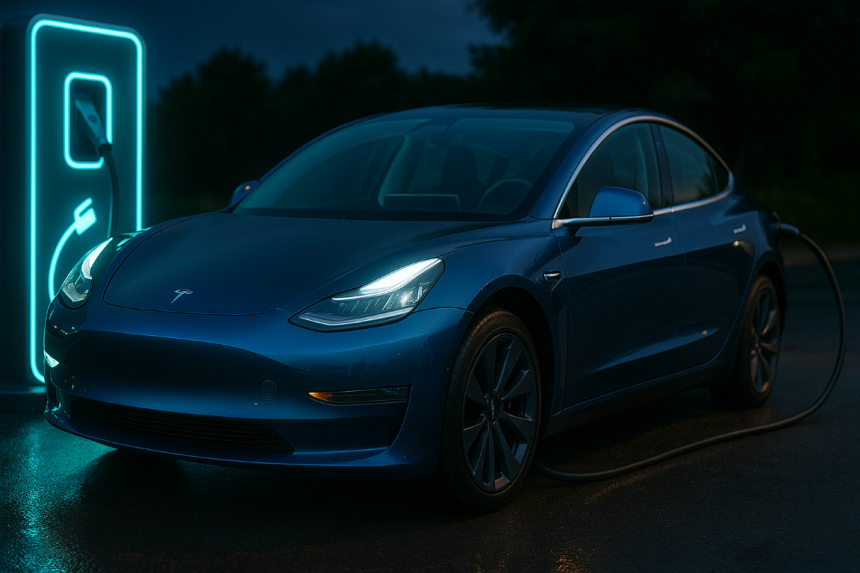
Tesla (NASDAQ:TSLA)’s stock valuation has ignited ongoing debates in financial circles, as its metrics appear both expensive and compelling to investors. Against a backdrop of volatile markets, Tesla’s Q1 earnings showcased strong growth, yet questions remain about the justification of its high valuation. Tesla’s ventures like the Robotaxi program and the sale of Optimus humanoid robots are crucial to maintaining investor interest and trust, given their potential future impact on financial performance.

 ETH
ETH
 SOL
SOL
 BSC
BSC
 ROBINHOOD
 USDT
USDT
 AAPL
AAPL
Tesla recently reported first-quarter revenue of $22.39 billion, marking a 16% increase year-over-year. Previously, attention centered on Tesla’s ambition to enhance electric vehicle technology and expand the global charging infrastructure, aiming to reduce dependency on traditional fossil fuels. Significant strides have been made concerning vehicle automation as well. In a landscape of rapid development, historical financial performance has often been the basis for analyzing Tesla’s high price-to-earnings (P/E) ratio. As these new ventures progress, Tesla continues to be a focal point of investor attention.
What Explains Tesla’s High Valuation?
The market perceives Tesla as valuable due to future potential rather than current financial figures. With operating income and free cash flow reaching $941 million and $1.44 billion respectively, the financials reflect robust growth. The company’s forward price-to-earnings ratio at 182 indicates expectations of solid future earnings, despite the traditional P/E ratio sitting at 345.

Challenges Faced by the Automaker
Tesla’s ambitious plans involve substantial capital expenditure, with CEO Elon Musk highlighting projects like the Optimus humanoid robot and the next stage of the Robotaxi initiative. Musk noted, “
Optimus will be our biggest product, not just Tesla’s biggest product ever, but probably the biggest product ever.
” The success of these projects remains pivotal for justifying the high stock valuation.
Additionally, Tesla’s forward-looking growth heavily relies on delivering unsupervised self-driving and funding technological developments. As stated by Musk,
We certainly hope to have unsupervised FSD or Robotaxi operating in, I don’t know, a dozen states by the end of this year.
Investor expectations are fueled by market optimism regarding Tesla’s future capabilities.
Recent financial figures show a rise in service revenue and full self-driving subscriptions, contributing to the company’s diversified revenue streams. Discussions on platforms like Reddit reveal skepticism among some investors regarding the feasibility of Tesla’s plans, juxtaposed with the bullish sentiments of others who foresee significant returns.
The financial industry continues to scrutinize Tesla, analyzing both supportive and critical projections. Tesla’s venture into artificial intelligence and robotics has become a critical component of its growth narrative. As the company unfolds its initiatives, the financial community anticipates further developments by mid-2026, hoping these will offer clearer indications of sustainable growth.