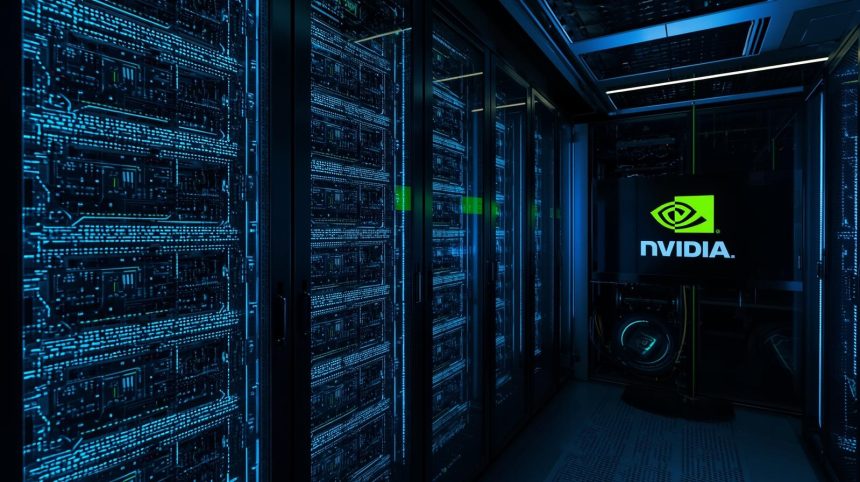
As the landscape of artificial intelligence continues to evolve, Nvidia (NASDAQ:NVDA) has revealed its fiscal first-quarter earnings, reflecting the growing demand for advanced AI capabilities in industries. The company’s latest financial announcements underscore the significant shift from AI as a feature to AI agents capable of independently completing complex tasks. Such advancements indicate a paradigm shift in AI operations, affecting industries ranging from finance to logistics. Meanwhile, Nvidia’s strategic partnerships and hardware innovations mark an important chapter in their technological endeavors. The company’s intensified focus on AI cloud services aligns with broader trends of increasing automation and integration across different sectors.

 ETH
ETH
 SOL
SOL
 BSC
BSC
 ROBINHOOD
 USDT
USDT
 AAPL
AAPL
In previous years, Nvidia’s emphasis on AI was primarily centered around enhancing certain business functions. With the advent of agentic AI, businesses now rely on sophisticated agents to autonomously execute tasks. This development is indicative of Nvidia’s adaptive strategies with a focus on AI tokens that carry value, contrary to being mere operational additions in the past. These advancements align with the industry’s trajectory as organizations strive for more efficient processes.
How Does Nvidia Utilize Layers to Enhance AI?
AI agents, as utilized by Nvidia, are structured into two distinctive layers: reasoning and execution. Reasoning relies on GPUs, where computational thinking happens, while execution depends on CPUs for orchestrating tasks. This architecture enables AI agents to seamlessly process and execute tasks, illustrating a marked transformation in AI applications.

According to Nvidia CEO Jensen Huang, the orchestrated use of GPUs and CPUs ensures the agents’ capability to execute tasks independently. “All of the thinking happens on GPUs,” he noted, highlighting the fundamental shift in computational demands. Additionally, Nvidia’s new Vera processor supports the execution layer, further exemplifying the company’s commitment to addressing these emerging needs.
What Financial Strategies is Nvidia Pursuing?
Nvidia divides its operations into two main segments: hyperscale platforms and AI cloud providers. Growth in the AI cloud sector demonstrates the potential for expanding AI capabilities in various commercial applications. These segments represent Nvidia’s efforts to cater to evolving computational needs across industries.
The rapid growth within the AI cloud group highlights an upward trend in demand for AI-specific data solutions. Huang emphasized that comprehending the economics of AI entails understanding the cost and efficiency factors driving the sector. As a result, Nvidia anticipates substantial contributions to its revenue from the Vera chip and related AI infrastructure.
“The economics of AI is tokens per dollar,” expressed Huang, as the company projects substantial revenue increases from their AI endeavors. Nvidia’s endeavors in AI infrastructure are expected to reshape its financial landscape.
The rising costs and demand for AI capabilities are influencing Nvidia’s market strategies. The partnership with Anthropic and establishment of infrastructures on Amazon (NASDAQ:AMZN) Web Services and Microsoft (NASDAQ:MSFT) Azure showcase Nvidia’s intent to align with corporate requirements. This strategy reflects Nvidia’s objective of securing its position in the enterprise sector.
Nvidia’s expanding role in technology is mirrored in the growth of its networking and consumer AI divisions. The company’s focus on efficient chip design and implementation underscores its response to increasingly complex computational demands in modern industries. Historically, Nvidia’s venture into new markets, such as AI-enabled vehicles with Uber (NYSE:UBER), emphasizes the company’s ambition to apply AI solutions across diverse fields.
Nvidia’s transition from focusing on enhancing singular business functions to integrating robust AI solutions demonstrates a commitment to scaling AI operations. By leveraging partnerships and investing in new technologies, Nvidia strengthens its role in the AI ecosystem. Investors and industry leaders look to Nvidia’s performance as a reflection of broader trends in AI development and commercialization. Understanding Nvidia’s strategies and advancements offers valuable insights into the ongoing AI evolution.