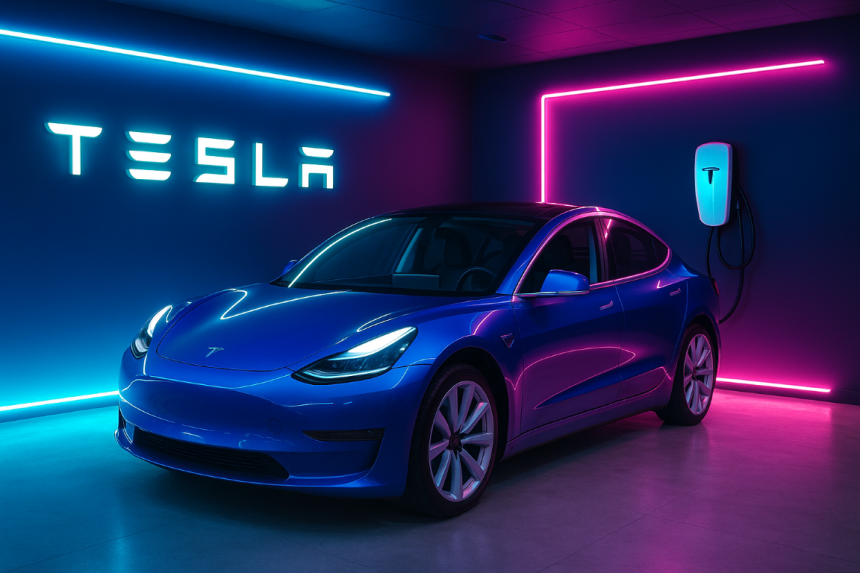
The automotive industry is witnessing a turbulent period as geopolitical tensions contribute to fluctuating oil prices, impacting electric vehicle (EV) stocks. While Lucid and Rivian are seeing boosts in their stock values, Tesla (NASDAQ:TSLA) is experiencing a decline. The volatility in oil markets is creating ripples across various sectors, especially affecting electric vehicle companies. This landscape offers a compelling insight into the interconnected nature of global events and financial markets, showcasing how external factors can influence stock market behavior.

 ETH
ETH
 SOL
SOL
 BSC
BSC
 ROBINHOOD
 USDT
USDT
 AAPL
AAPL
Historically, fluctuations in oil prices have always influenced the market strategies of automotive companies. While positive sentiment towards emerging electric vehicle companies like Rivian has persisted, companies such as Tesla face unique challenges. The broader context of competitive pressures and regulatory scrutiny has consistently played a crucial role in shaping these companies’ valuations over time.
How Does Oil Influence Lucid and Rivian?
The recent increase in oil prices has acted as a catalyst for Lucid and Rivian stocks. Today, Lucid stock climbed to $10.48 while Rivian reached $15.94. Lucid Group has struggled to maintain profitability, with rising production costs outweighing its revenue. Despite these financial challenges, the geopolitical situation temporarily boosts Lucid’s market performance. Rivian, on the other hand, reports significant gains in software and services revenues, with a notable partnership with Amazon (NASDAQ:AMZN) bolstering its market position.

What Challenges Are Constraining Tesla?
Tesla’s stock performance contrasts with its electric vehicle counterparts, affected by the federal investigation into its Full Self-Driving system. BYD’s increasing presence in North America through EV imports also creates competitive pressure for Tesla. Chinese innovations, such as five-minute flash-charging technology, are narrowing the technological gap with Tesla. These dynamics present a complex environment where regulatory challenges and international competition stifle Tesla’s momentum.
Lucid Group and Rivian’s current market performance are short-term reactions to external socio-political factors. While Lucid remains heavily dependent on Saudi Arabian backing for financial support, Rivian’s strategic partnerships hint at more sustainable growth.
Our focus on high-margin revenue streams is a differentiator,” stated a Rivian representative, highlighting their strategic shifts.
However, Lucid’s extensive spending limits its financial resilience, with cost of revenue exceeding its earnings significantly.
Rivian’s development, marked by a full year of positive gross profit, stands in sharp contrast to Lucid’s financial difficulties. However, longstanding analyst sentiments suggest this might not translate to sustained stock value increases for Lucid.
“Our financial performance reflects the market realities and challenges,” acknowledged a Lucid spokesperson.
The company navigates a landscape where external events complicate long-term strategy execution.
Tesla’s stock trajectory is further complicated by its CEO’s political exposure, diminishing investor confidence. Over the last decade, while Tesla’s value soared, the recent scrutiny on autonomous driving systems introduces a potential barrier to its growth story.
As market dynamics evolve, investors and stakeholders should be cautious of short-term fluctuations driven by global events. Understanding technological advancements, strategic partnerships, and regulatory landscapes remains crucial in projecting long-term stock performance. For electric vehicle markets, attention should focus on sustainability measures and regulatory changes alongside traditional forces like oil price swings.