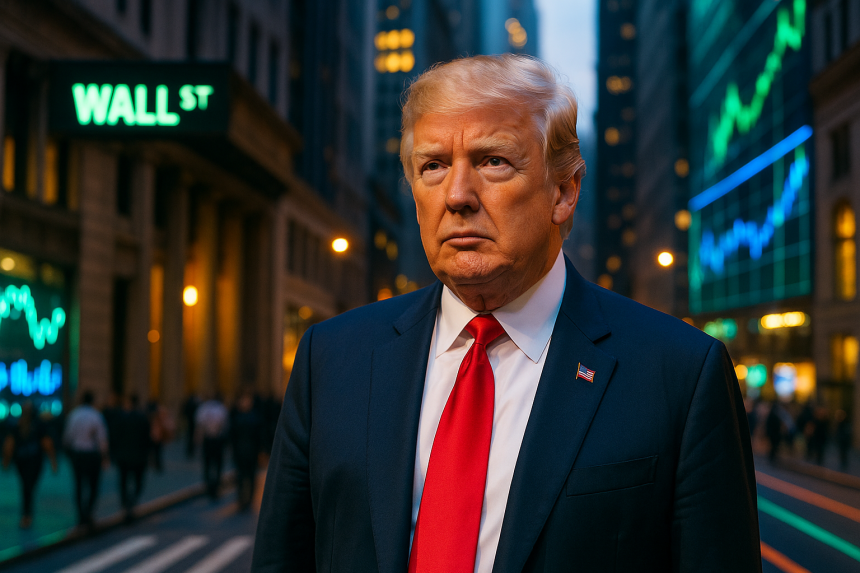
President Donald Trump’s tax relief policy, initially designed to stimulate economic growth, may paradoxically contribute to volatility in the financial markets. These tax revisions led to elevated corporate profits by reducing tax burdens and encouraging spending, while advancements in artificial intelligence intensified investment enthusiasm. This confluence propelled the stock market‘s meteoric rise under Trump’s leadership, though some argue the measures could inadvertently sow seeds of instability.

 ETH
ETH
 SOL
SOL
 BSC
BSC
 ROBINHOOD
 USDT
USDT
 AAPL
AAPL
Analysis reveals that prior to this legislation, market inclusion for Initial Public Offerings (IPOs) necessitated a waiting period, allowing time for pricing stability to manifest. Conversely, the new rules introduced under Trump’s tax changes accelerated this process, facilitating the rapid inclusion of major IPOs like SpaceX, OpenAI, and Anthropic into prominent indices. This rapid inclusion requires index-tracking funds to purchase these newcomers promptly, drawing attention to the potential liquidity strain on existing market constituents.
Rapid Index Admission: A Double-Edged Sword?
Immediate index inclusion mandates an acquisition of shares by funds tracking indices, potentially distorting broader market liquidity. The influx of AI-based IPOs anticipated under the new rules, commanding substantial capital due to immediate index considerations, further amplifies concern. This phenomenon could exacerbate disparities as existing stocks might face sell-offs to facilitate these purchases.

Could Historical IPO Trends Predict Future Outcomes?
Data from previous high-profile IPOs suggests a pattern of initial excitement followed by stabilization or decline. For instance, following its debut, Meta (NASDAQ:META) saw a notable stock value decrease within months. This historical trend raises questions about the performance expectations of new market entrants, especially amidst forced buying from index funds, which could lead to heightened market volatility.
A financial analyst emphasized, “Mega-IPOs bring monumental interest, but historical evidence suggests caution post-launch.”
As the market contends with potential concentration risks, the relevance of AI-driven stocks grows. This shift remains grounded in the extensive valuation appreciation seen in major tech companies. While companies like SpaceX show impressive revenue figures, investor focus increasingly weighs heavy on balancing valuations with performance post-IPO to avoid liquidity shortages.
Discussing market trends, a CEO stated, “Companies must navigate index inclusion benefits alongside systemic risks presented by immediate capital reallocation.”
In examining recent developments, this evolving index methodology diverges from historical norms, where companies gained index inclusion after demonstrating stable public trading performances. The shift towards rapid inclusion reflects broader trends in trading dynamics over recent years negating traditional stabilization periods.
Amid nascent AI advancements, Trump’s policy might inadvertently escalate market concentration risks as investor focus narrows on a handful of AI-driven stocks. Consequently, this dynamic could unsettle wider market liquidity, exacerbating valuation discussions and sparking potential corrective phases within financial markets.