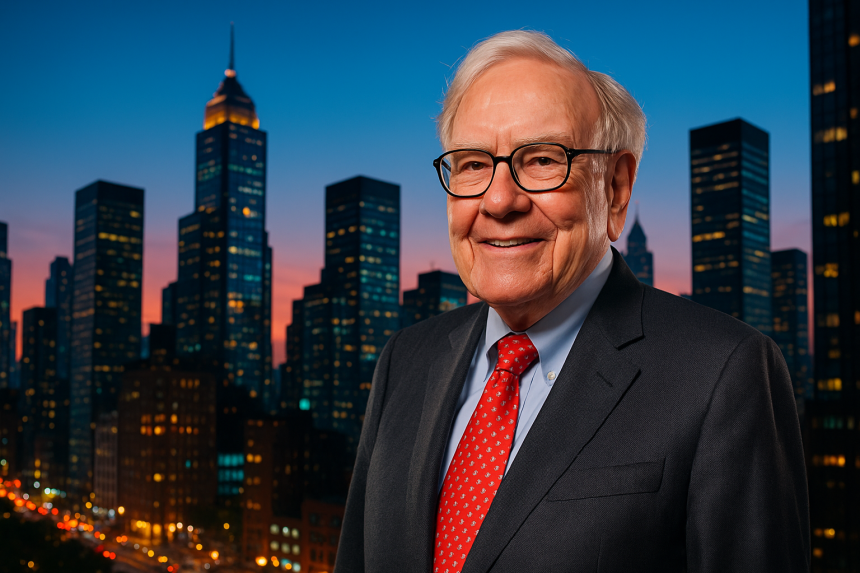
Warren Buffett, who recently stepped down as CEO of Berkshire Hathaway (NYSE:BRK.A), is far from leaving the world of investments behind. Despite the transition, Buffett’s presence remains strong as he continues to frequent the Omaha headquarters and share insights. His dedication to nurturing successor Greg Abel signals a new chapter for the conglomerate. As Abel faces new challenges, noteworthy anecdotes from Buffett reveal much about leadership evolution and strategic investments.

 ETH
ETH
 SOL
SOL
 BSC
BSC
 ROBINHOOD
 USDT
USDT
 AAPL
AAPL
Abel’s leadership style diverges from Buffett’s, bringing a fresh approach to the iconic investment company. Historically, Buffett maintained extensive control over Berkshire’s activities, overseeing acquisitions and steering strategic decisions. Abel, contrastingly, combines his roles adeptly, balancing responsibilities while maintaining passion projects outside work. Previously, Berkshire’s operations have been synonymous with Buffett’s direct involvement, making this gradual shift a significant transition for the company. Navigating these changes, Abel pledges adherence to the firm’s core values, such as minimal bureaucracy and decentralized management.
What insights did Buffett share about the transition?
Buffett acknowledges Abel’s capacity for tackling multiple responsibilities efficiently, citing his ability to manage more in a day than Buffett traditionally handled in a week. While Buffett maintains a visible advisory role, ultimate decision-making lies with Abel. During a CNBC interview, Buffett expressed admiration for Abel’s capabilities.

“He covers more ground in a day than I would in a week.”
This backing reflects Buffett’s trust in Abel’s performance and adaptability in handling Berkshire’s incoming demands.
How do their investment strategies compare?
Buffett continues to prioritize concentrated investments, with Apple (NASDAQ:AAPL) being a prime example. Berkshire’s substantial stake in the tech giant illustrates his ongoing confidence despite a recent reduction in the position. Reflecting on Apple, Buffett admitted past hasty actions concerning share sell-offs.
“I sold it too soon,”
he reflected, hinting at the potential for reacquisition under favorable circumstances.
Abel maintains Berkshire Hathaway’s strategic focus on competitiveness. Notably, Berkshire’s operations under Abel aim to sustain its longstanding tradition of value-driven investments. Meanwhile, Buffett continues to vocalize an aversion to speculative ventures like prediction markets and sports betting, describing them as exploitative and detrimental. As a mentor, his emphasis on thoughtful investment principles remains unchanged.
Buffett’s collaboration with Abel reflects perpetual oversight blended with encouragement. Consistently crediting the success of Apple’s Tim Cook for his management acumen, Buffett stays committed to recognizing good leadership.
“Tim was a fantastic manager, and he’s a good guy.”
This admiration underscores respect for effective leadership beyond direct investment gains, portraying Buffett’s holistic view on leadership and performance.
Warren Buffett’s ongoing involvement with Berkshire Hathaway, through mentorship and strategic insight, marks a subtle yet noteworthy transition in leadership dynamics, with Abel poised to sustain and extend Buffett’s enduring legacy. The narrative is one of enduring legacy and investment principles, even amidst leadership changes. Understanding the lasting impact of strategic management and investment philosophies demonstrates their relevance to current and emerging business contexts.