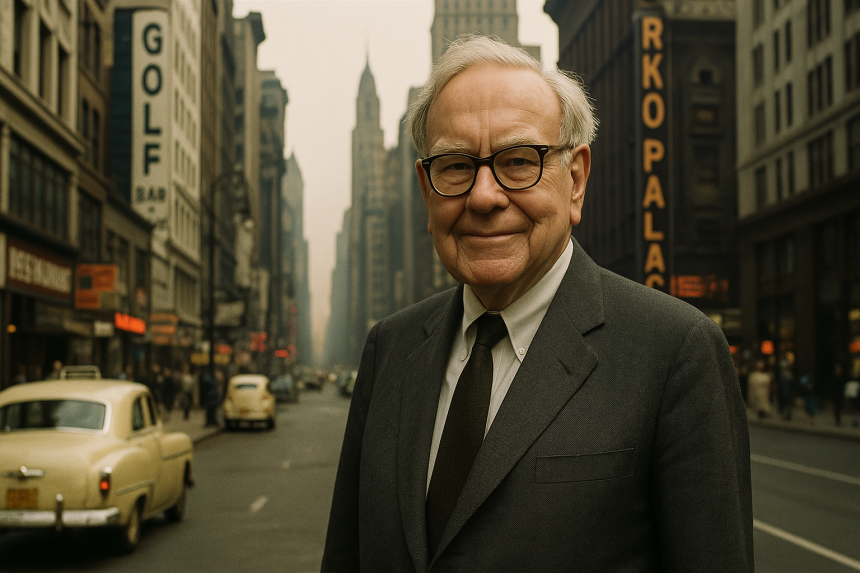
Warren Buffett’s departure from the CEO role at Berkshire Hathaway (NYSE:BRK.A) marks a significant leadership change while the financial giant braces for potential market shifts. After steering the company from a humble textile mill to a colossal $1 trillion empire over six decades, Buffett steps aside to make room for Greg Abel, the new CEO as of January 1, 2026. Despite this transition, Buffett reassures stakeholders of his continued presence as chairman of the board. His move comes amid growing discussions about overvaluation in the stock market and speculation around future corrections.

 ETH
ETH
 SOL
SOL
 BSC
BSC
 ROBINHOOD
 USDT
USDT
 AAPL
AAPL
Warren Buffett’s leadership principles have often highlighted cautious investment strategies, particularly in overvalued market environments. Historically, Berkshire has been notable for its net selling of stocks over the past 12 quarters, a trend driven by Buffett’s belief in an overpriced market. While this pattern reflects a focus on liquidity, it remains consistent with Buffett’s long-standing investment philosophy, which favors value and stability amidst economic fluctuations. This approach underscores Buffett’s caution in a volatile stock market landscape.
Who is Greg Abel?
Greg Abel, previously vice chairman overseeing Berkshire’s non-insurance operations, brings extensive experience to his new role as CEO. With a strong background in managing diverse business segments within the conglomerate, Abel is well-positioned to navigate Berkshire’s future under fluctuating market conditions. His leadership will be crucial as the company reassesses its strategies amid expectations of market corrections.

What are Berkshire Hathaway’s strategic focuses?
Under Abel’s leadership, Berkshire Hathaway is anticipated to continue its tradition of strategic investments in durable sectors while maintaining a cautious stance on market valuations. Buffett’s preference for reallocating capital from overextended tech stocks to more stable, dividend-yielding options like Chevron and Coca-Cola (NYSE:KO) exemplifies this strategy. These moves indicate a focus on safeguarding against potential risks while ensuring sustainable returns.
“We need to be prepared for economic volatility,” emphasized Buffett on his decision for a leadership handover.
This sentiment reflects an enduring dedication to strategic conservatism at Berkshire Hathaway, even as the market fluctuates.
Abel is expected to prioritize diversification and risk management, maintaining a conservative portfolio amidst growing economic uncertainties. By placing emphasis on stable income and value-based investments, Abel aims to fortify Berkshire’s financial positioning.
“We are committed to making informed investment decisions that align with long-term success,” Abel stated.
This vision aligns with Buffett’s proven investment ethos, ensuring continuity in Berkshire’s operational philosophy.
Berkshire Hathaway’s adjustment to shifting market dynamics highlights a continued focus on defensive strategies. As the market anticipates corrections, the company’s long-term investment in sectors like energy and consumer goods presents an example of resilience and foresight. Investors and analysts alike are keeping a close watch on this transition, which underscores an era of cautious optimism for Berkshire Hathaway.