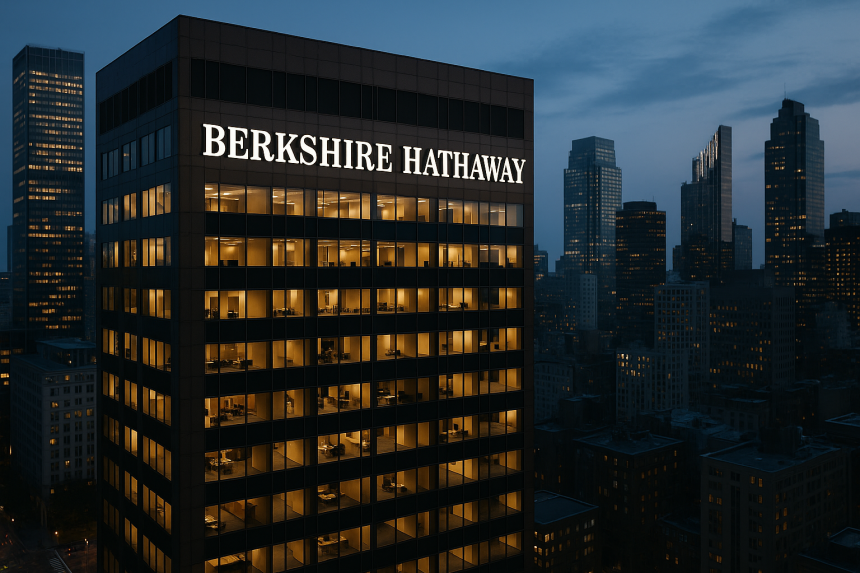
Amidst fluctuating market conditions, speculation surrounding Warren Buffett’s potential return to a more central role at Berkshire Hathaway (NYSE:BRK.A) is intensifying. Despite his declining net worth, Buffett’s influence remains pivotal, making many wonder about his future position within the company. The current challenges faced by Berkshire Hathaway, including a dip in stock performance, have sparked discussions regarding leadership effectiveness under the management of Greg Abel. Historical patterns in corporate leadership shifts are being examined, as many question whether Berkshire Hathaway might see another change at the helm.

 ETH
ETH
 SOL
SOL
 BSC
BSC
 ROBINHOOD
 USDT
USDT
 AAPL
AAPL
Historically, the spotlight on Buffett’s decisions has been unrelenting. Over the years, his investment choices have steered Berkshire Hathaway’s trajectory, cementing its reputation. However, the current leadership under Abel has been marked by a conservative approach with substantial cash reserves still intact. Questions arise about whether this cautious strategy benefits the firm’s long-term goals. Market behavior has also changed significantly, demanding adaptation from all companies, including Berkshire Hathaway.
Why Is Berkshire Hathaway’s Performance Lagging?
Berkshire Hathaway has experienced a decline in stock value, contrasting with market growth over the past year. While the market surged by 23%, Berkshire’s shares fell by 1%. This lag is notable because investors heavily rely on Berkshire Hathaway for consistent returns. The tech sector has boomed, with companies like AMD (NASDAQ:AMD) seeing significant growth, which further highlights Berkshire’s missed opportunities in capturing tech stock gains.

Could Changes in Leadership Be Imminent?
Berkshire Hathaway has been contemplating leadership strategies likely to influence market trust and internal decisions. Recent high-profile CEO changes at companies like Disney (NYSE:DIS) and Unilever illustrate the volatility of executive roles in large corporations. The challenges of establishing trust within the leadership team are evident, particularly in a firm heavily associated with one iconic figure.
Greg Abel has faced scrutiny over his investment choices, notably his $8.5 billion investment in Taylor Morrison, amidst a sluggish real estate market. Wall St. has raised concerns about his cautious financial strategy and desires increased investment activity using Berkshire’s available cash reserves. Abel’s tenure is under watch by investors keen on visible and impactful investments.
With an eye on future profits, investors advise diversifying into well-performing companies that offer substantial growth potential. Buffett’s influence remains, as he routinely visits Berkshire Hathaway’s headquarters, providing reassurance of his ongoing involvement. The imperative for actionable changes arises amid uncertainties about Abel’s prolonged leadership.
In assessing corporate stability, leadership dynamics play a significant role. As tech markets remain volatile, Berkshire Hathaway’s strategic direction is critical for investor confidence. Watching Abel’s strategic decisions over the coming months will show how effectively the company navigates its market position under potential shifts in leadership technique.
Buffett’s health assures his potential availability for leadership adjustments if needed. Nevertheless, any decision around leadership at Berkshire Hathaway hinges on multiple factors including market performance, leadership adaptability, and investor pressure, which are all in play during such transitional circumstances.