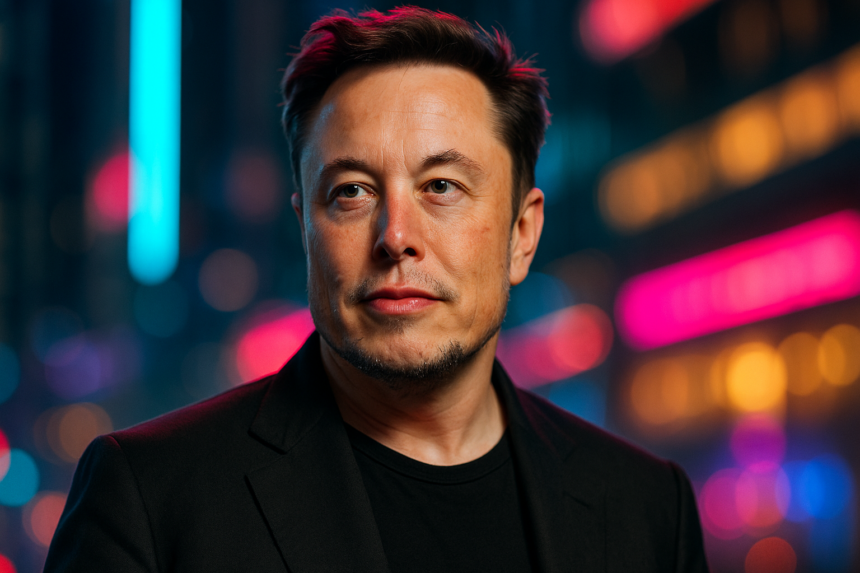
Analyzing the mindset that drove Elon Musk to success, this article delves into the thought processes that distinguish him from the majority. Well-known for his leadership roles in companies like SpaceX and Tesla (NASDAQ:TSLA), Musk approaches problems with a distinct mindset that often bypasses conventional wisdom. His methodologies have led him to venture into industries typically marked by high failure rates, fostering curiosity about the unique cognitive approaches he employs to overcome daunting challenges.

 ETH
ETH
 SOL
SOL
 BSC
BSC
 ROBINHOOD
 USDT
USDT
 AAPL
AAPL
Reflecting on earlier insights, Musk’s methods have consistently defied traditional expectations. A notable comparison can be drawn with initial skepticism around SpaceX, where returning rockets for reuse was deemed impractical. However, Musk’s focus on reducing material costs and increasing efficiency contradicted these longstanding industry beliefs. Similar narratives surround Tesla’s rise in the automotive sector, challenging the established norms of what electric cars could achieve in speed and design. This pattern of challenging the status quo is evident across Musk’s ventures, illustrating how his approach has consistently contradicted expert opinions yet resulted in substantial achievements.
How does Musk counter prevailing assumptions?
Musk challenges traditional assumptions by deploying first principles thinking. This technique involves dismantling complex issues into their fundamental truths, disregarding preconceived notions. At the heart of SpaceX’s inception was Musk’s assertion that the real costs of rocket materials were significantly lower than the market prices, leading him to redefine cost structures in aerospace.

Why does Musk embrace failure?
The perspective on failure within Musk’s philosophy frames it as a critical component of innovation. The success of SpaceX was preceded by multiple failed launches, yet this did not deter Musk. He contends that failure signifies insufficient innovation.
“Failure is an option here. If things are not failing, you are not innovating enough,”
he asserts, highlighting his belief in failure as a pathway to unparalleled successes.
In managing risk, Musk has made significant decisions under uncertainty, motivated by the significance of his goals rather than guaranteed outcomes. During financial crises, instead of playing it safe, he simultaneously invested in Tesla and SpaceX against advised odds.
“When something is important enough, you do it even if the odds are not in your favor,”
he has stated, illustrating a commitment to long-term vision over short-term clarity.
Contradicting common beliefs, Musk asserts that meaningful accomplishments often require immense effort. He is known for enduring extensive work hours, especially during pivotal company phases. This rigorous dedication suggests that extraordinary success often demands more than what one perceives as feasible, challenging the idea of ease in achieving meaningful goals.
Interacting with experts forms another avenue where Musk diverges from traditional approaches. Instead of strictly adhering to expert opinions, he often scrutinizes established knowledge critically. He believes that expertise can become entrenched, potentially limiting innovation. Therefore, by questioning norms, he continues to drive forward initiatives in unexpected directions.
Musk’s vision extends beyond standard goals, aiming for nearly incomprehensible achievements. With ambitions like colonizing Mars and making humanity multi-planetary, he sets extreme targets that galvanize collective effort, investment, and attention. This ambitious approach suggests that setting high objectives can catalyze broader industrial and technological advancements.
In conclusion, Musk’s unique cognitive framework—marked by first principles thinking, a favorable stance on failure, bold risk-taking, intensive effort, independent expertise evaluation, and audacious goal setting—illuminates the ways limitations can be transcended. These strategies can offer valuable insights into tackling obstacles by questioning and dismantling traditional constraints commonly perceived as insurmountable.