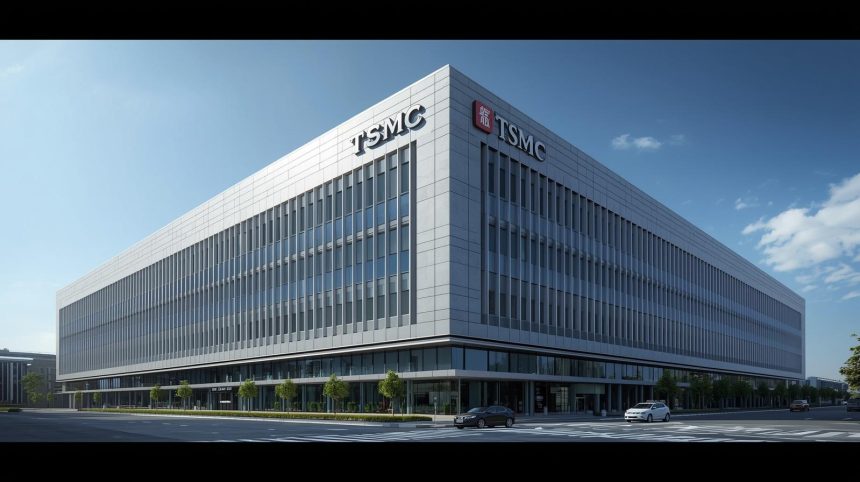
In a world reliant on semiconductors, Taiwan Semiconductor Manufacturing Company (TSMC) stands central to the tech landscape, crafting over 12,682 products for 534 clients annually from its Taiwanese hubs. The breadth of TSMC’s portfolio translates into an expansive array of technology—from the processors in smartphones to automotive chips and AI accelerators. A significant chunk of the digital age hinges on these essential components, drawing from the concentrated efforts of a singular territory nestled in Taiwan. This scenario introduces both logistical precision and geopolitical dependence.

 ETH
ETH
 SOL
SOL
 BSC
BSC
 ROBINHOOD
 USDT
USDT
 AAPL
AAPL
The past has seen similar reliance on distinct semiconductor entities, yet none have dominated like TSMC today. Previously, companies such as Intel (NASDAQ:INTC) and IBM fabricated their own designs, a model that shifted as TSMC embraced a foundry-centric pathway, rendering chips for diverse customers without designing the chips themselves. Now, TSMC commands over 60% of the global foundry market, underscoring its pivotal role in today’s tech production. Such dominance also brings to light the geopolitical vulnerabilities associated with global chip manufacturing being rooted firmly in one region.
How Does TSMC Define a Product?
Each of TSMC’s products constitutes a unique intellectual design belonging to one of its 534 customers. TSMC doesn’t design chips but manufactures them for industry titans such as Apple (NASDAQ:AAPL), Nvidia (NASDAQ:NVDA), and Qualcomm. An individual chip variant often counts as a distinct product. For example, an Apple A-series chip for smartphones counts separately from its iPad counterpart. This meticulous classification and specialization contribute significantly to TSMC’s product count and exemplify the sophisticated supply demands currently shaping the tech sector.

Why Are Clients Centralizing With TSMC?
TSMC’s client roster includes influential firms that trust this Taiwanese titan with sensitive chip designs. Major tech companies like Apple and Nvidia lean heavily on TSMC’s capabilities, representing large portions of its revenue. Firms across sectors—from automotive to data centers—rely on TSMC’s advanced processes. This uniform reliance creates a network where global tech products and features often originate from or depend on TSMC’s manufacturing capabilities.
Infrastructures such as the production complex in Southern Taiwan Science Park, producing the iPhone’s chip, exemplify TSMC’s role in fabricating essential components. These facilities apply modern techniques allowing cutting-edge designs to flourish. However, geographic dependencies raise industry concerns about potential interruptions due to political tensions involving Taiwan, indicating a fragile aspect of this prevalent reliance.
Efforts to diversify chip production are underway, with TSMC establishing operations in Arizona and Kumamoto. These projects aim at spreading risk and enhancing capacity. Despite these attempts, Taiwan remains the epicenter of advanced chip production, producing the majority of TSMC’s state-of-the-art chips.
The global dependency on one company for such a crucial component highlights potential risk factors. The semiconductor supply chain heavily depends on a restricted geographic area, emphasizing the importance of assessing potential disruptions. Political uncertainties and rare production elements introduce significant challenges.
TSMC stated, “Our priority is ensuring the smooth operation and agility of our production capabilities.”
Behind the 12,682 figure lies a staggering operational scale—millions of wafers and countless design variations cater to unique requirements for a wide client base. This intricate delivery pipeline further demonstrates the delicate interdependency between technology providers and TSMC’s concentrated prowess. Added pressures on this network could ripple globally, affecting consumer products worldwide.
According to a company spokesperson, “We are continuously assessing geopolitical risks and seeking ways to mitigate impacts on our operations.”
Analyzing the depth of TSMC’s influence highlights the complexity and scale of the industry’s global alignment. Understanding this situation may help companies and policymakers devise strategies to address supply chain vulnerabilities, ensuring a more resilient technological ecosystem that can better weather geopolitical challenges.