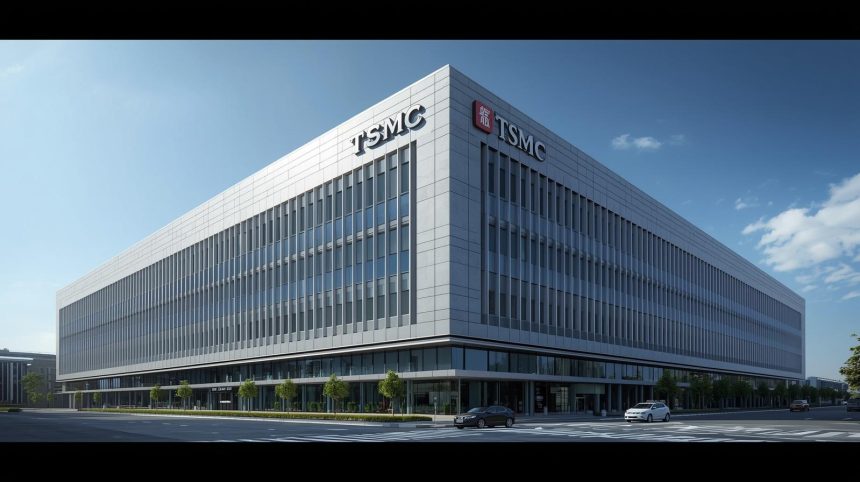
Taiwan Semiconductor Manufacturing Company (TSMC) has become a pivotal player in the chip manufacturing industry with its advanced 7-nanometer and beyond process nodes. Once a small fraction of its revenue, these nodes now account for 74% of TSMC’s revenue, highlighting a market shift towards more advanced technologies. The capacity to manufacture these chips, featuring immense transistor densities, remains limited to only a few companies globally. The reliance on these cutting-edge technologies underscores the critical role played by semiconductor manufacturers in technological advancement. This concentration within TSMC marks a significant milestone for the company and the broader industry.

 ETH
ETH
 SOL
SOL
 BSC
BSC
 ROBINHOOD
 USDT
USDT
 AAPL
AAPL
In earlier years, TSMC’s revenue primarily came from older and more matured nodes like 28nm and 40nm. As technology needs evolved, TSMC transitioned towards smaller nodes, enhancing performance and efficiency. A decade ago, nodes of 7nm and smaller contributed minimally to the revenue stream, evidencing how the incremental shift in advanced nodes has drastically changed revenue dynamics. TSMC has been consistent in leading these technological advancements, asserting its presence in an increasingly competitive market. This progression reflects broader trends in tech manufacturing, moving away from more traditional nodes to cutting-edge methods.
How Do the Nodes Work?
The term “7 nanometers and beyond” symbolizes a technological leap rather than physical measurement accuracy. The shift towards these advanced manufacturing nodes allows TSMC to produce high-density chips like the Apple (NASDAQ:AAPL) M3 that pack billions of transistors. This progress becomes practical using Extreme Ultraviolet Lithography (EUV) systems, primarily sourced from Dutch company ASML. Such collaborations highlight TSMC’s strategic partnerships and investments influencing their output capabilities.

What Is TSMC’s Unique Market Position?
TSMC stands as the leading manufacturer, surpassing others like Samsung and Intel (NASDAQ:INTC) in efficiency and capacity with these advanced nodes. While competitors such as Samsung Foundry and Intel venture into similar technologies, TSMC maintains superior yield rates, highlighting their predominant share of the high-performance computing (HPC) and artificial intelligence (AI) markets. Despite competitors’ attempts to enter the space, TSMC’s robust supply chain and strategic investments cement its market dominance globally.
The growth in technology, especially within AI and HPC sectors, heavily depends on TSMC’s capability to manufacture next-generation semiconductors. As industries increasingly demand advancements, TSMC’s advanced fabrication processes become indispensable. The dependency cycle influences companies like Nvidia (NASDAQ:NVDA) and AMD (NASDAQ:AMD), which rely on TSMC’s fabrication prowess to meet their production needs. NVIDIA’s substantial commitment to Taiwan further emphasizes the reliance on TSMC for advanced silicon outputs.
Further securing its dominance, TSMC has been expanding its operations across various regions, notably with new facilities underway in Arizona, USA, and plans in Kumamoto, Japan. These efforts seek to mitigate geopolitical risks tied to its primary manufacturing base in Taiwan. However, these new facilities don’t match the capability or output of the primary operations back home.
In May 2026, NVIDIA’s significant investment highlighted the continued reliance on Taiwanese infrastructure despite geopolitical tensions. The island’s geopolitical circumstances and seismologic activities mark TSMC’s positioning as a strategically vulnerable yet critical entity. The industry watches closely as TSMC balances this intricate geopolitical reality with its operational and production objectives.
Any disruption in TSMC’s manufacturing processes could significantly impact global tech industries, as seen in a scenario where existing competitors might struggle to fulfill immediate demand without years of capacity buildup. This kind of dependency underlines the critical duality of risk and necessity inherently linked to TSMC’s operations. The technological ecosystem’s vulnerability to such disruptions exemplifies the intertwined nature of global supply chains and advanced chip manufacturing.
Advancements at TSMC challenge industry norms, placing immense focus on the importance of sustaining innovation while addressing the market’s dynamic needs. As technology evolves, so too does the demand for sophisticated nodes, pointing to the potential for future shifts in semiconductor production and market strategy. TSMC’s path mirrors its strategic prowess in mastering production, ultimately defining the pace of technology worldwide.