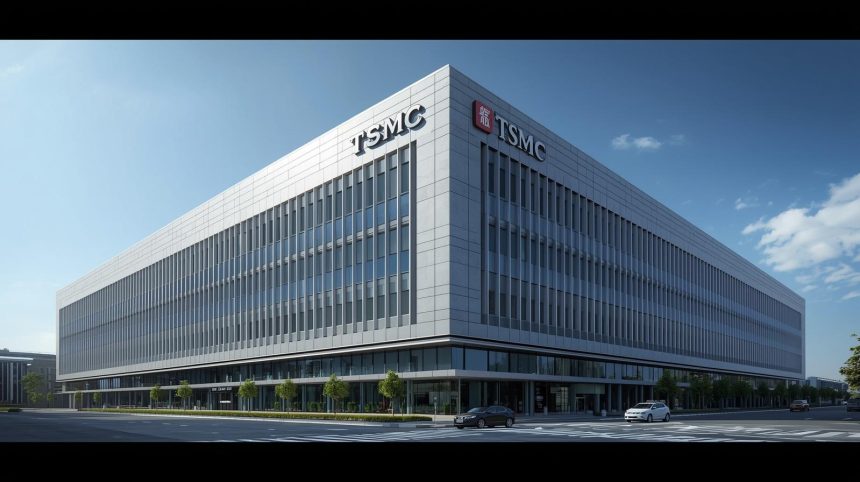
Amidst the complex world of chip manufacturing, Taiwan Semiconductor Manufacturing Company (TSMC) has become a significant player, wielding immense influence over Taiwan’s economy. The company’s dominance in the global foundry market has transformed it into a cornerstone of Taiwan’s financial landscape. With TSMC accounting for a substantial portion of the country’s stock indices, concerns are rising about the challenges and risks this concentrated influence poses, especially in light of geographical and geopolitical factors.

 ETH
ETH
 SOL
SOL
 BSC
BSC
 ROBINHOOD
 USDT
USDT
 AAPL
AAPL
In recent years, TSMC’s growth trajectory has been exceptional, with its market capitalization soaring to around $2 trillion. This rise has intensified its significance not only for Taiwan’s economy but also for stakeholders globally. As of mid-2026, the company plays a critical role in the production of advanced semiconductor chips, maintaining nearly a 90% share in the leading-edge processes of the global foundry market. The absence of a comparable alternative raises questions about the stability and reliance on this single entity, especially since the company has no direct rival for the critical chip making processes it commands.
TSMC’s Role in Taiwan’s Economic Framework
Morris Chang’s vision of a pure-play foundry model, separating chip design from production, set the groundwork for TSMC’s success. The company effectively pools demand across a vast customer base and reinvests its profits in cutting-edge technological advancements. Consequently, the company now outperforms its competitors, controlling a significant portion of chip manufacturing. Despite this success, questions persist about the sustainability and long-term impact of a sole dependency on TSMC.

How Competitive is the Foundry Market?
While TSMC dominates, Samsung and Intel (NASDAQ:INTC) attempt to compete in the same space, but they face significant challenges. Samsung grapples with lower yields, while Intel strives to reclaim its position but lags in process adoption. These challenges make it difficult for competitors to match TSMC’s performance, leaving chip designers with limited alternatives. As a result, switching foundries is not only costly and time-consuming but also risks performance setbacks for companies reliant on TSMC’s services.
Taiwan’s economic growth heavily relies on the booming semiconductor sector, which contributes a significant portion to the island’s GDP. However, this prosperous growth creates imbalances, leading to an emerging “K-shaped economy,” where sectors outside the tech sphere experience stagnation. This uneven prosperity is a concern for the broader economy as TSMC’s presence dictates financial parameters like salary benchmarks and housing prices, shaping the financial landscape of Taiwan.
Geopolitical tensions with China compound these economic concerns, as Taiwan’s strategic location raises the stakes for potential disruptions in the tech supply chain. The geopolitical risks associated with Taiwan, notably its contentious status with China, hang over TSMC. Any major disruption could send ripples across the global technology market dependent on TSMC’s chips. A protracted halt in production could create significant economic repercussions given no other manufacturing capacity matches TSMC’s production volume or technological advancement.
The reliance on TSMC as a central element of Taiwan’s economy poses both an opportunity and a risk. Diversification in the manufacturing sector could mitigate risks and foster sustainable economic growth. For Taiwan, exploring diversification strategies while maintaining technological leadership could marshal resilience against geopolitical risks. Stakeholders must assess the sustainability of such concentration and explore policies that balance prosperity across various economic sectors.