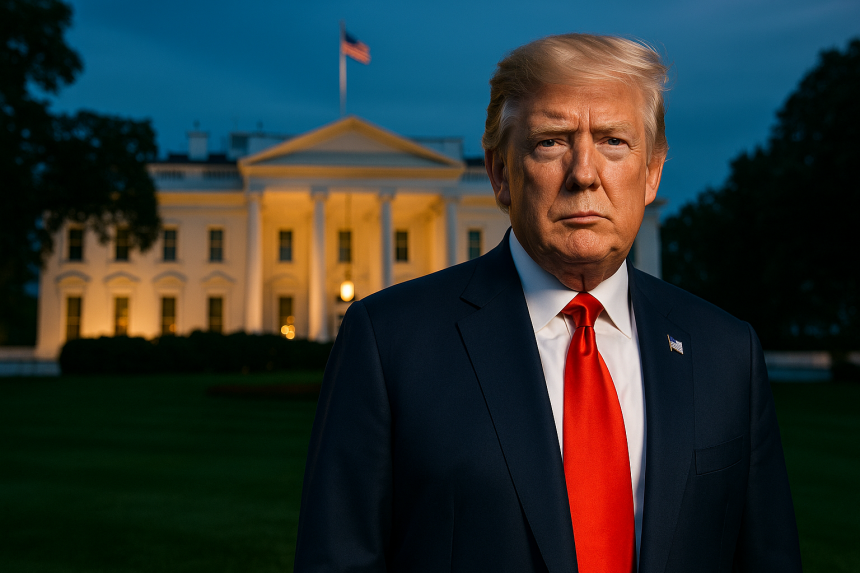
Diplomatic discussions between the United States and Iran have faced unexpected challenges recently, as US President Donald Trump frequently shares updates on Truth Social. These posts, often deviating from diplomatic norms, have stirred reactions not only from Iran but also within his own administration. Trump’s comments about a nuclear agreement, which Iran promptly denied, have intensified scrutiny over his approach. Negotiations mediated by Pakistan have become precarious, given the backdrop of such public disclosures.

 ETH
ETH
 SOL
SOL
 BSC
BSC
 ROBINHOOD
 USDT
USDT
 AAPL
AAPL
Past negotiations with Iran have unfolded under layers of strategic diplomacy, typically shielded from the public. However, Trump’s outspoken approach marks a significant departure from traditional diplomatic methods. The US President’s use of social media to share sensitive information contrasts starkly with previous administrations, which maintained a more discreet posture during similar discussions. Trump’s active engagement through social platforms presents a new dynamic in diplomatic communications.
Breakdown within the Administration?
Conflicting statements from within the Trump administration have further complicated the situation. Notably, when Trump stated that Vice President JD Vance would not travel for the next talks, UN Ambassador Mike Waltz and Energy Secretary Chris Wright were concurrently affirming the opposite. Eventually, Vance proceeded with the trip, highlighting a disconnect between Trump’s public pronouncements and the official stance. During this period, Trump’s assertion of Iran’s supposed agreement to suspend its nuclear program was refuted by Iran within hours.

Is the Blockade Effective?
The US naval blockade of Iranian ports, meant to exert economic pressure, remains in effect. However, its effectiveness in promoting diplomatic progress is questioned. Trump’s claim of being under “no pressure” juxtaposes the active blockade, creating ambiguity about the US strategy. Observers note that the economic strain inflicted by the blockade is outweighing its potential diplomatic benefits. The tension is exacerbated by Trump’s recent order to the Navy to target boats involved in mine-laying activities near the Strait of Hormuz.
The complexities are not solely US-generated; internal divisions plague Iran’s government as well. Different factions pull in separate directions, complicating their unified response to US negotiations. Iranian Parliament Speaker’s adviser Mahdi Mohammadi’s statements against terms imposed on Iran highlight these divisions. Meanwhile, market dynamics reveal the sensitivity of oil prices to these diplomatic developments. Trump’s posts trigger fluctuations, with escalation hints driving prices up, while talks of deals tend to calm the markets.
Trump’s recent announcement of an indefinite ceasefire extension removed a critical pressure point from Iran, potentially allowing prolonged diplomatic stalling. Trump’s advisors have cautioned against this approach, yet the persistent volatility in oil markets suggests that traders remain more responsive to Trump’s social media activity than to the actual negotiation progress. With the ceasefire’s open-ended nature, questions arise about the leverage and effectiveness of this strategy.
Future diplomatic efforts may benefit from more conventional practices, promoting consistency and reducing the chances of miscommunication. Balancing transparency with strategic discretion is key, as the repercussions of publicized internal disagreements can ripple into broader geopolitical impacts.