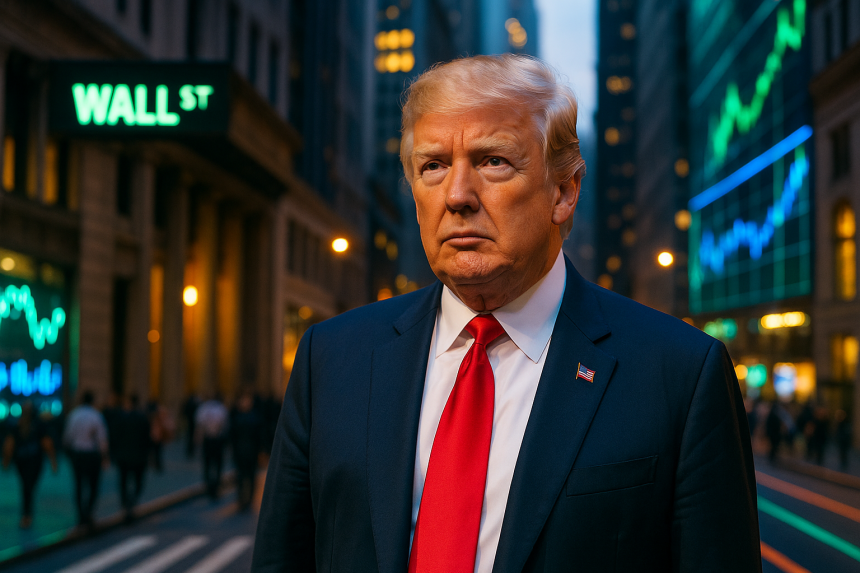
Amid a turbulent trade environment under the Trump administration, tariffs have become an instrument wielded with economic and political motivations. These tariffs, often framed as measures that make foreign producers bear the cost, have sparked controversy and heated debate. The true expense of tariffs hits closer to home in the U.S., affecting domestic prices and households. While the political narrative suggests that foreign entities shoulder the burden, economic analysis reveals a different picture. This complex dynamic raises questions about who ultimately pays the cost, adding another layer of complexity to already strained economic dialogues.

 ETH
ETH
 SOL
SOL
 BSC
BSC
 ROBINHOOD
 USDT
USDT
 AAPL
AAPL
Tariffs have been a key policy in Trump’s economic strategy since his administration. Historically, the perspective was often that tariffs could be absorbed by foreign producers. However, past and present analyses consistently indicate that the expenses predominantly impact American consumers. Economic conditions have demonstrated a consistent pattern where tariffs act more as domestic taxes on imports. The response from the domestic markets has solidified this understanding over time as inflationary pressures continue to emerge.
Who Bears the Tariff Burden?
The direct impact of tariffs largely falls on American consumers who face increased prices for goods. Economists point to customs duties, reporting a significant increase in revenues collected by the U.S. government, predominantly from tariff enforced goods. In the first part of fiscal 2026 alone, customs duties soared, adding billions to governmental revenues. This indicates that tariffs function more as domestic taxes than international penalties, affecting both supply chains and household expenses.

What Is the Inflationary Impact?
Inflation stemming from tariffs remains a persistent concern, though its magnitude can be overstated. The impact is notably real and affects the cost of everyday goods, yet it is not as expansive as both critics and proponents often assert. Evidence suggests inflationary changes are more localized and manageable, yet they contribute to overall economic pressures faced by American families. Prices on imported goods rise, pushing consumers to expend more of their income on regular purchases.
The ongoing debate about the economic cost of tariffs continues to ponder the true balance between international and domestic implications. Politically charged narratives often overshadow economic realities, where empirical data provides clearer conclusions about tariff impacts. Throughout the debate, American policymakers continue to adjust strategies, seeking an equilibrium between economic theories and public sentiment.
The Trump administration’s tariff policy remains a focal point of analysis and discussion, setting precedents for future trade negotiations. Its complex layers illustrate how international strategies can ripple through domestic economies. By understanding these nuances, stakeholders can better navigate the intricate landscape of global trade policies.
Consideration of these tariffs from an economic standpoint suggests externalities fundamentally shift inward, highlighting the domestic absorption of costs. There is substantial evidence to support the greater understanding of tariffs as an internal tax mechanism. Going forward, similar policies will need more calibrated economic insights to mitigate impacts on households while balancing political imperatives.