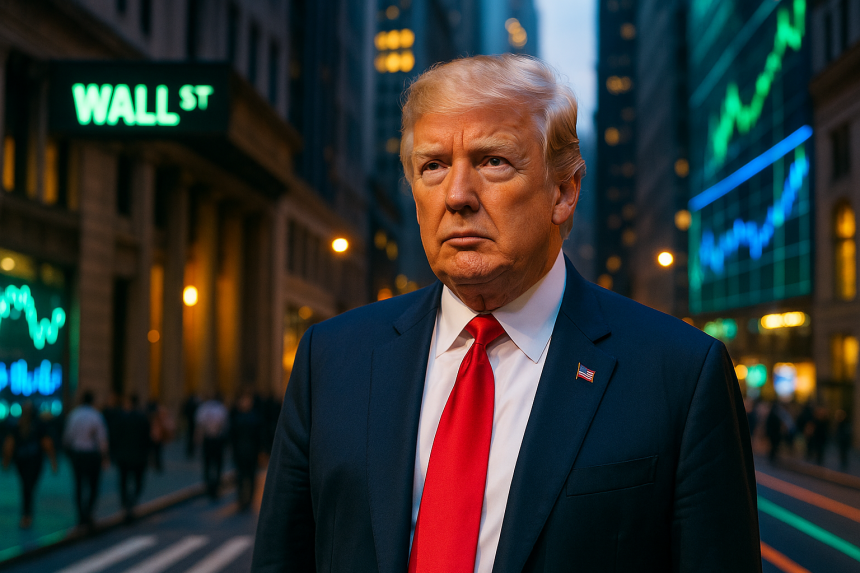
Marking the first anniversary of President Donald Trump’s ‘Liberation Day,’ a complex scenario emerges as the tariffs initially envisioned to boost American economic independence face criticism and setbacks. Originally announced on April 2, 2025, these tariffs promised a wealthier America by addressing trade inequities. However, a year later, the expected economic transformation remains elusive as various challenges, including a Supreme Court ruling, have overshadowed the administration’s ambitious goals. Substantial refunds, increased trade deficit, and fluctuating tariff rates have complicated the economic landscape, raising questions about the effectiveness of this bold policy.

 ETH
ETH
 SOL
SOL
 BSC
BSC
 ROBINHOOD
 USDT
USDT
 AAPL
AAPL
Previous discussions around Trump’s tariffs often highlighted the unpredictability in his trade approach, with multiple changes reflecting an attempt to respond to economic realities. Initial optimism has given way to debates on whether these measures have achieved any meaningful results, with critics citing inconsistencies in policy implementation. Comparatively, past tariff initiatives under previous administrations typically aimed for more stability, with fewer abrupt changes and adjustments within one year. This context provides insight into the challenges faced by the Trump administration’s recalibration of trade relations.
What were the promises made on ‘Liberation Day’?
On ‘Liberation Day,’ Trump committed to making America wealthy again, promising that factories would thrive, and international partners would contribute equitably. This pledge was underscored by imposing what he described as ‘reciprocal’ tariffs. Nevertheless, the reality struck as tariff strategies, perceived by some as overly aggressive, were not aligned with the theoretical promises. Critics noted these tariffs didn’t necessarily mirror reciprocal rates, but instead were based on a formula that varied widely across trading countries due to its reliance on converting trade deficits into tariff rates, leading to significant controversy.

Did frequent changes impact businesses?
Within the year following the announcement, more than 50 tariff rate modifications, along with new exemptions and inclusions, were reported. This resulted in a volatile trade environment, creating what’s been termed an “uncertainty tax,” impacting business operations and confidence.
“Businesses cannot invest, hire, or plan around a policy that changes once a week on average,” an economist remarked, highlighting the detrimental impact of such frequent alterations.
The fluctuating nature of these tariffs added complexity for American companies, grappling with evolving trade conditions that impeded strategic planning.
Despite federal intentions that foreign countries absorb tariff costs, Federal Reserve research indicates that the burden largely befell American consumers. This data refute the initial optimistic assumptions, adding pressures to household budgets. The cumulative impact saw the Consumer Price Index (CPI) increase notably, with costs of essentials such as food and energy rising significantly, contributing to inflation trends that were already a concern for the economy. Meanwhile, the Federal Reserve continues monitoring these developments closely.
A vital aspect of the tariffs was to reshape investment landscapes, yet the anticipated investment influx did not materialize. Contrary to the $6 trillion projected initially, actual foreign direct investment tallied considerably lower. This shortfall was echoed in labor market outcomes where fewer manufacturing employment opportunities were realized, and reshoring initiatives among businesses remained largely unfulfilled despite initial enthusiasm. Reports highlighted minimal reshoring action among companies, revealing a disparity between thought and action.
Beyond economic measures, trade deficits, a primary target for improvement, instead witnessed an increase. Imports continued to rise, while countries like China saw trading surpluses grow, counter to US objectives. Further, shifts in global trade relationships, particularly in agriculture, saw persistent changes with countries like Brazil capitalizing on new opportunities, potentially altering trade dependencies permanently regardless of future US trade decisions.
“The primary target, China, recorded a record trade surplus of $1.2 trillion,” reports indicate, reflecting missed goals.
A critical juncture occurred when in early 2026, the Supreme Court invalidated key aspects of the tariff policy, citing overextension of presidential powers as a legislative function. The outcome necessitated a shift in strategy, as the administration turned to other legal avenues to enforce tariffs. However, this move invited further legal challenges, underscoring the contentious nature of the policy. Meanwhile, public opinion mirrors the challenges faced, with economic approval ratings for Trump plummeting as many Americans perceive worsened conditions under the current tariff regime.
Ultimately, these developments underscore a complex interplay of expectations and realities as tariff initiatives reshape economic dynamics in unforeseen ways. For those examining policy impacts, understanding the variability and economic consequences tied to tariff strategies will be vital, especially as global trade environments continue evolving with political and economic shifts. Observing future trajectories, particularly around manufacturing and agricultural sectors, may provide sharper insights into long-term ripple effects and emerging global trade alignments.