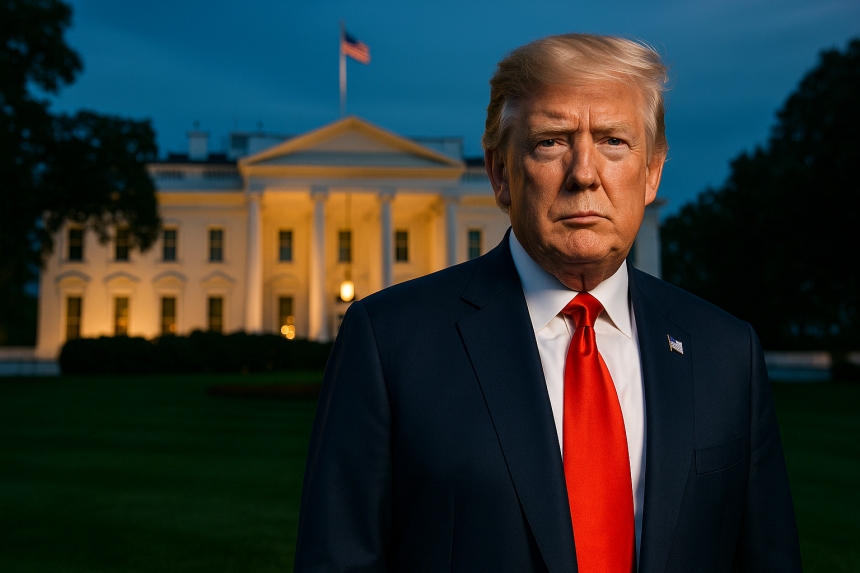
The financial community is closely observing an unfolding scenario involving President Trump and Federal Reserve Chair Kevin Warsh, with potential interest rate decisions capturing market attention. Trump’s recent remarks highlight his inclination towards lowering rates amidst economic indicators, sparking dialogues about Fed policy outcomes. The interplay of Trump’s expectations and Warsh’s strategic considerations introduces a notable situation for market observers and financial analysts alike. The outcomes of these discussions hold significant implications for both markets and the economy, rendering this issue a focal point for economic stakeholders.

 ETH
ETH
 SOL
SOL
 BSC
BSC
 ROBINHOOD
 USDT
USDT
 AAPL
AAPL
President Trump has applied pressure on Fed Chair Kevin Warsh, suggesting Warsh is inclined towards appropriate economic actions, despite internal Fed board challenges. Trump’s push for rate cuts contradicts the Federal Open Market Committee’s current baseline forecast, which leans towards maintaining the status quo. In previous instances, such communications between Trump and Warsh have stirred market predictions and adjustments, reflecting the complex dynamics between presidential rhetoric and Fed policymaking. Economic estimates from past periods display recurring fluctuations in market responses to presidential statements.
Is the Fed Ready for a Rate Hike?
The Federal Reserve is situated in a complex economic environment where any move on interest rates could have wide-ranging effects. The current federal funds rate stands at 3.75%, holding steady since December 2025. Present measures of inflation and unemployment suggest conditions that traditionally might support a rate hike. Core inflation metrics and unemployment data reflect pressures that could lead Warsh to consider rate increases, an action that has historically affected market trends, financial institutions, and consumer behavior.

Market Signals: Is Change Inevitable?
Despite Trump’s advocacy for lower rates, market indicators suggest a shift in sentiment that considers future hikes more plausible. Recent adjustments in Treasury yields and volatility indexes indicate market apprehensions towards potential changes in Fed policy. Traders have assigned varying probabilities to rate hikes, with financial instruments reflecting these expectations. Polymarket data shows divided trader perception, while forecasting platforms suggest odds for rate changes before September, emphasizing the uncertainty within economic landscapes.
In the event of a rate hike, the influence on consumer credit and mortgage rates would be direct and immediate. Credit costs would likely escalate for consumers, affecting loan affordability and disposable income levels. For savers, however, potential rate hikes might mean better returns on savings instruments, contrasting impacts leading to mixed sentiments. Markets, especially those reliant on interest rate margins, would experience volatility, highlighting the significance of any forthcoming decisions.
Statements from relevant parties highlight the significance of current discussions. Warsh’s decisions at the Federal Open Market Committee meeting may pivot significantly under pressure from the Trump administration. The final announcement will closely determine market directions and the Fed’s autonomy in policy formulation.
“Rates should be lowered,” asserted President Trump, expressing his expectations clearly.
The coming decisions are crucial in setting tone for economic policy discourse and financial market adjustments. The outcome may indicate alignment or divergence in strategic economic directions, serving as a bellwether for future interactions between government directives and independent economic governance.
“Kevin Warsh wants to do the right thing,” President Trump emphasized, indicating support.
Strategic analysis suggests significant implications of Warsh’s rate decisions. The dual focus of governmental influence versus Fed independence underscores complex policymaking dynamics. A nuanced review reveals that any policy shifts echo broader economic themes, impacting everything from inflation trajectories to market stability. Stakeholders anticipate the Fed’s decisions with serious interest, given the economic and political stakes involved. These developments underscore a pivotal period in economic policy-making with significant outcomes on the horizon.