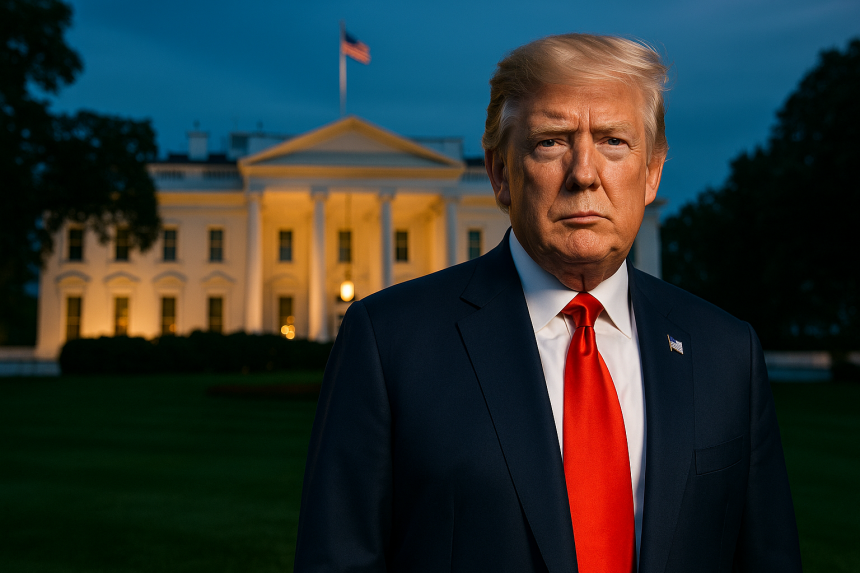
In a strategic move resonating in the corporate world, President Trump recently visited China, accompanied by 17 top executives. Among them, only Elon Musk of Tesla (NASDAQ:TSLA) and Jensen Huang of NVIDIA received the prestigious invitation to travel on Air Force One. This selection has not only grabbed attention due to the transportation exclusivity but also because of the implications for the ongoing US-China technology dynamics. Musk and Huang notably lead firms heavily impacted by the current geopolitical tensions, catapulting their roles and decisions into international focus.

 ETH
ETH
 SOL
SOL
 BSC
BSC
 ROBINHOOD
 USDT
USDT
 AAPL
AAPL
Elon Musk and Jensen Huang’s access to President Trump reflect a notable shift in how trade relations and industry negotiations are being navigated. Historically, such significant diplomatic engagements were less individualized, often relying on structured institutional channels. Today, the personal rapport between individual business leaders and political figures seems to influence substantial policy directions. Such interactions raise questions about fairness and long-standing legislative processes crafted to guide trade and foreign policy. Meanwhile, competitors like AMD (NASDAQ:AMD) and Ford, without similar direct White House influence, might find themselves at a disadvantage when pushing for policy preferences.
Why Were Musk and Huang Chosen?
The stakes for Musk and Huang are significant. For Musk, Tesla’s operational prospects hinge heavily on maintaining favorable relations with China due to his ventures like the Shanghai Gigafactory’s expansion. Musk’s aspirations also include Chinese regulatory approval for Tesla’s Full Self-Driving technology, adding pressure to his presidency-influenced diplomacy efforts. Huang’s position revolves around a potential massive revenue stream amounting to $50 billion, should US-China export restrictions on AI chips ease. His persistent lobbying exemplifies the tactical business measures leaders undertake amid such high-stakes international engagements.

What Are the Implications?
The dynamics observed reflect a broader trend in how leaders like Trump choose to navigate international relationships. Huang described these meetings as significantly consequential, potentially culminating in pivotal outcomes for international trade practices. The benefits for Tesla and NVIDIA, if successful, could further widen the competitive gap with other industry players lacking similar levels of engagement. As personal relationships increasingly drive trade decisions, those without direct connections to political power may find themselves at a strategic disadvantage.
Huang noted the importance, stating,
“These meetings are some of the most crucial in current business history.”
Similarly, Tesla’s operational strategies are closely watching China’s openness, as Musk mentioned,
“Xi Jinping assured us of further encouraging business collaborations.”
Consequently, the preferential treatment Musk and Huang experience hints at deeper narratives within the context of global trade and influence in a changing world landscape.
The takeaway for stakeholders and competitors is multi-faceted. Observers should remain alert for developments in Commerce Department licensing for NVIDIA’s critical H200 shipments and potential regulatory breakthroughs for Tesla’s self-driving initiatives in China. Although Musk and Huang’s accomplishments thus far signify a personal, relationship-driven angle to US trade policies, the effects of such strategies on broader trade ethics, equity, and the business environment are still playing out on a global stage.