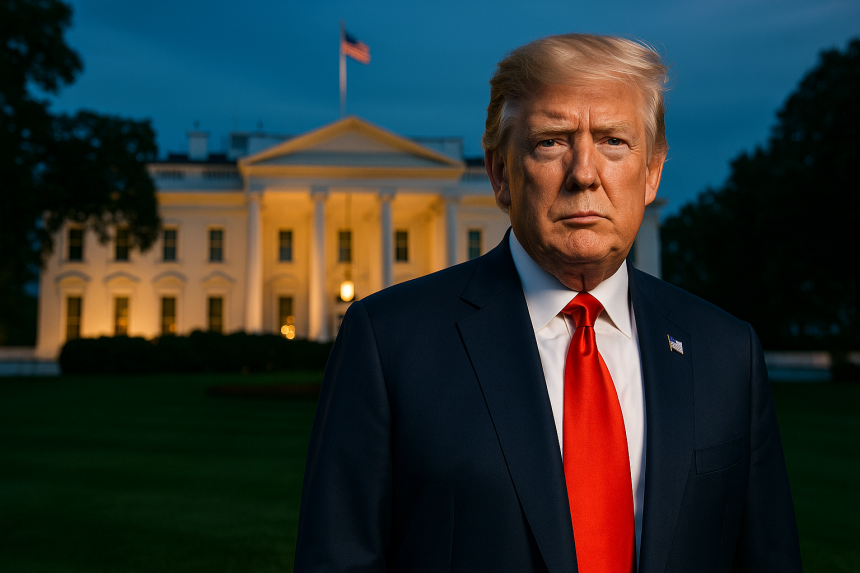
The recent announcement of President Donald Trump’s agreement aimed at reopening the Strait of Hormuz has sparked considerable debate. This move, perceived by several of his supporters as conceding to Iran, has resulted in notable criticism. Despite the potential economic implications and geopolitical ramifications, the detail of the arrangement has led some political figures and allies to voice substantial reservations about its long-term impact.

 ETH
ETH
 SOL
SOL
 BSC
BSC
 ROBINHOOD
 USDT
USDT
 AAPL
AAPL
In past communications, President Trump emphasized a firm stance on Iran, often describing strategic interactions in terms of force and influence. The current agreement, extending the ceasefire by 60 days for negotiation purposes, contrasts previous actions where more stringent measures were highlighted. This shift has drawn parallels to past decisions where concessions were scrutinized for perceived leniency. Various stakeholders are now making comparisons to earlier approaches, considering this agreement overly favorable to Iran.
What Do Leading Critics Say?
Notably, some of President Trump’s staunch allies have voiced their discontent with the details of the Iran deal. They argue that it could fortify Iran by releasing billions through lifted sanctions and unfrozen funds, potentially supporting its regional pursuits. Senator Ted Cruz articulated his apprehensions by stating that such decisions could be strategically misguided. He remarked,

“President Trump believes in peace through strength, and his strong leadership has already made America much safer. He should continue to hold the line, defend America & enforce the red lines he has repeatedly drawn.”
Is Trump in a Dilemma?
The predicament for Trump lies in navigating the complex geopolitical and domestic factors. On one side, his influential financial backers who invested heavily in his campaigns might perceive the deal as undermining firm policies against Iran. This could jeopardize vital support. On the other, a hardline stance resulting in escalated military conflict risks economic instability through potential spikes in oil prices.
With Iran’s threat of retaliation and the prospect of significant disruptions in oil supply chains, the stakes are high. This potential increase in crude oil prices would have far-reaching consequences, potentially impacting global markets extensively. These scenarios highlight the delicate balance required in international negotiations, emphasizing the complexity faced by current leadership.
Meanwhile, figures such as Mark Levin suggest that any agreement made with Iran should receive Senate input, guaranteeing robust scrutiny and consensus. He expressed the necessity for transparency by stating the significance of understanding the deal’s enforcement mechanisms and interpretations.
Senator Lindsey Graham’s stance remains unchanged as he continues to advocate for strong military postures, questioning the trustworthiness of the negotiated peace in light of strategic control over critical waterways such as the Strait of Hormuz. His concern, shared by many, revolves around the broader implications of negotiating with negotiation-resistant regimes.
“It makes one wonder why the war started to begin with if these perceptions are accurate. I personally am a skeptic of the idea that Iran cannot be denied the ability to terrorize the Strait and the region cannot protect itself against Iranian military capability.”
This scenario places Trump in a challenging position. Balancing the interests of promoting peace and maintaining a strong deterrent approach against Iran’s actions presents a complex diplomatic challenge. Evaluating the outcomes of this agreement will require close analysis and possibly revisiting the terms for alignment with broader international security objectives. The geopolitical landscape requires careful negotiation to address the multifaceted issues of nuclear capability, regional peace, and economic interests.