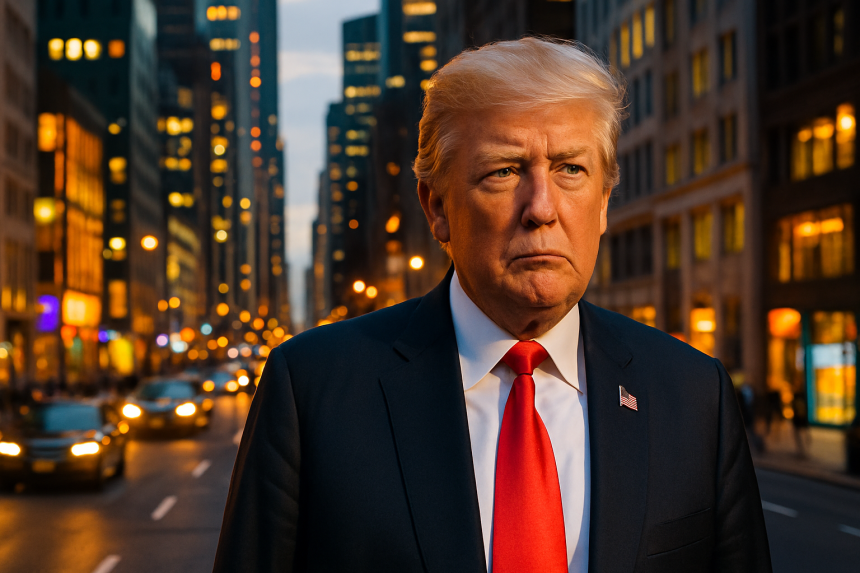
President Donald Trump recently expressed unexpected candor in a speech delivered to retirees at The Villages in Florida, voicing surprise over the economic implications of military actions taken against Iran. Despite anticipating severe market consequences, actual outcomes have diverged from expectations. Trump addressed the current surge in gasoline prices, which have reached a four-year high, attributing these increments to his decision to engage in military intervention in Iran.

 ETH
ETH
 SOL
SOL
 BSC
BSC
 ROBINHOOD
 USDT
USDT
 AAPL
AAPL
Examining Trump’s previous remarks on similar geopolitical moves reveals a familiar rhetoric emphasizing national security, though economic impacts varied. Historically, Trump has utilized robust justification centered on defense strategies. Comparisons highlight a pattern of pursuing military measures with calculated risk assessments yet underlining unforeseen economic sensitivities such as fluctuating fuel costs and their cascading effects across market sectors.
What’s Trump’s Perspective on the War?
In his discourse, Trump emphasized the necessity of impeding Iran’s nuclear ambitions, portraying the military campaign as essential for U.S. safety. He stated,

“We cannot let lunatics have a nuclear weapon.”
Additionally, he highlighted Iran’s debilitated military capabilities as a justification for continued action. Despite acknowledging economic repercussions, Trump maintains confidence in eventual energy price stabilization.
The president acknowledged pre-war lower oil prices, attributing recent spikes as a consequence of strategic decisions against Tehran. With Iran proposing a 14-point peace plan, Trump’s firm rejection suggests an unwavering stance aiming to leverage future concessions.
How Are Markets Reacting?
Despite escalating tensions, financial markets showcased resilience, with indices like the S&P 500 reaching historic highs. Investment dynamics have been influenced by burgeoning AI sector growth and market skepticism about prolonged military engagement. Trump’s reputation for potentially negotiating rather than escalating further conflicts contributes to a hesitant but optimistic economic forecast by some financial experts.
However, perspectives on future economic impacts vary. Analysts predict divergent paths contingent on geopolitical developments. Economic projections indicate potential repercussions if resolutions take longer than anticipated or escalate further. The ongoing situation continues to be monitored closely by both policy analysts and market experts.
Households are already experiencing fiscal strains from increased fuel expenditures, significantly impacting various economic demographics. While discussions emphasize potential relief post-strategic resolutions, immediate effects are perceived keenly by consumers worldwide. Shifting household expenditures reflect current oil market instabilities coinciding with geopolitical narratives.
Future scenarios concerning the Strait of Hormuz and allied military engagements remain pivotal. Ongoing analyses of Trump’s Iran strategy and stock market trajectories reinforce the complexity of integrating political and economic forecasts. Only time will reveal whether peace initiatives will alleviate current economic burdens.