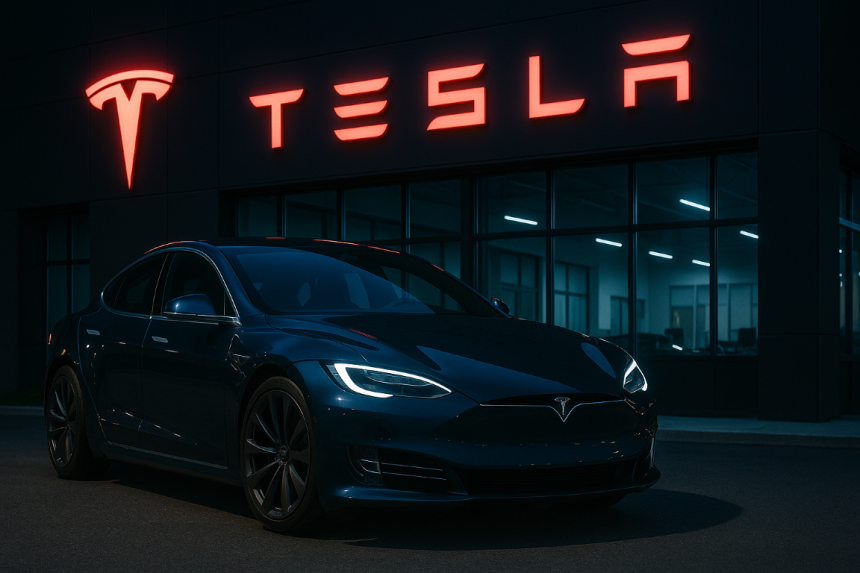
In an unexpected financial maneuver, the integration of Tesla (NASDAQ:TSLA)’s $2 billion investment into SpaceX marks a notable shift in asset positioning. This development has not only rewritten the traditional financial narrative but also highlights the intricate connections among leading tech pioneers. Beyond the immediate financial implications, these changes reflect on the complex corporate strategies being pursued, painting a picture of inter-company dynamics in high-tech industries that may influence broader market trends.

 ETH
ETH
 SOL
SOL
 BSC
BSC
 ROBINHOOD
 USDT
USDT
 AAPL
AAPL
Back in January 2026, Tesla formalized an investment agreement with xAI, aiming to secure Series E Redeemable Convertible Preferred Stock, contingent upon regulatory green lights. Unexpectedly, just a few weeks later, the financial path shifted as SpaceX consummated a merger with xAI on February 2, 2026, converting the AI company’s role into that of a subsidiary and thereby redirecting Tesla’s investment.
What lies beneath this financial shift?
Post-merger, Tesla’s rights transitioned from acquiring xAI preferred stock to obtaining SpaceX Class A common stock. As of March 12, 2026, following the expiration of a regulatory waiting period, SpaceX allocated 3.8 million Class A shares to Tesla, effectively reassigning their AI stake within SpaceX’s realm.

How does this impact Terafab collaboration?
This strategic shift aids SpaceX’s Terafab venture, publicly announced in March 2026, involving close collaboration with Tesla to achieve extensive computational manufacturing capabilities. Notably, Intel (NASDAQ:INTC)’s entry into the initiative in April 2026 underscores its significance. Despite the promising outlook, the venture’s future depends on voluntary commitments of collaborators, as neither Tesla nor Intel are contractually bound.
The synchronization of Tesla’s AI developments with SpaceX’s initiatives presents new prospects for stakeholders. Nevertheless, market analysts express mixed sentiments. Speculative markets suggest a minimal likelihood for a formal merger storyline to emerge shortly, while some raise possible concerns over Elon Musk’s leadership priorities potentially conflicting with shareholder interests.
Recent analyses of similar business decisions in the tech sector underline the balance companies aim to maintain between strategic growth and shareholder value. Historically, investments similar to this have made substantial impacts on company valuations and market perceptions. Beyond the intra-company dynamics, the decision exemplifies the growing trend of deeper integrations among tech giants.
As the situation continues to develop, closely observing how these strategic investments unfold will be essential. This integration shapes Tesla’s investment exposure and could influence the landscape of corporate asset alignment in other sectors. The ongoing saga of Tesla and SpaceX highlights the potential for pioneering new business formats and prompting discussions about future corporate structuring strategies.