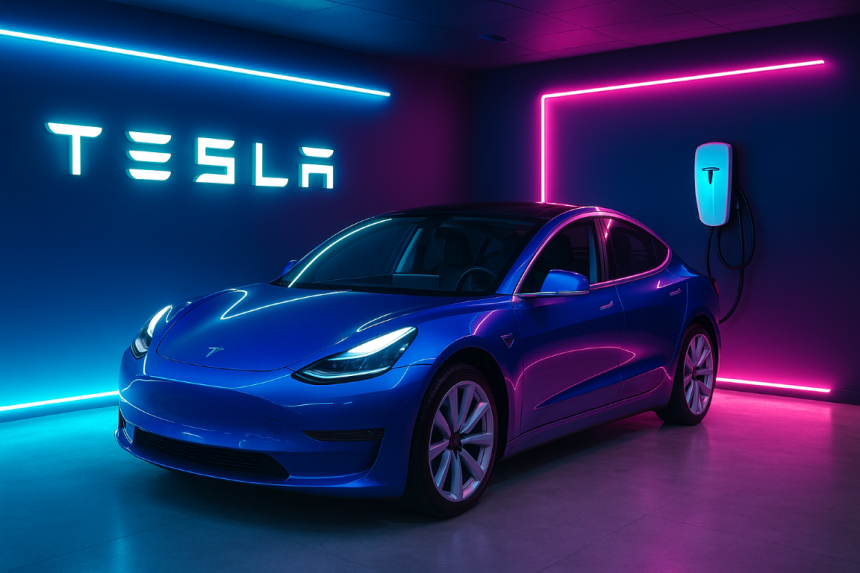
Tesla (NASDAQ:TSLA) is poised to amplify its production capabilities, leveraging the infrastructure of its Shanghai Gigafactory for mass production of its Optimus humanoid robots. Unlike other manufacturing centers, the Shanghai facility stands out due to its proven track record of speed and efficiency, attributes that are crucial for Tesla’s ambitious goal of producing 1 million units annually. The strategic significance of this plan extends beyond production numbers, as it aligns with Tesla’s broader strategy to solidify its position within the robotics and AI sectors.

 ETH
ETH
 SOL
SOL
 BSC
BSC
 ROBINHOOD
 USDT
USDT
 AAPL
AAPL
Is Shanghai the Ideal Choice for Tesla’s Ambitions?
The Shanghai Gigafactory’s existing infrastructure offers Tesla several advantages. Equipped with a robust supplier network and a skilled workforce, it is well-positioned to handle the demands of high-volume production. Historically, Shanghai has been a cornerstone for Tesla’s automobile manufacturing, enabling quick scaling to meet demand. In previous projects, such as the Model Y launch, the factory demonstrated an ability to reach full production swiftly.
The plan for mass production of the third-generation Optimus robot includes a timeline set for the end of 2026. As part of its wider growth strategy, Tesla is also exploring new production lines for vehicles and energy storage in this facility. A key objective is to integrate the manufacturing cultures of their automotive and robotics operations to streamline processes.

What Impact Could This Have on Investors?
Tesla’s energy and robotics segments are becoming increasingly pivotal, perhaps overshadowing traditional automotive earnings. Although the company‘s automotive revenues are currently under stress, its gross margin rose to 20.1% in Q4 2025, demonstrating resilience. This growth could intensify if the company succeeds in harmonizing robotic and automotive production processes.
A successful Optimus rollout must address market skepticism, with Tesla facing a 17% market probability for meeting its 2026 deadline. Overcoming these doubts could unlock significant revenue diversification, as the Optimus is anticipated to secure market traction alongside energy products.
Elon Musk remains optimistic about Tesla’s potential in robotics.
“Optimus will be a transformative product,”
he stated. The Shanghai Gigafactory is expected to test Tesla’s hypothesis about Optimus’ market fit. In its valuation, Tesla’s stock currently reflects both hope and skepticism for its robotics endeavor.
As the anticipation builds for Tesla’s Q1 2026 earnings report, stakeholders are eagerly waiting for updates that could bolster confidence. With the Shanghai facility positioned as the heart of this initiative, Musk’s assertion about its role could be substantiated by forthcoming data.
“Shanghai is instrumental in proving Tesla’s manufacturing thesis for Optimus,”
an executive noted.
Tesla continues its ambitious journey, moving beyond being merely an electric car manufacturer and stepping into the intricate world of robotics. For investors, this expansion could redefine Tesla’s position, potentially turning skeptics into advocates if Shanghai meets its high expectations. The focus now is on strategic execution and the next few years will determine the success of Tesla’s endeavors in robotics.