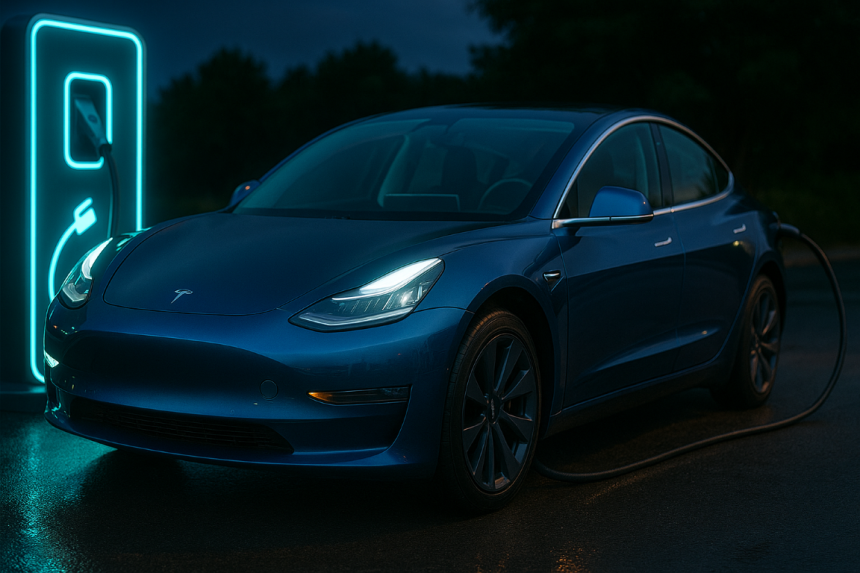
Tesla (NASDAQ:TSLA), once synonymous with electric vehicle innovation, is no longer just an automaker. In an industry increasingly defined by fierce competition and shifting consumer preferences, Tesla is redirecting its strategic focus from mere vehicle production to advanced technologies. As the demand for electric vehicles stabilizes, the company has announced a significant shift in capital allocation, prioritizing artificial intelligence, software, and robotics. This strategic pivot has implications for how Tesla should be valued by investors, who must consider both the traditional automotive side and the burgeoning AI sector.

 ETH
ETH
 SOL
SOL
 BSC
BSC
 ROBINHOOD
 USDT
USDT
 AAPL
AAPL
Recent developments highlight Tesla’s evolving business model. Previously, the company was primarily seen as a transformative force in the electric vehicle sector, consistently achieving record sales and profits. As of now, however, emphasis is being placed on diversifying into new technological areas. The company’s latest financial disclosures emphasize this transition, with a substantial portion of its capital expenditure earmarked for AI, chip development, and robotic projects.
Where Does the Focus Shift Lead Tesla?
Currently, Tesla’s strategic reorientation is illustrated by its first-quarter results, where it reported stronger-than-predicted gross margins despite a decrease in electric vehicle deliveries. The improved margins are largely attributed to efficient cost management and a diversified revenue stream from software and energy sales.

Tesla’s CEO elaborated on the current business strategy:
“Our investment in AI and other advanced technologies will pave the way for long-term growth beyond automotive sales.”
The company’s focus is gradually shifting towards products and technologies that promise higher profit margins and future market potential.
How Does This Affect Tesla’s Market Position?
With the new strategy in place, Tesla’s expenditure on capital projects now rivals that of purely tech-driven companies. Over $25 billion is set to be channeled into AI computing resources, proprietary chip design, and robotics, marking a significant departure from its previous automotive focus. This poses unique challenges and opportunities for investors, who must reassess their valuation frameworks.
Tesla’s management indicated that this shift is not sudden but a planned course of action:
“The road to integrating advanced technologies into our ecosystem is meticulously charted.”
Competitors like Ford and General Motors remain heavily invested in automotive, but Tesla’s bet on technology suggests a forward-thinking approach in the ever-evolving market.
This strategic evolution underscores Tesla’s aim to solidify its presence not only as a car manufacturer but as a formidable player in the technology sector. While traditional automakers may experience cyclical demand, Tesla’s investment in technology offers potentially higher, albeit speculative, returns.
As Tesla navigates its transition, valuations become complex. Investors must consider the tangible returns from vehicle sales and the speculative potential of its forays into AI and robotics. The company’s trajectory suggests it could redefine norms in both industries, making investment decisions increasingly nuanced.
Tesla, poised at the intersection of automotive and technological sectors, exemplifies the challenges of evolving in a fast-paced market. While primarily reliant on vehicle sales for revenue, its strategic investments signal a future where revenue streams could shift significantly towards technology. This positions Tesla uniquely within the market as a transitional entity.