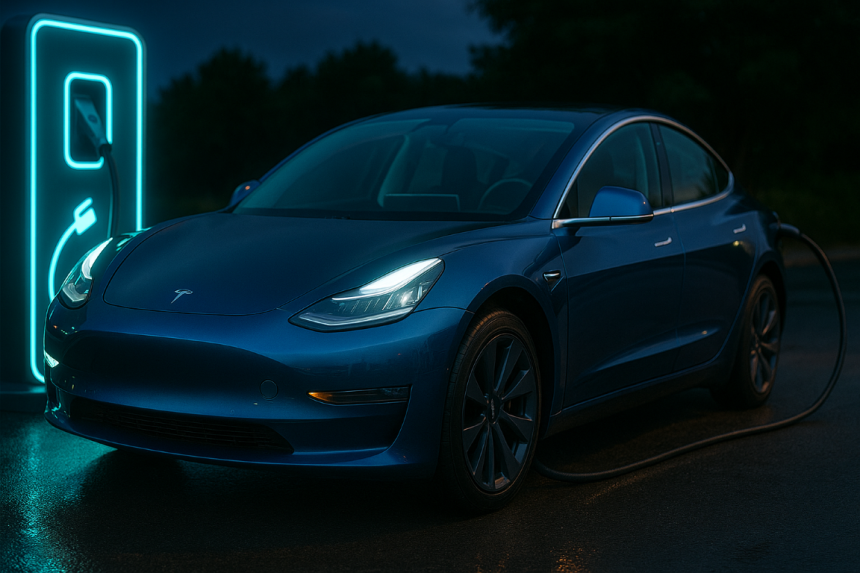
Tesla (NASDAQ:TSLA) Inc., led by CEO Elon Musk, seeks to redefine itself as a pivotal player in robotics and artificial intelligence, yet its profitability continues to rely heavily on electric vehicle (EV) sales. As the current leader in the U.S. EV market, Tesla holds a commanding share, despite facing stiff competition and declining influence in major markets like China and Europe. Hyundai, with its Ioniq series, emerges as a formidable competitor, threatening to overshadow Tesla’s dominant position.
How Does Hyundai Compare?
Hyundai, the world’s third-largest automotive manufacturer by unit sales, poses a serious challenge to Tesla’s EV supremacy. Unlike Tesla, Hyundai offers a diversified product lineup at competitive prices, which appeals to a broader customer base. The Ioniq 5 N has garnered positive attention for its blend of performance and practicality. Car enthusiasts see value in Hyundai’s modern and versatile offerings, contrasting with Tesla’s aging models.

Can Tesla Retain Its Market Share?
Although Tesla maintains a significant market position, Hyundai’s strategic moves in the EV sector could influence its trajectory. Hyundai’s ability to capture nearly 10% of the U.S. EV market reflects its rising influence. This penetration challenges Tesla’s dominance and indicates a shift in consumer preferences toward affordable and technologically advanced vehicles like Hyundai’s. The situation presents a need for Tesla to address both product and leadership criticisms.
Tesla’s market position has historically been underpinned by its innovative approach and Musk’s high-profile leadership. However, Hyundai’s recent advancements leverage its global reach and capitalization to rival Tesla effectively. The Korean automaker benefits from strong brand perception, advanced production capabilities, and a customer-focused approach, which contrasts with raising concerns over Tesla’s model age. Over time, Hyundai’s investment in a comprehensive EV range has steadily increased its share and reputation in the competitive landscape.
Musk’s polarizing public persona has occasionally impacted Tesla’s brand perception, raising concerns about its leadership direction. Despite his prominence as a CEO, controversies surrounding his public views have created opportunities for rivals like Hyundai. The setback for Tesla is twofold: fading innovations in its vehicle lineup and the shadow of its CEO’s public image. Hyundai capitalizes on this by delivering market-ready, desirable options.
Hyundai’s EV growth strategy extends beyond mere product offerings. The Ioniq brand captures diverse markets with price-to-value ratio models, a gap that Tesla struggles to fill. This diversification expands Hyundai’s potential to increase its EV market presence significantly. Tesla must now consider addressing these competitive factors more effectively to stay relevant.
Though Tesla remains a formidable player in the EV industry, signs of vulnerability urge strategic reassessment. Hyundai’s advancements exemplify challenges Tesla faces from traditional automakers transitioning to electric mobility. Broad affordability, innovative tech, and adaptive market strategies characterize Hyundai’s movement against Tesla’s dominance. To counteract these developments, Musk’s organization may need to innovate further or adapt its market strategy.