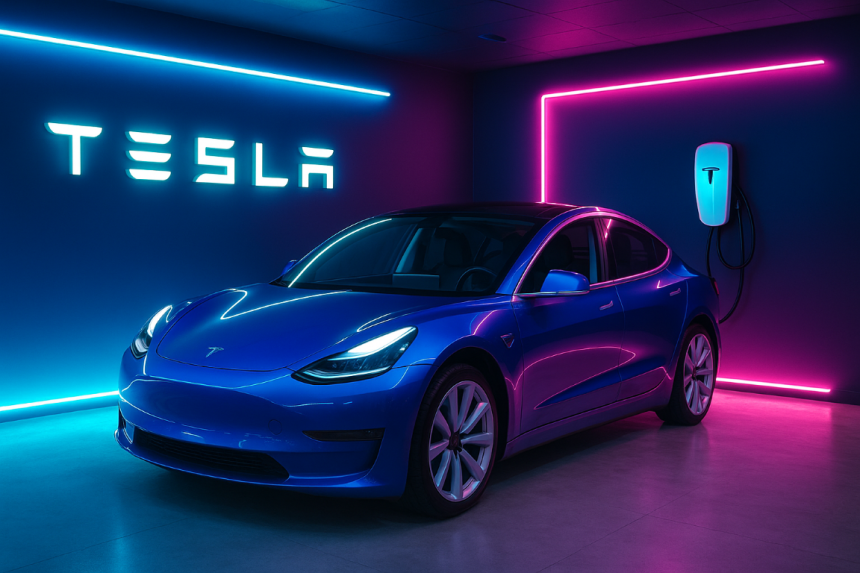
Tesla (NASDAQ:TSLA) has announced that its robotaxi fleet has completed over 380,000 miles of travel without any notable safety incidents. The electric vehicle manufacturer continues to expand its autonomous services across several cities, aiming to cement its position as a leader in self-driving technology. This achievement could influence perceptions of safety in autonomous vehicles, pushing the industry towards camera-based solutions instead of traditional sensors.

 ETH
ETH
 SOL
SOL
 BSC
BSC
 ROBINHOOD
 USDT
USDT
 AAPL
AAPL
A closer look at recent developments reveals that Tesla has maintained a focus on enhancing its Full Self-Driving software, aimed at improving vehicle safety. Historically, there has been skepticism surrounding the use of just cameras and AI software without relying on conventional safety tech like lidars and radars. This latest report about the robotaxi fleet can potentially challenge previous notions and sway industry players to reconsider the efficacy of traditional sensor systems.
How Safe Is Tesla’s Robotaxi Fleet?
Tesla’s vice president of AI software, Ashok Elluswamy, shed light on the fleet’s safety performance during a recent earnings call. Despite industry apprehension over autonomous vehicles, Tesla has recorded “zero notable incidents” over a significant mileage.

Can Camera-Based Autonomy Replace Traditional Sensors?
Elluswamy defended their reliance on cameras and AI for autonomous driving rather than more established methods like lidars. This approach contrasts with companies such as Waymo, known for their use of lidar technology. In support of this strategy, Elluswamy stated, “You can have safe, comfortable and affordable autonomy with just cameras.”
The mileage covered by Tesla’s robotaxi fleet is experiencing substantial growth, with a double-digit weekly rate increase pointing to rapid adoption and expansion. Reflecting on this growth, Elluswamy projected optimism for continued progress, adding confidence to Tesla’s autonomous vehicle ambitions.
“We have grown at such a high compounding rate on a week-over-week basis,” he explained.
Tesla has recently expanded its unsupervised robotaxi service to Orlando and Tampa, with previous rollouts in Austin, Dallas, Houston, and Miami. These expansions are in line with Tesla’s strategy to widen its autonomous services, paving the way for broader adoption in the United States.
With its different technological approach and rapid expansion strategy, Tesla could catalyze further advancements and shifts in the autonomous driving industry. Future city launches are anticipated to accelerate, potentially further establishing Tesla as a significant player.
As the industry keeps evolving, Tesla’s focus on camera-based technology alongside its robust growth pattern could become a template for others. While challenges remain, the company’s advancement suggests an adaptive strategy might be critical as more cities open their doors to autonomous services. The continued dialogue between industry leaders and regulatory bodies could shape the future landscape of self-driving vehicles.
“We expect that the time to launch to a new city will continue to trend towards zero,” stated a Tesla executive, indicating the company’s vision for rapid service expansion.