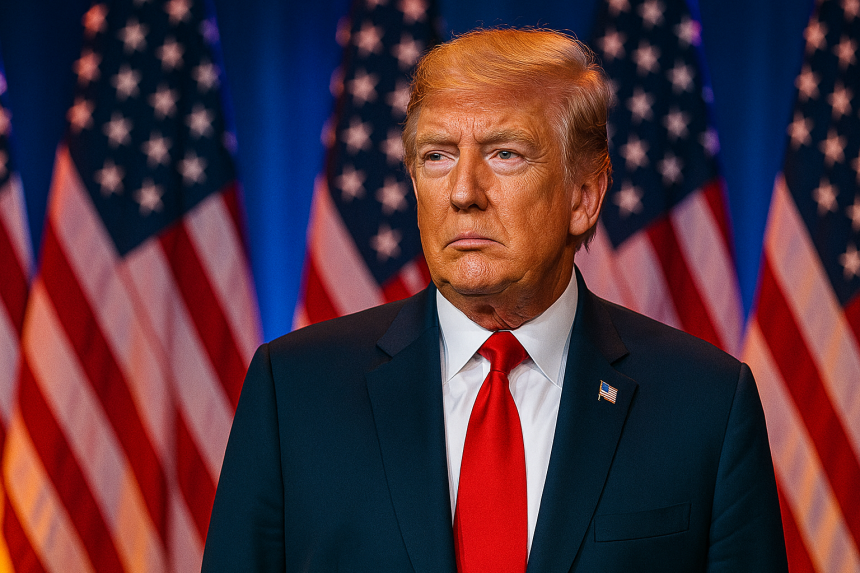
The legal battle between multiple U.S. states and the federal government deepens with a new lawsuit concerning trade tariffs. Twenty-five states have collectively urged the U.S. Court of International Trade to declare recent tariff measures by the Trump administration as unlawful. The legal challenge marks a critical step in the ongoing discourse over trade policies and their implications for domestic and international commerce. The states assert that the administration’s actions are inconsistent with the Trade Act’s legal provisions, suggesting potential overreach in tariff imposition.

 ETH
ETH
 SOL
SOL
 BSC
BSC
 ROBINHOOD
 USDT
USDT
 AAPL
AAPL
Historically, the Trump administration’s trade policies have generated significant discourse. Notably, previous tariff measures have led to both political and economic debates. Similar suits in the past have focused on the broader implications of the administration’s trade actions. This lawsuit integrates lessons learned from such precedents and emphasizes the recurring tension between federal directives and state-level economic interests.
What are the Core Allegations?
The lawsuit contends that the administration contravened Section 301 of the Trade Act by failing to comply with procedural norms and by enacting tariffs lacking clear justification related to combating forced labor practices. Investigations, traditionally conducted on an individual country basis, were expedited to encompass 59 countries and the European Union, resulting in rapid tariff implementations. New York Attorney General Letitia James voiced these concerns in a public statement.

“After losing at the Supreme Court, the administration is once again trying to illegally raise taxes on families and businesses with a new round of tariffs,” said Letitia James. “No matter how the administration tries to justify it, the law and our Constitution are clear that the president does not have the power to impose sweeping tariffs on whatever countries he wants.”
How Does the Administration Justify Its Actions?
In response, White House spokesperson Kush Desai has dismissed the allegations raised by the states. According to Desai, the tariffs are part of a lawful approach to address unfair foreign trade practices impacting U.S. commerce. The administration argues that countries failing to enforce prohibitions on goods made with forced labor are taking unreasonable actions that harm American economic interests. These tariffs, as proposed by the United States Trade Representative, also carry different ad valorem rates tailored to the economies involved.
“The United States is using its lawful authority to obtain the elimination of unreasonable acts, policies and practices that burden U.S. commerce,” stated Desai. “A foreign country’s failure to impose and effectively enforce a prohibition on the importation of goods produced with forced labor is unreasonable and burdens U.S. commerce, including American workers, and must be addressed.”
The current lawsuit stands against the backdrop of ongoing critiques about whether such trade measures serve the intended economic purpose or create unintended domestic burdens. Given prior defeats at the Supreme Court concerning tariff strategies, the legal and procedural merits of this case will likely influence broader policy responses at state and federal levels.
In conclusion, the case carries significant implications for the balance between state and federal trade authorities and highlights the complexity of implementing effective trade policies. As this legal process unfolds, interested parties will examine its outcomes for potential shifts in how trade disputes are managed and what precedents might be set for future tariff-related legal challenges. Regardless of the outcome, the discourse will inevitably inform future dealings concerning international trade law and policy execution.