
 ETH
ETH
 SOL
SOL
 BSC
BSC
 ROBINHOOD
 USDT
USDT
 AAPL
AAPL
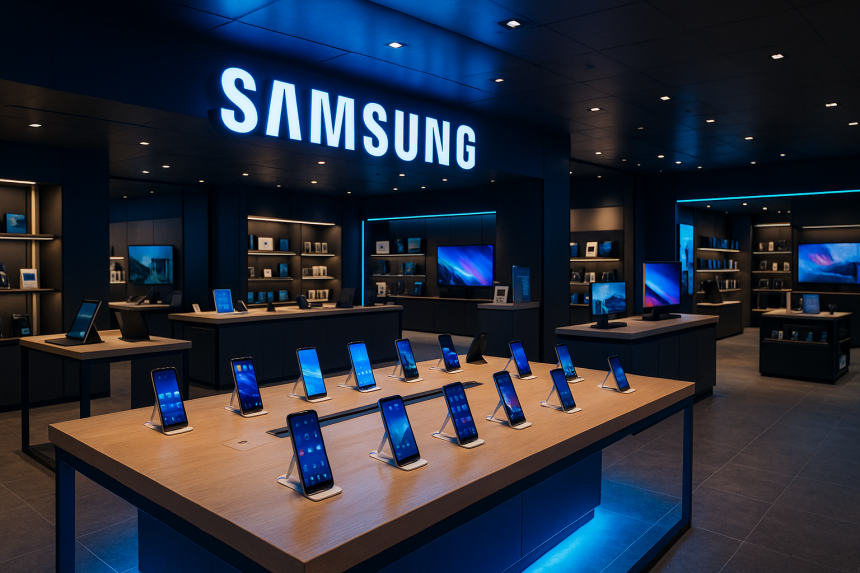
Samsung Electronics has announced plans to strategically expand its integration of AI technology within its products. Their objective is to enhance user interaction across a broad range of devices. The ambitious move involves equipping more devices with “Galaxy AI,” intending to grow their presence in the AI-dominated tech market. With AI rapidly evolving, Samsung’s strategy is to align its device capabilities with these technologies, in and outside traditional smartphone use.
Samsung had previously adopted AI technology in its devices, using Google (NASDAQ:GOOGL)’s Gemini platform. Historically, Samsung incorporated AI features into approximately 400 million smartphones and tablets, aiming to elevate this number to 800 million. This aggressive scaling highlights the company’s commitment to competing against global smartphone leaders and augmenting its market position. This approach follows Google’s launch of its latest Gemini version, which pushed companies like OpenAI to enhance their AI offerings. Samsung’s efforts to intensify its AI focus reflect a broader industry trend as technology companies seek to deliver more sophisticated and intuitive AI capabilities.

What is Samsung’s Plan for AI Integration?
The company’s recent statements emphasize extending AI technology to all functions, products, and services. According to T.M. Roh, the new co-CEO, Samsung intends to implement AI rapidly and broadly. Roh expressed the significance of AI, explaining,
“We will apply AI to all products, all functions, and all services as quickly as possible.”
With the increasing relevance of AI, this strategy assists Samsung in striving to regain its leadership in the smartphone sector, currently dominated by companies like Apple (NASDAQ:AAPL) and facing growing competition from Chinese brands.
How Will Consumers Benefit from Galaxy AI?
Enhancing consumer experience is at the core of Samsung’s AI deployment strategy. AI features are notably popular in areas like search functionalities, generative AI tools for image editing, and translations. T.M. Roh remarked on the rising public awareness of Galaxy AI, which saw a significant jump from 30% to 80% within a year. Roh stated,
“Even though the AI technology might seem a bit doubtful right now, within six months to a year, these technologies will become more widespread.”
The expectation is that continued development will integrate AI capabilities into everyday user applications.
The broader implications of such technological advancements in AI extend beyond immediate user applications. AI’s role in reconfiguring industries like retail is notable, with Google Cloud showcasing advancements dubbed as agentic AI. This technology, capable of interpreting consumer need nuances, is shaping new frontiers in personalized experiences and improved commercial engagement pathways.
The endeavor by Samsung to multiply its AI-powered devices underscores a competitive drive in the tech landscape. Companies are increasingly focusing on AI capabilities as central to their innovation strategies. Incorporating advanced AI features could retain and attract users amid growing expectations for smarter, more responsive technology.