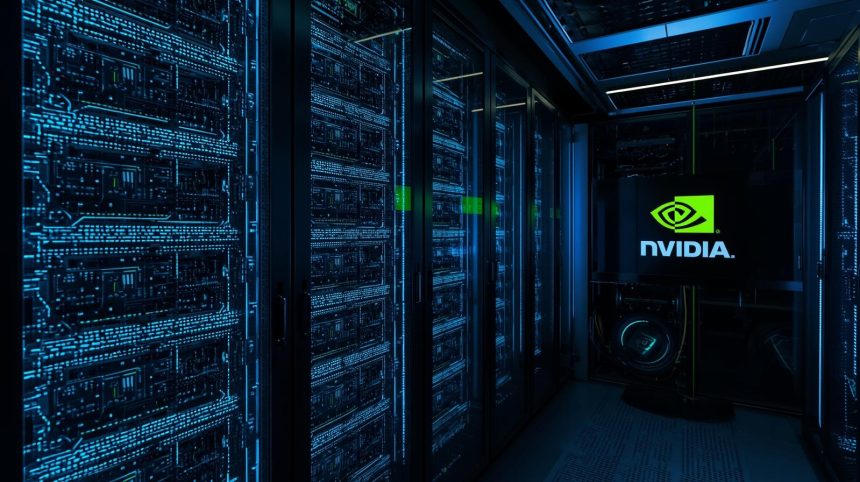
Nvidia (NASDAQ:NVDA) continues to attract attention as its stock prices climbed 2% amidst a broader market rally in the United States. The rise, which came as the Dow Jones (BLACKBULL:US30) Industrial Average increased by 348 points, underscores Nvidia’s resurgence in investor interest despite geopolitical tensions affecting global markets. Historically known for their volatility, oil price fluctuations have played a role in impacting market sentiment, yet the recent pullback in prices has provided a boost across the equities sector. This environment has set the stage for Nvidia’s notable performance.

 ETH
ETH
 SOL
SOL
 BSC
BSC
 ROBINHOOD
 USDT
USDT
 AAPL
AAPL
In earlier reports, Nvidia showed unprecedented stock growth, with shares surging over 800% between the end of 2022 and 2024. Despite a strong financial report last month, which usually acts as a bullish catalyst, the stock experienced a 5.5% drop the following day. Such fluctuations speak to Nvidia’s vulnerability to market forces but also highlight its capacity for substantial rebounds as seen in the latest session.
What Drives Foxconn’s Optimism?
Foxconn, a key partner in Nvidia’s supply chain, expressed a positive outlook for the future growth of the AI server business. Chairman Young Liu shared expectations of strong performance in this domain by 2026. These comments came during a post-earnings call that revealed a net income below analysts’ expectations but highlighted a 22% revenue growth, surpassing market predictions.

“Despite the earnings miss, we see a robust demand for AI solutions,” said Liu.
Will Nvidia GTC Impact Stock Momentum?
Market observers now gear up for Nvidia’s annual developer conference, Nvidia GTC. This event draws increased attention as investors anticipate insights into the company’s strategic direction. While Nvidia’s shares have remained relatively stable over the past six months, the conference could provide additional inputs for market participants. Nvidia CEO Jensen Huang’s keynote promises to delve into advancements in data center chip development and future revenue projections.
“We are committed to pioneering advancements in AI technology,” Huang emphasized.
AI inference workloads have emerged as a focal point in discussions at industry events, with Nvidia’s GPUs playing a crucial role in training large AI models. However, the trend is shifting, with growing emphasis on new types of chips catering to inference workloads. This changing landscape in AI processing presents competition challenges, particularly from companies like Alphabet and Meta (NASDAQ:META) Platforms, as well as collaborative advancements with partners like OpenAI.
The shift toward AI inference has critical implications for Nvidia’s future as it underscores an evolving demand landscape in the tech industry. Nvidia’s efforts to expand its reach into AI applications are a testament to its adaptive strategies in navigating this competitive sector. Insights gleaned from this conference may shed light on Nvidia’s position vis-à-vis its competitors.
Nvidia’s stock momentum reflects market confidence, fueled by the anticipation surrounding new AI developments. The ongoing conference and strategic partnerships will likely influence Nvidia’s performance metrics and investor sentiment. For stakeholders, the implications of AI industry shifts will guide strategic decision-making and investment choices as challenges and opportunities present themselves.