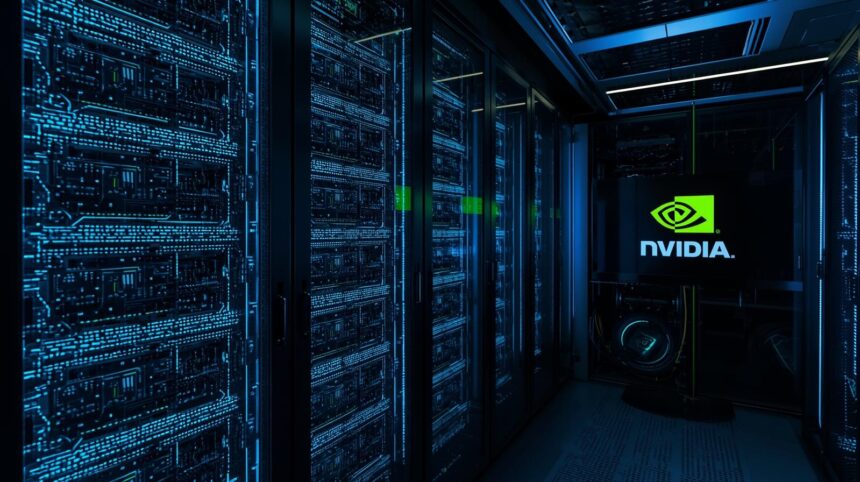
Recent developments signal a pivotal moment for Nvidia (NASDAQ:NVDA) as it regains access to the Chinese AI market, following a decision allowing its H200 GPU to be sold in China under stringent conditions. This comes after extensive lobbying efforts by Nvidia’s CEO, Jensen Huang, who has been at the forefront of advocating for renewed business opportunities in China, a key market with substantial revenue potential. The decision reflects the delicate balance of maintaining U.S. national security while fostering international business ties, particularly in the tech industry, where geopolitical tensions have significant implications.

 ETH
ETH
 SOL
SOL
 BSC
BSC
 ROBINHOOD
 USDT
USDT
 AAPL
AAPL
Historically, Nvidia’s navigation through restrictive policies has been challenging. Initially, Nvidia’s attempts to sell the H20 faced barriers under the Trump administration, resulting in a temporary blockage that mirrored the complex trade dynamics between the U.S. and China. Over time, these shifts in policy have highlighted the intricate trade-offs between economic interests and national security concerns. Amid these uncertainties, Nvidia’s lobbying strategies have showcased its capacity to adapt to policy changes, underlining the competitive nature of the global semiconductor industry.
What Led to Nvidia’s Successful Deal?
The approval to sell the H200 chipset, which is considerably more powerful than the H20, marks a significant turnaround from previous bans. Jensen Huang played a crucial role in this outcome, focusing on showcasing the benefits of U.S. technology dominance in AI hardware. His engagement with policymakers underscores Nvidia’s intent to resolve trade barriers through persuasive dialogue. The commitment to navigating through complex geopolitical waters demonstrates Nvidia’s strategy to sustain and expand its market reach globally.

Why is This Decision Controversial?
Concerns arise as this decision may impact U.S. national security and technological leadership. Experts argue that the approval could enable Chinese companies to enhance their technological capabilities, thereby challenging U.S. supremacy in the AI sector. Critics, including national security experts, have voiced reservations about the long-term implications of such agreements on the United States’ competitive edge. While the approval offers Nvidia substantial market opportunities, it inadvertently stirs discussions about the strategic consequences for the U.S.
President Trump’s announcement included additional measures beyond Nvidia, extending similar approvals to AMD (NASDAQ:AMD) and Intel (NASDAQ:INTC). This reflects a broader regulatory approach aimed at addressing industry-wide concerns, despite opposition from some quarters emphasizing national security risks. The deal involves a transactional element, with a proposed revenue share arrangement, reviving earlier discussions for similar financial agreements with the U.S. government, enhancing fiscal interests amid bilateral trade negotiations.
Jensen Huang stressed the importance of this decision for U.S. manufacturing.
“We applaud President Trump’s decision to allow America’s chip industry to compete,”
said Nvidia, highlighting the alignment of economic interests with domestic technological development efforts. While the deal opens doors for Nvidia, it remains framed within the context of safeguarding U.S. technological advancements, as articulated by Trump.
“[The deal] will support American jobs and strengthen U.S. manufacturing,”
Trump stated, emphasizing the domestic advantages of such agreements.
As Nvidia ventures back into Chinese markets, attention turns to the long-term consequences and potential geopolitical shifts in tech supremacy. This development, though engaging, still underscores the ongoing debates about the delicate equilibrium between national security and economic interests in the realm of technology exports. The implications of China’s regulatory measures and their impact on U.S. tech firms present continuing challenges, shaping the future of international tech diplomacy and trade relationships.