
 ETH
ETH
 SOL
SOL
 BSC
BSC
 ROBINHOOD
 USDT
USDT
 AAPL
AAPL
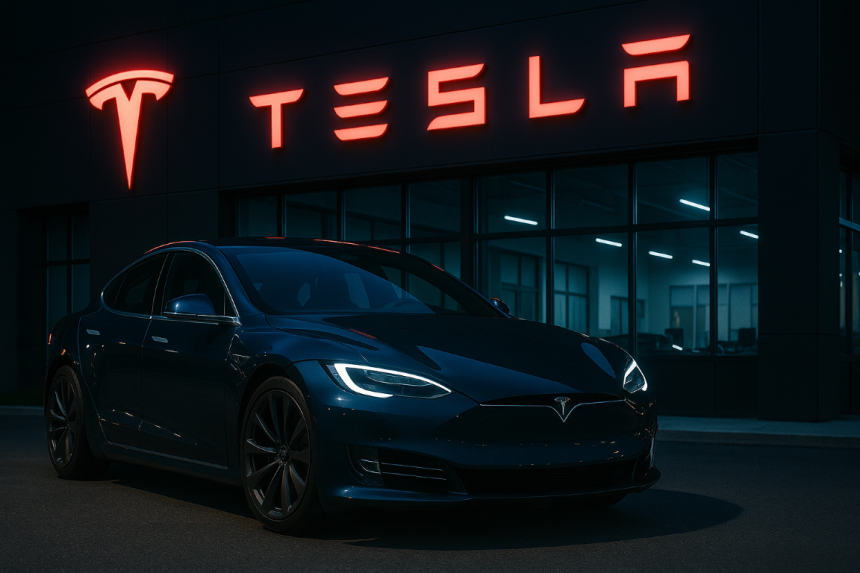
Tesla (NASDAQ:TSLA) is encountering dynamic shifts as it broadens its focus from electric vehicles to include artificial intelligence and robotics, creating an atmosphere of uncertainty among investors. CEO Elon Musk’s evolving priorities, including advances in AI and the Optimus robot lineup, are adding new dimensions to Tesla’s journey. Meanwhile, analysts are divided, reflecting a volatile landscape for Tesla’s stock price predictions, ranging from potential highs of $500 to potential lows of $300. These complexities prompt stakeholders to evaluate their investment strategies in light of Tesla’s rapidly changing vision.
The assessment of Tesla’s future is notably inconsistent among Wall Street analysts, who struggle to find common ground due to Musk’s unpredictable approach and Tesla’s foray into non-automotive ventures. Looking back, Tesla’s focus heavily leaned towards electric vehicles, defining its global image as an EV leader. However, Musk’s recent statements highlight a strong intent to make significant strides in the fields of AI and robotics, posing a dilemma for investors accustomed to Tesla’s traditional market positions. Analysts’ concerns about the future profitability of these ventures add another layer of complexity to the stock’s projections.

What is the Market Consensus on Tesla’s Stock?
The topic of Musk’s strategic pivot brings forth discussions about Tesla stock’s trajectory, which lacks a definitive stance among market watchers. On Wall Street, analysts are split with some advocating for a strong buy, while others advise holding or even selling. The result is a varied range of stock price targets for Tesla, averaging around $401.24, a figure that indicates a projected decline. In comparison, 34 analysts show strong disagreements with forecasts differencing widely, thereby heightening the unpredictability and wariness among investors.
Can Tesla Overcome the Automotive Division’s Revenue Drop?
Tesla’s financial health shows vulnerabilities primarily in its automotive division, which once served as the company’s cornerstone. Recent reports indicate an 11% drop in automotive revenue in Q4 2025, reflecting challenges amidst an overall 3% decline in total revenue from the previous year. While other business areas, like energy generation and services, saw revenue growth, the automotive sector remains crucial. This contraction raises questions about Tesla’s reliance on its core business and the sustainability of its newer ventures. The stock’s response to this mixed financial performance contributes to the overall market uncertainty.
A focal point for Tesla’s emerging narrative centers around new projects like the Gen 3 Optimus robot and advancements in AI. These initiatives highlight Musk’s shift towards enhancing Tesla’s innovation portfolio beyond automotive manufacturing. As part of this transition, the company is advancing AI capacity at the Gigafactory Texas, underlining Tesla’s intent to integrate these technologies further into its business model. However, skepticism persists among some analysts who question the financial returns of such ambitious projects and whether they justify the associated high costs.
The move towards AI and robotics embodies Musk’s ambitious strategy for Tesla, likely to appeal to investors confident in disruptive technologies as lucrative ventures. Some analysts predict significant stock gains if these endeavors align with market expectations, potentially reaching $500. Conversely, doubts about the venture’s profitability might result in a downturn, with shares potentially dipping to $350, influenced by investor apprehensions and Musk’s uncertain pathway.
Tesla’s financial undertaking in its advanced projects remains understated, gesturing towards a strategy reliant on considerable capital commitments. Maintaining investor confidence heavily depends on demonstrating that these investments yield substantial long-term returns. Musk’s dynamic approach to Tesla’s direction, although innovative, leaves investors juggling caution with optimism, highlighting the company’s status as a risky yet potentially rewarding investment.
Tesla’s shift from its traditional automotive focus presents a risk-laden yet intriguing opportunity to redefine its market positioning. As the company invests in AI and robotics, stakeholders weigh the potential benefits against the probability of achieving sustainable financial outcomes. Investors continue to deliberate on whether Tesla’s innovations can fulfill high expectations amidst evolving market trends.