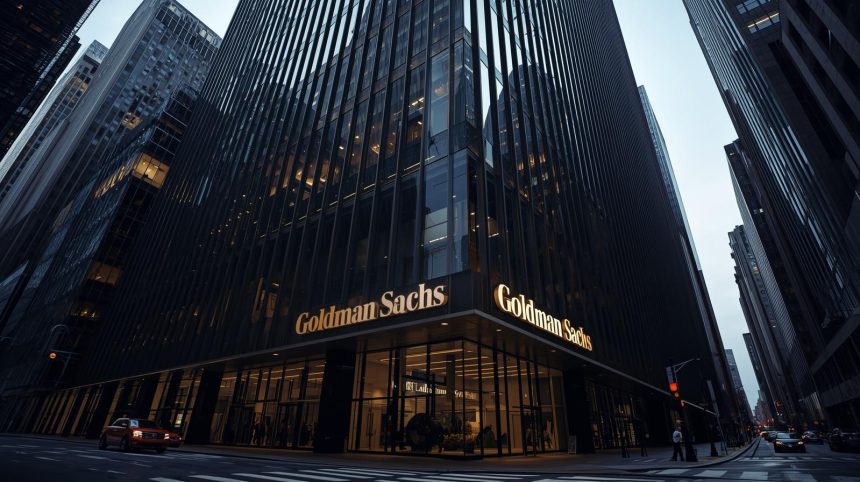
Goldman Sachs (NYSE:GS) has signaled a strong commitment to private credit investments, even as market volatility introduces increased risks. The firm’s recent earnings call addressed the complex landscape of potential opportunities coupled with significant market uncertainties. With a focus on long-term growth, Goldman Sachs remains undeterred by current challenges, maintaining a positive outlook on private credit’s potential. The ongoing conflict in the Middle East, coupled with AI-driven market disruptions, adds layers to the existing financial landscape. However, the company emphasizes its dedication to navigating these uncertainties and capitalizing on available opportunities.

 ETH
ETH
 SOL
SOL
 BSC
BSC
 ROBINHOOD
 USDT
USDT
 AAPL
AAPL
Goldman Sachs’ recent activities mark a continuation of its established strategy in private credit. Previous statements from the company have consistently underlined the potential of private credit as a significant component of its portfolio, and this perspective remains unchanged despite fluctuating market conditions. Historically, private credit has offered robust returns, and Goldman Sachs seems poised to uphold its reliance on this segment. The firm’s steadfast approach underlines its commitment to leveraging private credit’s benefits while managing the associated risks.
How is Goldman Sachs Enhancing Digital Engagement?
Goldman Sachs has observed a notable rise in digital interactions, reflecting broader market trends. Recently, the firm’s digital platforms, including Marquee, have seen user engagement climb by over 30% year-over-year. Such growth underscores clients’ increasing reliance on digital tools for market insights and transactions. Infrastructure enhancements further complement these trends. As noted by Denis Coleman, ramped-up investments in cloud technology and data systems aim to boost the firm’s operational efficiency through improved AI-driven solutions.

What Are Goldman Sachs’ Strategies for Deposit Growth?
Goldman Sachs is actively advancing its deposit strategy alongside funding and lending initiatives. Significant deposit increases were recorded, largely via the Marcus platform, reinforcing the firm’s funding objectives. Achieving a $60 billion rise over the previous year, the firm leverages these deposits as a strategic financial resource. Furthermore, expanded lending activities across diverse financial segments mirror Goldman’s broader financial strategy, emphasizing its role in equity financing and corporate loans.
Chief Executive Officer David Solomon offered insights into the private credit landscape, highlighting $3.5 trillion in assets within the broader market, with direct lending contributing significantly. Goldman Sachs’s involvement in direct lending, defined by a large retail audience, aligns with global trends stressing institutional engagement. A notable 40% of recent subscriptions came from institutional sources, reinforcing a diverse partner mix of insurance firms, banks, and pension funds.
Within consumer credit, Goldman Sachs has demonstrated a shift, repositioning its credit card services to better align with institutional priorities. The decision to categorize the Apple (NASDAQ:AAPL) Card portfolio as held-for-sale illustrates a strategic refocus. Reflecting this direction, provisions for credit loss have increased, indicating adjustments in the firm’s financial strategy towards institutional channels.
As Goldman Sachs adapts to the evolving regulatory and financial environment, the company’s leadership remains optimistic about future market dynamics. A more balanced regulatory landscape is anticipated, likely influencing the firm’s expansion into diverse market segments. Despite a slight decline in stock performance during intraday trading, the company projects sustained client engagement and growth.
Private credit investments continue to serve as a crucial pillar for Goldman Sachs, reinforcing their market position amidst broader economic shifts. By capitalizing on digital engagement, increasing deposits, and realigning focus from consumer-facing to institutional activities, Goldman Sachs aims to secure its long-term standing in financial markets. Understanding these strategies offers insightful perspectives on the firm’s approach to balancing risk and reward.