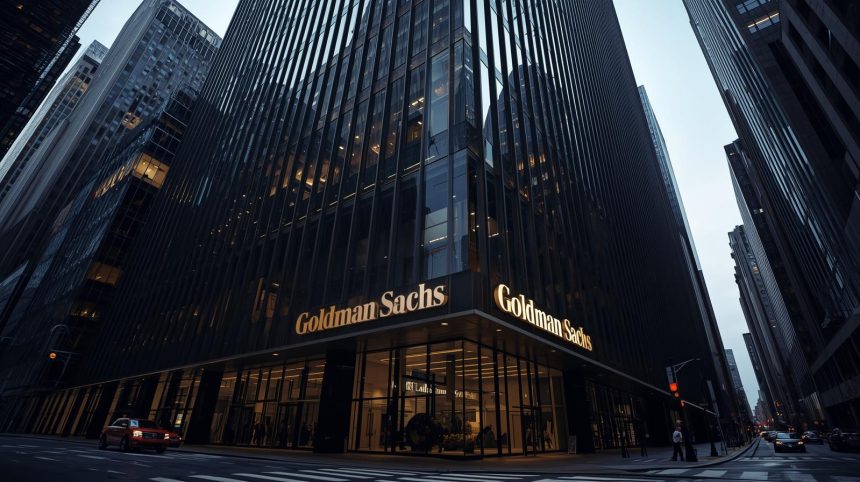
Goldman Sachs (NYSE:GS)’ recent acquisition of a significant XRP holding has drawn considerable attention, considering most investors have been distancing themselves from this cryptocurrency. The move comes at a time when the cryptocurrency market is experiencing volatility, with XRP taking a notable hit. Goldman Sachs, however, invested in XRP through four different ETFs, a move that constitutes 73% of all institutional XRP ETF holdings disclosed publicly in the U.S. This strategic divergence raises questions about Goldman’s intentions and insights into the market.

 ETH
ETH
 SOL
SOL
 BSC
BSC
 ROBINHOOD
 USDT
USDT
 AAPL
AAPL
Historically, financial institutions have shown varying degrees of interest in cryptocurrencies like XRP. Previous trends indicated a heightened institutional interest when prices surged, but the market sentiment shifted as volatility increased. Comparatively, Goldman’s substantial engagement with XRP amid its declines, diverges from earlier patterns, suggesting a calculated strategy rather than a reactionary investment.
Goldman’s $153.8 Million XRP Investment
In their Q4 2025 SEC filing, Goldman Sachs disclosed a sizable $153.8 million investment in XRP through multiple spot ETFs. The allocation spanned issuers including Franklin Templeton, Bitwise, Grayscale, and 21Shares, which indicates an intention to diversify rather than concentrating funds in one vehicle. This acquisition, made during a downward trend in XRP’s market performance, reveals a potentially unique strategy from Goldman.

The firm’s XRP holdings are part of a broader $2.3 billion cryptocurrency portfolio, positioning XRP significantly although not as its largest digital asset. Compared to well-established Bitcoin and Ethereum ETFs, Goldman’s decision to engage with relatively new XRP ETFs is noteworthy.
Reasons Behind XRP’s Divestment by Others?
While Goldman Sachs strengthens its position in XRP, numerous retail investors and larger wallet holders offload this asset. Approximately 60% of the holders are reportedly experiencing losses, prompting increased selling pressure. This includes 3.8 billion XRP moving onto platforms like Binance as investors seek alternative options.
The decline of XRP’s market price persists, with 36.8 billion XRP held at values exceeding current rates. Data suggests frequent sell-offs occur when prices near $1.44 due to traders seeking to cut losses or break-even. Consequently, major inflows to XRP ETFs decreased significantly, reflecting the prevailing market sentiment.
Changes for XRP Since the Investment?
In addition to market liquidation, XRP encountered developments such as its integration into mainstream financial infrastructure. Ripple’s addition to the DTCC clearing directory and inclusion in Mastercard (NYSE:MA)’s Crypto Partner Program highlight potential institutional acceptance. Still, these advancements did not immediately translate to a price increase.
Ripple Prime’s ongoing activities within tokenized finance further indicate momentum toward institutional acceptance. This includes a recent share buyback program valuing the company at $50 billion, enhancing its market credibility despite the SEC’s regulatory framework changes.
With the CLARITY Act potentially affirming XRP’s commodity status, institutional engagements may strengthen. Industry insiders anticipate that legislative approval could prompt a surge in institutional participation, though this remains contingent on Congress passing the Act soon.
Goldman’s decision to buy into XRP, despite the general trend of divestment, poses intriguing possibilities for the asset’s future. Their strategy remains under scrutiny, with sector analysts awaiting further institutional filings to determine if these positions foreshadow broader adoption or function as market hedges.
Upcoming May filings will shed light on Goldman’s strategic posture regarding XRP adjustments. Performance indicators reveal whether Goldman’s optimism persists amid market turbulences. As institutional decisions often influence wider market sentiment, these developments could further impact XRP’s positioning within financial portfolios.