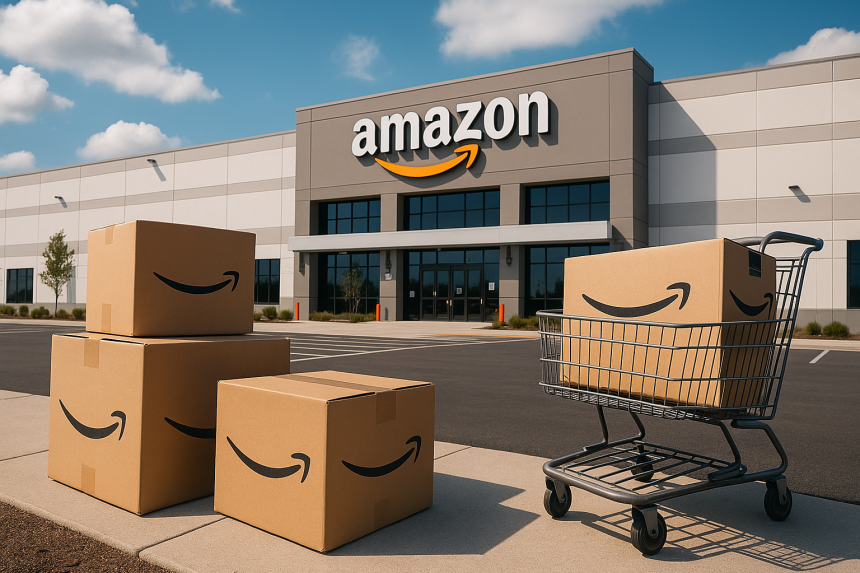
FedEx, a giant in the logistics industry, has addressed concerns related to Amazon (NASDAQ:AMZN)’s emerging supply chain service, emphasizing the differences in their business models. The conversation around Amazon’s service has sparked debates about its potential impact on the logistics landscape. Amidst these discussions, FedEx has confidently outlined its unique position in the market, underlining its operational breadth and international reach. As the sector witnesses shifts, stakeholders continue to analyze the strategic moves of key players.

 ETH
ETH
 SOL
SOL
 BSC
BSC
 ROBINHOOD
 USDT
USDT
 AAPL
AAPL
Amazon’s Supply Chain Services (ASCS) aims to provide businesses with access to its shipping and fulfillment infrastructure. This move is being compared to Amazon Web Services’ effect on the cloud industry. However, differentiators in logistics and computing scalability call into question the validity of this analogy. Conversations in recent years have often spotlighted ASCS parallels to AWS, yet fundamental operational distinctions remain. FedEx takes these nuances into account, positioning itself based on its established global network.
How Does FedEx View the Recent Developments?
FedEx’s CEO, Raj Subramaniam, discussed concerns about Amazon’s recent supply chain service, explaining why it poses no threat to FedEx. He emphasized that FedEx operates a comprehensive global network with unique capabilities not matched by Amazon’s latest offering.

“Last week’s announcement versus what FedEx operates is completely different,” Subramaniam remarked.
His comments underscore FedEx’s assertion that its extensive logistics network differentiates it from Amazon’s new service.
What Are the Core Differences Between Amazon and FedEx?
FedEx distinguishes its services by emphasizing its high level of integration and global reach, contrasting it with Amazon’s third-party logistics focus. Amazon’s service, largely viewed as an expansion of existing capabilities rather than entirely new offerings, centers around its existing market strength in eCommerce logistics. According to Subramaniam, the operational differences are significant.
“The true network is something you can pick up in any one part of the world and get it to any other part of the world in a couple of days,” he said.
This highlights FedEx’s infrastructure which spans continents, enabling rapid global transit.
Barclays analysts view Amazon’s move as more of a strategic repositioning than a direct threat to competitors. They argue Amazon’s announcement was a rebranding rather than a disruptive market change, suggesting existing capabilities remain largely the same. FedEx’s sizeable market presence and annual revenues reflect solid performance metrics, providing a stable hold in logistics despite competitive pressures.
FedEx’s confidence stems from its established track record and expansive operations, which cover far more than third-party logistics. The company’s broad logistics services, coupled with significant revenue forecasts exceeding $93 billion, serve as evidence of its robust industry stature. Despite Amazon’s ambitious positioning, FedEx remains focused on its core strengths, leveraging its network and expertise to maintain a competitive edge.
Understanding the logistics giants’ differing strategies is crucial for predicting long-term industry trends. FedEx’s assurance in its strategic approach highlights the nuanced dynamics of global logistics. While Amazon seeks to streamline efficiencies through network density, FedEx prioritizes unparalleled reach and integration. Industry observers continue to monitor these developments to assess future impacts on market stability.