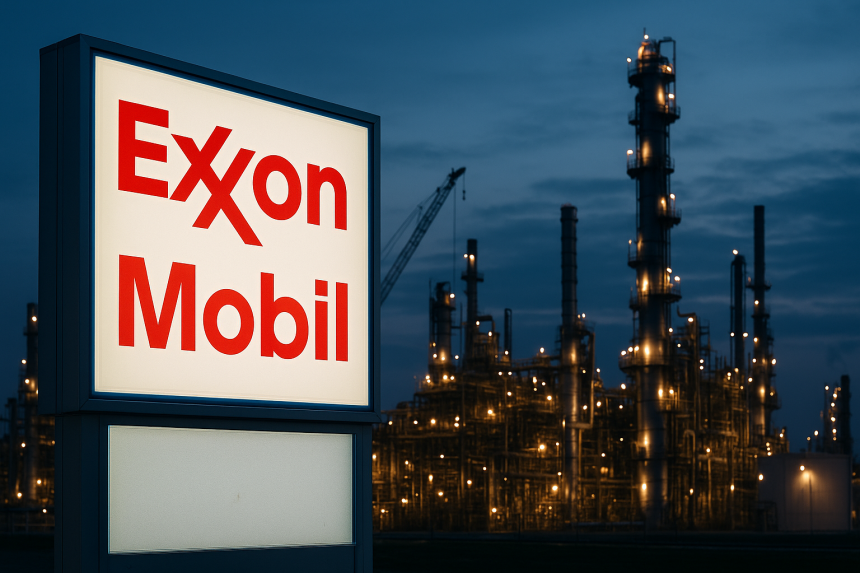
Exxon Mobil (NYSE:XOM) has reported its strongest quarterly profit in four years, signaling a robust rebound for the energy giant. The company’s shares have also experienced a significant climb, marking a peak for this period. However, investors face a challenging decision with the price target suggesting a potential downside. Examining Exxon’s broader performance, the firm has shown resilient operational strength but is currently valued at a premium, limiting room for future growth.

 ETH
ETH
 SOL
SOL
 BSC
BSC
 ROBINHOOD
 USDT
USDT
 AAPL
AAPL
Over the years, Exxon Mobil’s strategic operations and market presence have fluctuated in tandem with global economic and environmental changes. In its latest earnings report, Exxon highlighted substantial structural cost savings and increased output from its assets, notably in Guyana and Permian regions. Such achievements have been key differentiators against peers like Chevron and ConocoPhillips, whose growth strategies were less aggressive.
What Enabled Exxon’s Profit Jump?
A notable surge in WTI oil prices by 19.8% month-over-month, along with strategic shifts in production capabilities, contributed to Exxon’s profit maximization. The company recognized $8.77 billion in underlying earnings, surpassing expectations and reflecting robust operational execution. Additionally, Exxon’s CEO Darren Woods emphasized the transformation:

“We are now a fundamentally stronger company, delivering better outcomes.”
Could Shareholder Returns Be Affected?
While shareholder returns have traditionally been a focus at Exxon, evidenced by its extensive buyback plans and 43-year dividend growth streak, the current market indicators raise questions. The company’s free cash flow witnessed a notable dip, and the forward projections for Brent crude oil prices suggest potential volatility in revenue flow. The company faces valuation scrutiny, with some market analysts questioning the long-term sustainability of its high trailing price-to-earnings multiple.
For investors, Exxon’s premium valuation has been both a point of pride and concern. Exxon’s current pricing puts it at a distinct position compared to Chevron and ConocoPhillips. With an analyst consensus suggesting around $167.09 for Exxon, comparisons with Chevron’s market forecasts highlight Exxon’s relative market overstretching.
Exxon Mobil has positioned itself as a forward-looking yet traditional energy player, maintaining a focus on legacy fuel sources while prioritizing capital discipline. Notably, Guyana’s output has exceeded projections, further affirming the company’s production leadership among peers. Despite this, the external environment, including potential energy transitions and geopolitical factors, presents risks and opportunities.
The upcoming years are poised to present critical junctions for Exxon, with a balanced approach between leveraging its asset strengths and managing its valuations. Pursuing strategic cost management and capital returns while anticipating market shifts will be crucial in navigating these waters. A key consideration remains the trajectory of oil prices and its impact on Exxon’s profitability and market positioning.