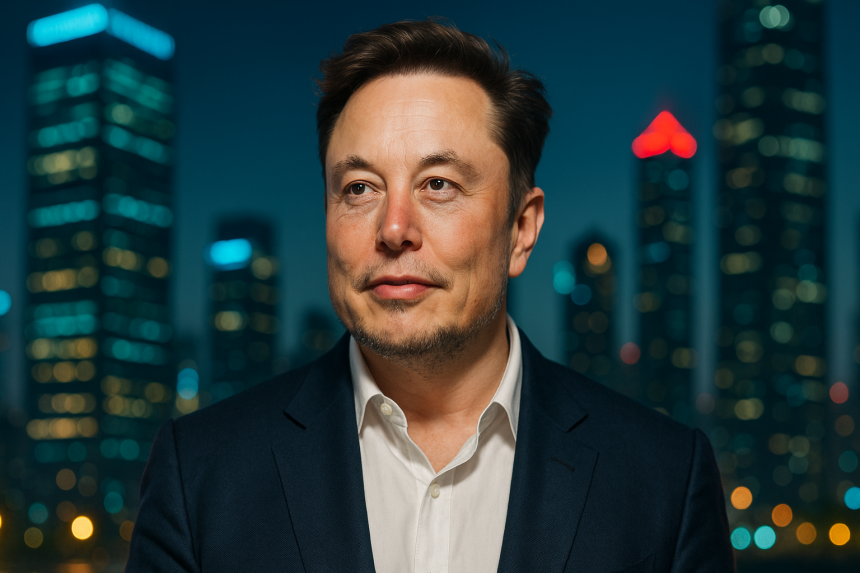
Elon Musk’s organizational endeavors are once again in the spotlight as xAI, an artificial intelligence startup, recently witnessed significant changes. Following a high-profile merger with SpaceX, xAI’s public spotlight has intensified, especially due to the unexpected resignation of key founding members. These changes come at a time when Musk gears up for a much-discussed potential IPO for SpaceX, drawing attention from industry watchers and critics alike.

 ETH
ETH
 SOL
SOL
 BSC
BSC
 ROBINHOOD
 USDT
USDT
 AAPL
AAPL
In recent events, the departure of Yuhuai (Tony) Wu and Jimmy Ba marks another turn in the story of xAI, which was launched a few years earlier. xAI had attracted attention due to its ambitious goals to delve deep into AI advancements. Similar resignations in the tech industry are often linked to disagreements over vision and strategy. These resignations echo a common trend where firms in rapid growth phases experience shifts in their foundational teams.
What Prompted the Departures?
The resignations of Wu and Ba were reportedly on good terms, but they underscore underlying internal dynamics at xAI. Internal sources and employees highlighted operational pressures and cultural challenges within the startup. Elon Musk explained the exit as a necessity due to the evolving structure of the company.

“As a company grows, especially as quickly as xAI, the structure must evolve just like any living organism. This unfortunately required parting ways with some people,”
Musk stated, reiterating his support for the departing members’ future endeavors.
Is There a Disconnect at xAI?
Some former employees mentioned discontent over xAI’s current direction and the work culture. Vahid Kazemi, who worked on audio models at xAI, criticized the lack of innovation.
“All A.I. labs are building the exact same thing, and it’s boring,”
Kazemi expressed on social media, adding his plans to pursue new creative ventures. Such sentiments further fuel the discourse around employee satisfaction in tech startups.
Despite these challenges, xAI continues as a subsidiary of SpaceX, facing legal scrutiny over Grok, one of its projects. The leadership style at xAI, characterized by long work hours and ambitious deadlines, remains a topic of discussion in tech circles. These issues add layers to xAI’s evolving narrative as it moves through its organizational transformation.
The departure list includes founders and former industry leaders like Mike Liberatore, Greg Yang, and Christian Szegedy, among others. Each had significant roles at xAI and has since moved to other ventures or remains involved in AI-related projects elsewhere. The challenge for xAI will be to maintain its momentum amid such turbulence.
Elon Musk’s leadership decisions have historically sparked both innovation and criticism, particularly about management approaches within his companies. As xAI navigates these personnel changes, its ability to attract and retain talent will decidedly influence its growth trajectory and innovation capacity.
Understanding the intricacies of company culture and vision alignment is vital as xAI positions itself in the AI sector. For stakeholders, these changes highlight the volatile yet potentially rewarding nature of the tech startup environment. Insights from these shifts could provide valuable lessons for similar enterprises.