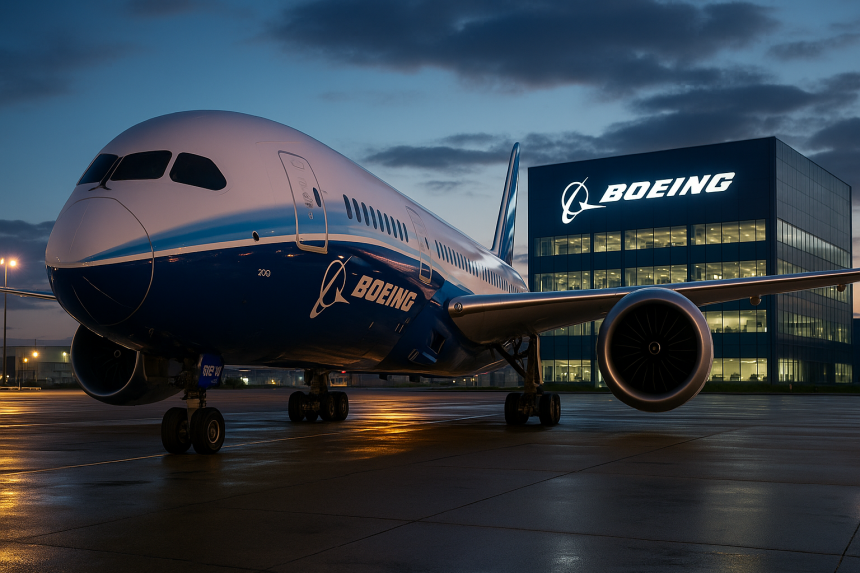
Boeing, a globally recognized aerospace giant, is in the preliminary stages of considering new airplane designs but isn’t ready to make any official announcements just yet. CEO Kelly Ortberg, appointed in August 2024, notes that the company is meticulously weighing its options. The ongoing analysis focuses on establishing a design baseline and subsequently refining it. Boeing’s approach involves not merely creating new designs but ensuring that every new development phase is tactically aligned with current and future market demands. This cautious strategy reflects the industry’s competitive landscape and complex financial considerations.

 ETH
ETH
 SOL
SOL
 BSC
BSC
 ROBINHOOD
 USDT
USDT
 AAPL
AAPL
What reasons contribute to Boeing’s current focus on financial stability?
Historically, financial stability has been a cornerstone for major aerospace developments, and Boeing appears to be aligning with this philosophy. Ortberg indicates that before introducing a new airplane model, Boeing aims to fortify its financial position and enhance technological capabilities. This viewpoint illustrates that ensuring a solid financial baseline is critical to advancing manufacturing and delivery operations. Addressing financial challenges remains pivotal, linking closely to the successful delivery of models like the anticipated 777X jet, which has experienced delays.
How does Boeing plan to address its backlog of orders?
Boeing’s strategy to manage its backlog involves prioritizing the delivery of existing orders and models, such as the 777X, which remains in the U.S. as Boeing awaits FAA approval. Kelly Ortberg acknowledges,

“Orders are not our challenge. Our challenge is getting these orders delivered.”
These complexities illustrate a broader strategy of stabilizing production capabilities before expanding the product line further.
Meanwhile, advancements on the 737 MAX series continue as the FAA may soon approve the 737 MAX 7, with the larger MAX 10 following shortly. This progressive certification timeline is part of Boeing’s broader aim to balance current operational demands and future product innovations.
The demand from airline clients also guides Boeing’s current emphasis. Ortberg emphasizes that customers desire improved production efficiency and reliability across the existing aircraft lineup.
“Certainly, getting our financial house in order is a part of our being ready,”
he reiterated, underscoring how customer expectations tie into Boeing’s strategic objectives.
Market dynamics between Boeing and Airbus carry strategic importance. Boeing’s potential new designs could provide a competitive edge against Airbus’ A320 family, potentially capturing market demand more effectively. The rivalry prompts innovation, but Boeing remains steadfast in balancing immediate operational priorities with long-term growth strategies.
In recent developments, Boeing has also seen an expansion of its order book, attributed in part to agreements such as China’s decision to purchase 200 Boeing jets. Such orders signify a robust demand for Boeing’s aircraft amidst its current challenges and objectives.
Boeing’s strategy reflects a multi-faceted balancing act between financial security, technological advancement, and addressing production challenges. By concentrating on delivering existing orders and enhancing reliability, Boeing aims to create a robust foundation upon which new developments can be built. The anticipated new aircraft designs will aim to outperform competitors and meet evolving industry needs. As Boeing navigates immediate challenges and plans for future innovation, these strategic initiatives will likely shape its trajectory in the commercial aircraft sector.