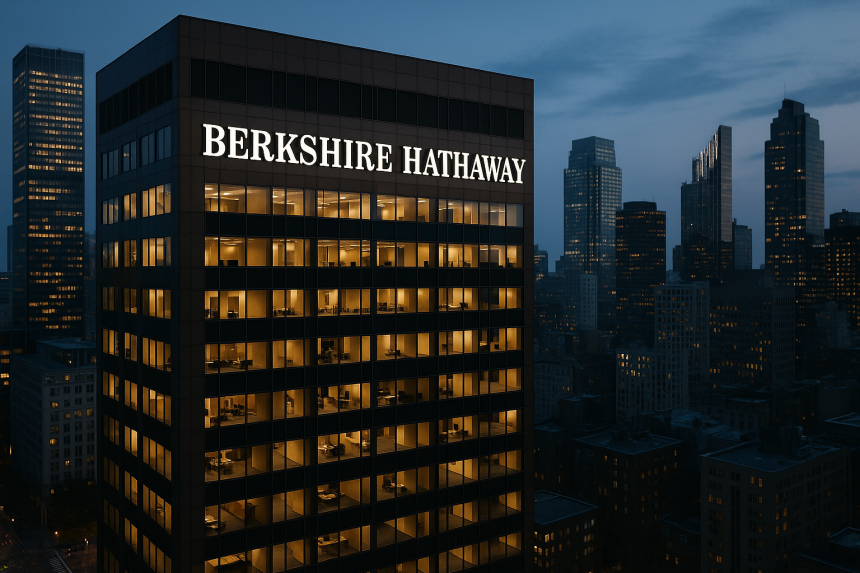
Berkshire Hathaway (NYSE:BRK.A)’s strategic maneuvers aim to counterbalance market uncertainties with solid financial planning. Leadership under Greg Abel faces the challenge of maintaining the performance consistency that the conglomerate has enjoyed for decades. With a notable $1 trillion market capitalization, Berkshire’s potential for future success hinges on its strategic use of cash reserves and adaptation to modern technological advances. Meanwhile, Pershing Square, led by Bill Ackman, seeks to capture investor interest through potential IPO launches, adding dynamics to the investment landscape.

 ETH
ETH
 SOL
SOL
 BSC
BSC
 ROBINHOOD
 USDT
USDT
 AAPL
AAPL
Historically, Berkshire Hathaway thrived under Warren Buffett, securing its position even without engaging in high-profile acquisitions. The focus was often on value and stability, in contrast to Pershing Square’s recent turbulence. Despite Ackman’s celebrity status, his fund faces performance challenges, affected by a 16% decline in Pershing Square Holdings share value this year. Berkshire seems positioned to leverage artificial intelligence technologies across its subsidiaries, including GEICO and Berkshire Hathaway Energy, thereby encouraging potential long-term growth.
What Is Driving Berkshire’s Current Strategy?
Berkshire Hathaway’s stock buyback plan suggests the company’s belief in its undervaluation, setting a bullish outlook for stakeholders. Although its shares have been slightly outperforming the S&P 500, investor concerns linger about the post-Buffett era. Leveraging AI within its operations signals an intent to harness emerging technologies for enhanced operational efficiency. Greg Abel’s leadership tenure, though nascent, is shaping strategies to stimulate growth amidst evolving market demands.

Is Pershing Square’s IPO a Risk Worth Taking?
The introduction of Pershing Square’s IPOs highlights Bill Ackman’s intent to build a significant stand-alone entity akin to Berkshire. Despite current share devaluation, Ackman aims to attract investor confidence by offering “free” shares in one of the new funds. The uncertainties in fee structures raise questions among potential investors, though Ackman’s long-term track record remains noteworthy. Ackman has articulated the plans as an effort to build a firm that mirrors the success of Berkshire Hathaway.
“Building an entity like Berkshire is ambitious but achievable,” said Ackman.
Comparatively, the success of Berkshire Hathaway may serve as both inspiration and benchmark. The firm’s ability to integrate artificial intelligence into business operations suggests readiness to evolve with technological trends. Greg Abel emphasizes that enhancing core business through technical innovation stands as a priority over traditional acquisition strategies.
“We are committed to integrating AI technologies to drive future growth,” Abel stated.
While Ackman’s tactical flares are appreciated, potential investors might prefer Berkshire’s dependable legacy. The utility of AI within Berkshire’s operations represents a crucial competitive edge. As Abel continues to focus on strategic and technological growth, this might validate investor trust in Berkshire, offering avenues for sustained, albeit cautious, prosperity.
Transitioning into 2026, these corporate narratives reflect broader market trends where technology becomes a keystone for profitability. Investors assessing their options between Berkshire Hathaway and Pershing Square must consider elements of leadership stability, past performance, and technological opportunity. Knowledge of historical performance, existing market conditions, and strategic changes will be central to informed investment decisions. Avaialability of such data-driven insights serves as a foundation for future investment strategies.