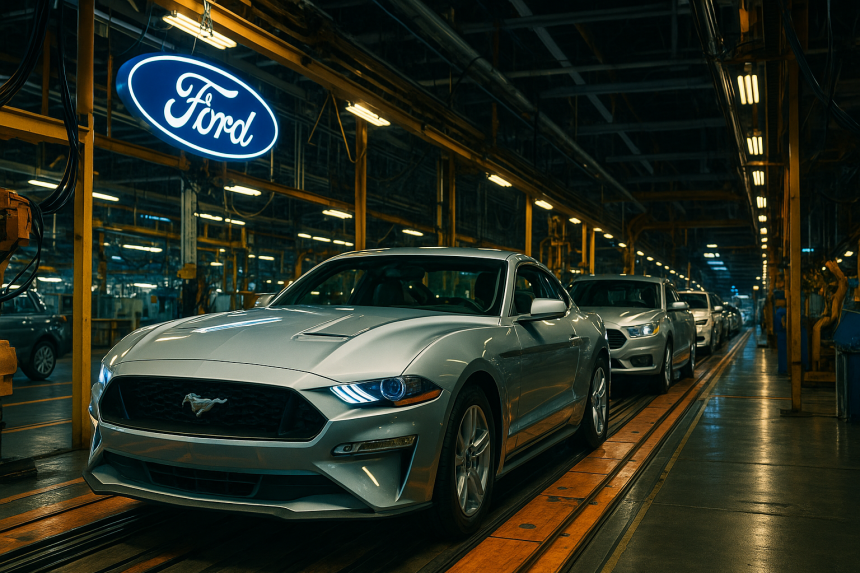
Ford and Rivian, two significant players in the automotive industry, have recently garnered contrasting forecasts from Bank of America (BofA). With Ford’s future appearing optimistic due to market strategies and evolving technological trends, Rivian faces a less favorable outlook. Investors are keenly observing these developments, especially as regulatory transformations are set to influence their trajectories. The differing approaches of these companies underscore a broader shift in the industry, prompting stakeholders to reassess their expectations.

 ETH
ETH
 SOL
SOL
 BSC
BSC
 ROBINHOOD
 USDT
USDT
 AAPL
AAPL
Historically, Ford and Rivian have navigated the evolving automotive landscape with different strategies. Ford, with its established presence, leverages its commercial vehicle segment, while Rivian, a newer entrant, aims to carve a niche in the electric vehicle market. Previous analyst reports highlighted Ford’s committed pursuit of EBIT targets through its Ford Pro ambitions, emphasizing a structured approach quite distinct from Rivian’s pursuit of expansion amid market fluctuations. As these companies face varied challenges in refining their business models and attracting investors, BofA’s latest ratings are pivotal in shaping perceptions and decisions within the investor community.
What Are the Implications for Ford?
The implications of BofA’s Buy rating on Ford, with a price target of $17, influence market perceptions positively. Ford’s commercial vehicle unit, Ford Pro, expects EBIT between $6.5 billion and $7.5 billion by 2026, showcasing growth potential. CEO Jim Farley expressed confidence in achieving an 8% adjusted EBIT margin by 2029.

“Moving forward, we’ll continue building on our strong foundation to achieve our target of 8% adjusted EBIT margin by 2029.”
Why Is Rivian Underperforming?
Rivian, with an Underperform rating from BofA and a $14 target price, is trading below the current market value. Such a position highlights challenges faced by Rivian, notably a 45% decline in Q4 automotive revenue and diminished regulatory credits. These challenges are compounded by federal tax credits expiring, impacting Rivian’s financial performance significantly.
In a volatile market that is slow to adopt their strategies, Ford’s establishment and revenue growth plans stand in stark contrast to Rivian’s tumultuous financial data. While Ford’s stock sees room for a 30% increase from its current $13.04, Rivian struggles with market rates slightly above BofA’s target, indicating market skepticism about its growth trajectory.
Bank of America’s contrasting assessments reflect deeper trends within the automotive world. Ford’s reliance on its commercial segment shows opportunity, whereas Rivian’s ambitious expansion doesn’t align with its current financial reality. With Rivian’s market value under scrutiny, the launch of its R2 model will be crucial, yet overshadowed by regulatory challenges.
As investors assess these insights, both Ford and Rivian face pivotal moments in their operational timelines. Regulatory factors are crucial determinants in industry strategies, affecting everything from market performance to product evolution. For investors, these insights into Ford and Rivian’s differing market strategies emphasize a need for careful consideration of regulatory dynamics and their implications.