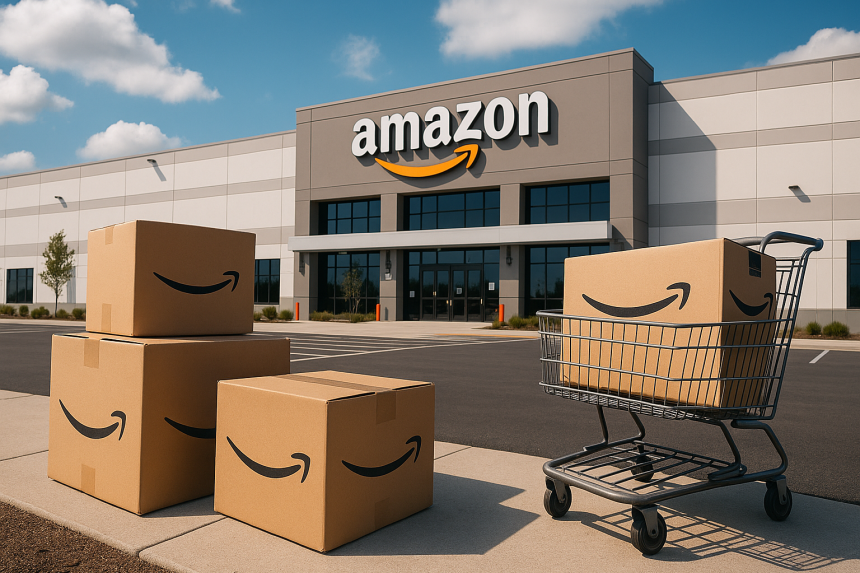
Amazon (NASDAQ:AMZN)’s investment in the United Kingdom has shown significant progress, sparking discussions about its strategic implications. Originally pledging to invest £40 billion from 2025 to 2027, Amazon recently announced it has already spent £15 billion. With this financial input, the company aims to not only enhance its operational capabilities but also contribute positively to the UK’s economy. By opening logistical hubs and investing in new technologies, Amazon is poised to reshape various sectors of the British market. This development raises questions about larger economic trends and how tech giants are adapting to evolving market dynamics.

 ETH
ETH
 SOL
SOL
 BSC
BSC
 ROBINHOOD
 USDT
USDT
 AAPL
AAPL
In early 2023, Amazon’s move to integrate its Pay By Bank service into the British market marked a significant shift in payment strategies. Prior to this, traditional payment methods like bank cards dominated. With the introduction of account-to-account payments, Amazon sets a new standard of convenience and security, offering efficient alternatives that may become instrumental in everyday transactions. The decision to weave this service into Prime memberships underscores a keen focus on embedding new payment habits among consumers.
What Does the Investment Entail?
Amazon’s £15 billion investment in the UK encompasses various projects, including opening new operation sites, advancing drone delivery technology, expanding studio production activities, and unveiling a new London campus. Additionally, Veeqo, a startup acquired by Amazon in 2021, has launched a new development center. These initiatives not only expand Amazon’s local presence but also aim to stimulate the broader economy, creating a multiplier effect. The company anticipates its investments will contribute an estimated £38 billion to the UK’s GDP.

How are Competitors Reacting to Market Changes?
Amazon’s strategic moves in the UK highlight growing challenges for competitors like Walmart (NYSE:WMT). Amid shifting consumer expectations and fast-paced technological advancements, these companies are redefining retail dynamics. Both Amazon and Walmart now aim to have greater control over retail systems, focusing less on direct sales and more on scalable, diversified revenue streams. This includes areas such as cloud computing, logistics, and AI infrastructure.
“Our approach is not just about selling products. We are building a robust tech ecosystem, aiming for sustainable growth,” said an Amazon representative.
Amazon’s latest initiatives, including AI-powered shopping assistants, further reflect its focus on serving broader commercial environments. By offering innovative technological solutions to third-party retailers, Amazon embeds itself deeper into competitors’ operations while simultaneously creating new pathways for revenue. This expanded role underlines Amazon’s intent to remain at the forefront of modern retail technologies.
“The integration of cutting-edge solutions into our partners’ ecosystems signifies the next step in our strategic journey,” another spokesman clarified.
Amazon’s commitment to the UK exemplifies a strategy that balances traditional retail with emerging revenue streams. By prioritizing technological investments, the company aims to maintain a stable market position amidst competitive pressures. Understanding Amazon’s evolving approach provides valuable insight into the tech-driven future of retail. Stakeholders should anticipate continual transformations that are likely to redefine consumer and business interactions alike.