
 ETH
ETH
 SOL
SOL
 BSC
BSC
 ROBINHOOD
 USDT
USDT
 AAPL
AAPL
The retail market is undergoing a significant evolution as major players like Amazon (NASDAQ:AMZN) and Walmart (NYSE:WMT) redefine their strategies to remain relevant. In a bid to capture consumer attention and streamline shopping experiences, both companies are implementing innovative approaches that could reshape the industry’s future. While Amazon has traditionally dominated eCommerce, and Walmart has excelled in physical retail, the two giants are exploring new avenues to expand their influence. These shifts indicate a broader trend in retail where established roles are being challenged and reimagined. Consumer expectations are evolving, and these corporations are responding by blurring the lines between physical and digital retail spaces.
What Strategy is Walmart Embracing?
Walmart has recently taken steps to align itself with technological advancements in retail. By collaborating with Google (NASDAQ:GOOGL), Walmart is embracing agentic AI, which allows shoppers to engage in streamlined transactions through conversational interactions. This signifies a pursuit of interoperability, aiming to create a seamless shopping experience across platforms. Such partnerships highlight Walmart’s inclination towards establishing open standards that can enhance user experience.

“This approach enhances the ability of consumers to interact seamlessly with our systems,”
a Walmart spokesperson commented. As retailers strive to break the traditional marketplace stereotypes, such alliances might dictate the pace and scope of future retail transformations.
Will Amazon’s Physical Expansion Pay Off?
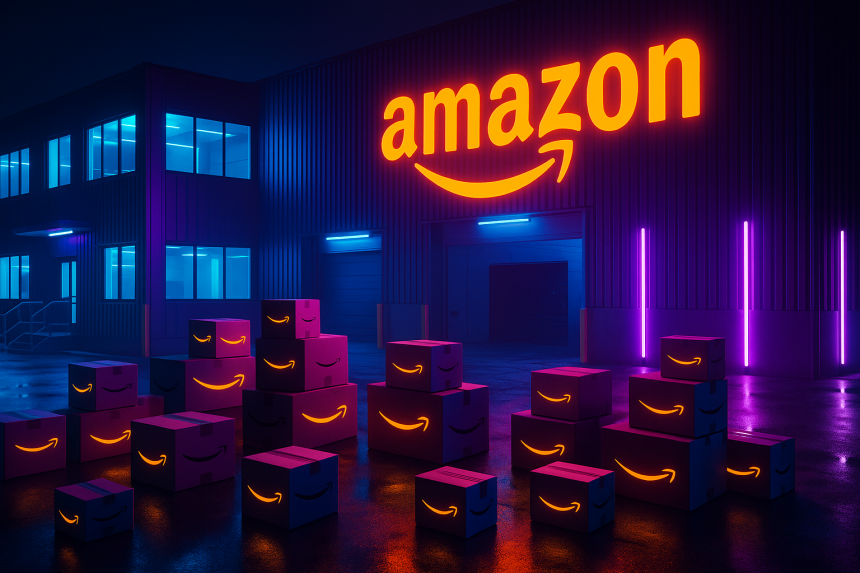
On the other hand, Amazon’s recent move to launch a 229,000-square-foot retail megastore in Chicago signals a shift toward tangible retail experiences. This megastore, blending groceries and general merchandise, underscores the importance of physical presence in Amazon’s strategy. By incorporating technology like ‘Just Walk Out’ kiosks, Amazon aims to offer frictionless shopping experiences, bridging the gap between its online dominance and physical retail ascent. This venture reflects Amazon’s acknowledgment of the value that physical stores bring in terms of instant fulfillment and customer engagement.
“Our aim is to enhance customer experience through omnichannel retail solutions,”
stated an Amazon representative.
Amazon earlier focused solely on eCommerce, reshaping how consumers purchase online. Recently, they have invested in offline avenues, including these substantial physical outlets. Walmart, on the contrary, built its empire on extensive retail chains but is now partnering with tech firms to enhance its digital operations. Their association with Google is a strategic pivot to integrate AI into their retail ecosystem. It contrasts with previous expansion efforts, reflecting their adaptive strategy against Amazon’s eCommerce expertise. Together, these firms continue to adapt based on their historic strengths and emerging market demands.
The strategies of both retailers showcase a divergence where individual strengths are being leveraged creatively. By following a different trajectory, Amazon and Walmart find themselves in varied competitive landscapes. Walmart’s use of partnerships to create open systems contrasts with Amazon’s move to house unique proprietary technologies in physical spaces. Although their approaches differ, the goal remains similar: to innovate and dominate.
Looking ahead, these strategic shifts suggest potential changes in competitive dynamics. As both companies refine their methodologies, a convergence of physical and digital retail experiences is likely on the horizon. Retailers may find themselves adapting their models to accommodate these shifts, which could redefine how brands engage with consumers in the digital age.