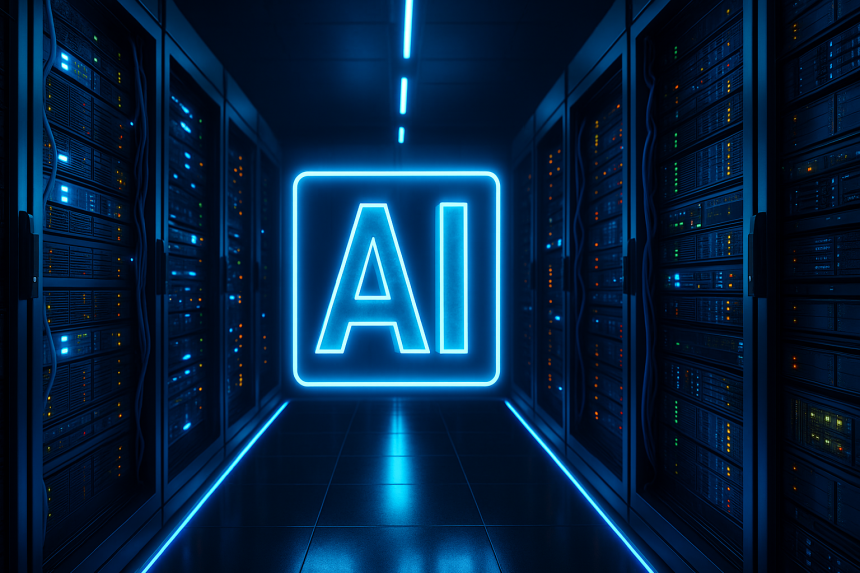
As artificial intelligence rapidly integrates into various sectors, a new challenge has surfaced for the US energy grid. Data centers, increasingly burdened by AI workloads, now contribute significantly to national electricity consumption. The resulting demand surge has pressured existing infrastructure, signaling the need for immediate reassessment of the planned grid enhancements. Experts emphasize that this development is not just a fleeting concern but a long-term issue that requires innovative solutions.

 ETH
ETH
 SOL
SOL
 BSC
BSC
 ROBINHOOD
 USDT
USDT
 AAPL
AAPL
AI’s rapid growth has magnified the grid’s need for swift adaptation, contrasting sharply with traditional, slower infrastructure development. Despite past efforts to accommodate technological advances, the scale and speed of AI’s impact have exceeded earlier expectations. Utilities and planners who rely on conventional predictive models now face unprecedented strain. Quick adaptation and flexible strategies are becoming essential to equip the grid for these new challenges.
Why is the Power Consumption Rising So Rapidly?
The spike in electricity consumption can be attributed to AI’s hefty computational demands, especially in hyperscale data centers that can exceed traditional industrial demands. Such resources can match the energy needs of tens of thousands of homes. With areas like Northern Virginia and regions across Texas and Arizona experiencing notable growth, traditional grid infrastructure struggles to keep pace.

How Are Industry Experts Addressing the Challenge?
To tackle this issue, utilities look beyond expanding conventional energy sources. There is a growing focus on distributed energy resources like solar, battery storage, and microgrids. These can be swiftly deployed closer to high-demand areas, reducing losses and bolstering resilience. Additionally, such solutions offer a faster response compared to large-scale power plants, meeting AI-driven demand more efficiently.
In an intriguing twist, AI not only poses challenges but presents opportunities for grid modernization. Enhanced forecasting and machine learning applications can optimize energy distribution, reduce inefficiencies, and better integrate renewable resources. This dual role of AI encourages a reimagining of energy systems, potentially unlocking smoother decarbonization pathways without hindering technological progress.
From an investment standpoint, success hinges on embracing AI as more than just a customer. Future energy companies must embed intelligent systems to dynamically respond to shifting demands. Adapting real-time operations can minimize costs and environmental impact, leveraging AI’s potential to drive sustainability and competitiveness.
There is a call for cohesive action across varied stakeholders, including regulators and capital markets, to synchronize their efforts in addressing challenges posed by AI. Neglect could lead to economic constraints where AI finds itself stifled by inadequate infrastructure, which could reshape tech innovation’s geographic distribution.
Current decisions will determine the energy sector’s trajectory. Addressing the critical issues posed by AI requires either patching existing systems or revolutionizing energy management. Using AI’s capabilities wisely could resolve infrastructure limitations, supporting the development of an advanced, resilient power grid.