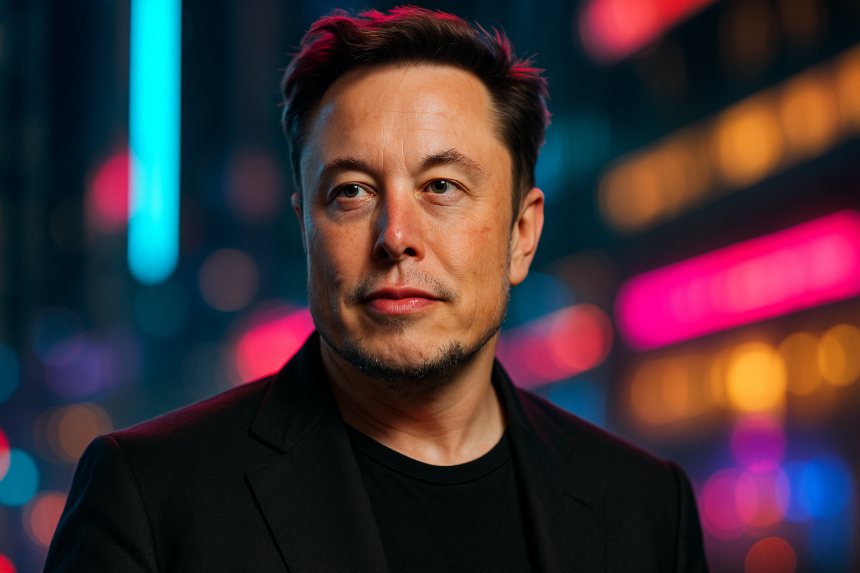
Elon Musk’s SpaceX has officially entered the public markets, with shares debuting at $150, higher than the initial listing price of $135. This significant entry has catapulted Musk to become the first individual trillionaire globally, thanks to his investments in SpaceX, Tesla (NASDAQ:TSLA), and other ventures amassing a combined net worth of approximately $1.1 trillion. The anticipation surrounding this IPO has been palpable, with investors showing immense interest and projecting a promising trajectory for the company. The enthusiasm reflects not only in the early stock performance but also in the prospective impact on Musk’s financial stature and the fortunes of SpaceX employees.

Historically, SpaceX has been a pivotal entity in the aerospace sector, consistently pushing the limits of innovation and practical application in space operations. The company’s role as a commercial launch provider and a trusted NASA contractor has underscored its value in modern space endeavors. Starlink, their satellite internet endeavor, stands as a crucial income stream, emphasizing the breadth of SpaceX’s market reach. Over the years, market analysts have recognized SpaceX as a frontrunner in both technological advancements and strategic business expansion.
How Does SpaceX’s IPO Impact Investor Sentiment?
Investor enthusiasm around SpaceX’s IPO was notably intense, highlighted by the $250 billion in orders reported by major financial outlets, and outstanding retail investor interest, which alone surpassed $70 billion. In an unprecedented move, SpaceX plans to reserve about 20% of the offering for retail investors, showcasing a shift toward inclusive shareholder dynamics. This strategic decision not only underscores the high demand but also aims to foster a strong relationship with individual investors, a trend not commonly seen in IPOs of this magnitude.

What Does the Future Hold for SpaceX Employees?
SpaceX’s market debut presents an opportunity for approximately 4,400 employees to potentially increase their wealth significantly through stock compensation plans. These outcomes mirror SpaceX’s commitment to reward its contributors who have been pivotal in the company’s growth narrative. As these employees stand to become millionaires, it reveals a growing trend of empowerment for workforce contributors in high-value tech firms.
The IPO, which raised $75 billion, went down as the largest in history, overtaking the previous record held by Saudi Aramco’s $29 billion IPO in 2019. With its stock trading under the ticker “SPCX” on Nasdaq, the offering reinforced SpaceX’s valuation at nearly $1.8 trillion. Elon Musk made a significant statement regarding his influence over the company moving forward.
SpaceX’s control remains largely in Musk’s hands with the dual-class share structure.
SpaceX’s ongoing partnership with government sectors, primarily through NASA, exemplifies the company’s strategic importance in national and international aerospace projects. Its innovation in pioneering reusable rocket technology paves the way for cost-effective space travel and satellite launches, reshaping the industry’s economic landscape.
The financial zenith reached by Musk is reflective of SpaceX’s strategic decisions and robust business outlook. The dual-class share strategy retains significant control with Musk, who will maintain about 85% of SpaceX’s voting power post-IPO. This design ensures continuity in SpaceX’s bold strategic trajectory under Musk’s stewardship, stabilizing the company’s long-term vision.
“Maintaining robust voting power allows us to focus on long-term objectives,” Musk commented.
The SpaceX IPO has heralded a new era in public trading dynamics with substantial retail investor participation and dramatic impact on personal wealth for Musk and SpaceX employees. Its comprehensive impact extends beyond financial figures to shape investor dynamics and governance structures, echoing broader implications for space industry investments.