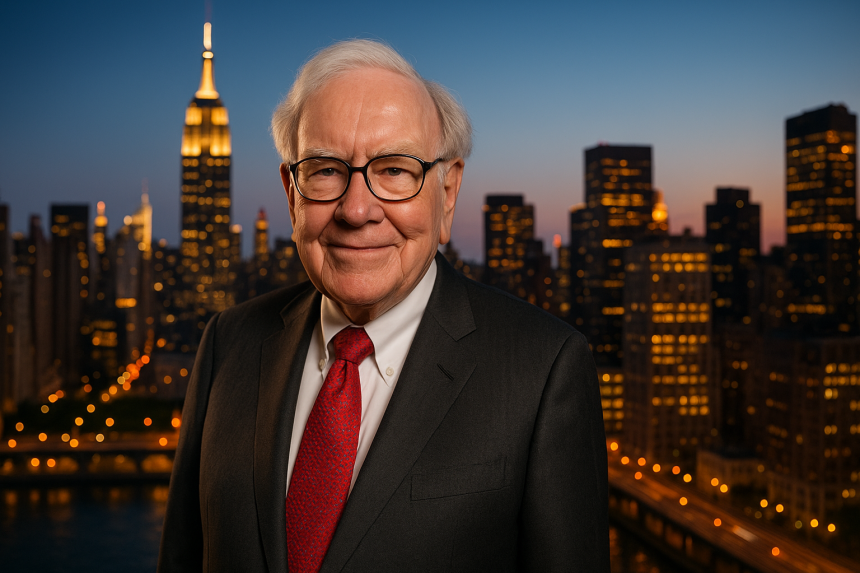
Warren Buffett’s reputation as a skilled investor is undeniable, yet his investment advice for most is notably straightforward. The stock market, epitomized by the S&P 500 index, offers a wealth-building avenue. Data shows its substantial returns over the past three decades. Buffett emphasizes the value of low-cost passive investment, particularly for those daunted by the complexities of stock market entry. New investors may find this approach appealing, as it simplifies the process while still leveraging the historical performance of the benchmark index. As the world steers through economic volatility, his tried-and-tested guidance gains traction.

In earlier observations, experts were uncertain about passive investment longevity. However, over recent years, data consistently reveals active management’s struggle to outperform the index. Despite extensive strategies, most fund managers fail to beat the S&P 500. Buffett’s stance gains credibility amidst this trend, as investors increasingly appreciate the cost effectiveness and simplicity of index funds.
Why Choose Passive Investment?
Buffett, who led Berkshire Hathaway (NYSE:BRK.A) for many years, recommends buying S&P 500 index funds over managing individual portfolios. This guidance springs from the observation that average investors lack time or expertise. Encouragingly, index funds like Vanguard S&P 500 ETF offer simple, broad market exposure at a low cost. This ETF tracks the S&P 500, including significant firms like Nvidia (NASDAQ:NVDA), Apple (NASDAQ:AAPL), and Microsoft (NASDAQ:MSFT). Such investments bundle major economic sectors, giving investors expansive reach effortlessly.

How Is Valuation Impacting Decisions?
The current steep valuation of the S&P 500 prompts concerns regarding potential future returns. Despite doubts about repeating the 10-year spectacular yield of 316%, the stock market remains a pertinent investment platform. Although high valuation signals may deter some investors, historical resilience suggests a nuanced approach remains beneficial.
Buffett states, “The average person doesn’t have the time, ability, or desire to pick individual stocks and manage a portfolio.”
Implementing strategies like dollar-cost averaging provides a pathway to counter valuation anxiety, enabling systematic and incremental market commitments.
This strategy involves regular savings allocation into the market, mitigating entry point valuation considerations. Even limited investments contribute significantly over time. An example illustrates that starting with $10,000 and investing $100 monthly, assuming a 10% annualized return, can culminate in approximately $382,000 after 30 years.
Buffett’s straightforward method underscores the value of simplicity, cost savings, and dependable returns. Passive avenues, such as the Vanguard S&P 500 ETF, highlight consistent long-term financial advantages. It’s crucial for investors to assess and adjust strategies in line with economic conditions and future projections. As economic landscapes mold, sound investment strategies anchored in historical performance and expert advice remain vital.