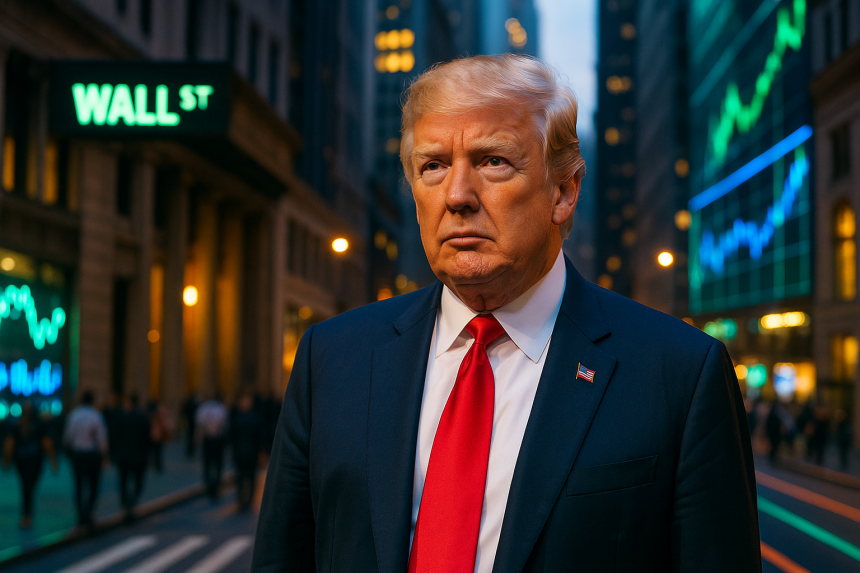
President Donald Trump’s administration continues to fuel the stock market as the S&P 500 reaches new peaks, thanks in part to his economic policies. Corporate tax cuts and regulatory reforms have generated optimism, pushing major indices higher. However, despite the buoyancy at the surface, analysts express caution as underlying structural weaknesses start to appear. Market observers notice worrying similarities to past economic downturns, raising concerns among investors. With artificial intelligence spurring colossal shifts in the business landscape, economic ramifications begin to unravel as historic trends come into focus.

The S&P 500’s high concentration of mega-cap tech stocks such as Nvidia (NASDAQ:NVDA), Alphabet, and Meta (NASDAQ:META) Platforms highlights risks in the current bull run. The last major occurrence, in which the index hit new highs while a significant proportion hit 52-week lows, preceded notable bear markets in the past. These historical signals prompt caution, reflecting times like July 1929, January 1973, and December 1999, all times preceding severe declines.
Will History Repeat Itself?
The relevance of historical parallels underscores investor worries, given the connection to drastic economic downturns. Yet, current economic conditions and technologies differ from previous instances. Analysts warn such market signals of narrow breadth during high index records are rare, highlighting excessive reliance on a few companies for growth.

How Science Fiction Becomes Reality
Nvidia, a significant player within the index, continues to captivate investors with its AI advancements, reinforcing its influence. This persistent tech surge dominates the S&P 500’s performance, making it increasingly reliant on AI-driven growth projections. However, optimism faces challenges as these projections depend on costly valuations in anticipation of future earnings.
Concerns about an impending correction suggest an urgent need to assess concentrated equity positions. While investors might benefit from gains within AI favorites, expansion beyond this narrow focus could ensure better risk management. Broader industrial and consumer discretionary segments appear vulnerable, demonstrating underperformance and, in some cases, bear-like conditions even amid broader index rallies. “
We’re enthusiastic about technology‘s potential, but prudent investment strategies are crucial amid such concentration,” financial analyst Jamie Kent emphasized.
Trump’s administration implements measures addressing corporate concerns, positively impacting sectors like industrials and financials but raising caution for those deeply investing in tech optimism. “
Such focused gains may seem tempting, but diversification remains essential to withstand potential corrections,” advises Elise Cooper, an economist with an eye on stability.
Long-term implications for AI within the market could potentially continue producing gains if current conditions sustain, but caution prevails as many traders eye the next decisive move. Beyond mere numbers, the inherent risks pose questions concerning wider economic momentum and the potential repercussions of overly concentrating on AI benchmarks.
Amid the volatile financial landscape, investors might find that a strategic blend of technology giants and undervalued opportunities provides more stability. Though potential challenges loom, careful planning and balance ensure resilience in uncertain times.