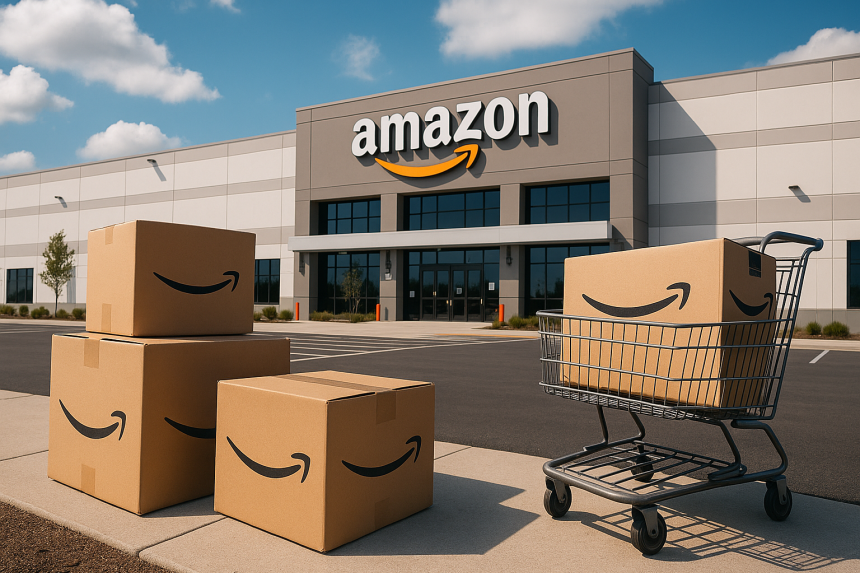
Amazon (NASDAQ:AMZN) continues to push the boundaries of convenience in delivery services, aiming to scale up its Prime Air drone operations. With the objective to expand to nearly 500 U.S. communities by the year’s end, the e-commerce giant is eyeing to establish a significant presence in major metropolitan areas, positioning itself as a leader in swift delivery technology. As the main objective of Prime Air is to expedite customer service, Amazon is set to redefine delivery standards within the next few years.

 ETH
ETH
 SOL
SOL
 BSC
BSC
 ROBINHOOD
 USDT
USDT
 AAPL
AAPL
Amazon’s journey into drone delivery has marked significant strides over the past years, moving beyond pilot projects to widespread implementation across several states. Previously, obstacles such as regulatory hurdles and technological challenges were prevalent; however, recent advances have enabled Amazon to target cities like Chicago and Atlanta for its service expansion. Progress in logistical infrastructure and advanced drone technology has allowed Amazon to broaden its operations effectively compared to initial setbacks.
What Drives Prime Air’s Expansion?
Prime Air’s scalability largely results from a broadened product selection eligible for drone delivery. The service accommodates any product weighing five pounds or less, approximately 60% of the items frequently bought by customers. Such capability reflects Amazon’s strategy to enhance delivery speed and efficiency, which allows drone deliveries to reach customers in as little as 30 minutes.

How Does This Affect Amazon’s Competitors?
As Amazon bolsters its delivery services, competitors like Walmart (NYSE:WMT) are also advancing their commerce strategies. Both companies are investing in systems that foresee consumer demand and accelerate delivery times. However, market complexities, such as drone network economics and AI usage, present challenges that each contender faces uniquely. Regulatory considerations and technological investments remain critical factors as these businesses compete for dominance.
The operational model of Prime Air showcases Amazon’s commitment to delivering quick service while maintaining competitive pricing. Expanding in Georgia, Ohio, Illinois, Idaho, and New York highlights Amazon’s intent to provide a nationwide ultrafast delivery option. This move aims to complement traditional delivery methods by offering customers multiple options.
Amazon’s recent valuation, which is influenced by advancements in AI and cloud computing, is indicative of more expansive implications for the company’s operations. Highlighting an infrastructure focused on commerce, Amazon’s path aligns with leading-edge technological integration. Consumer benefits from Amazon’s strategic moves, which may translate to a robust network supporting the full cycle of delivery and logistics, are increasingly transparent.
David Carbon, vice president of Amazon Prime Air, stated,
“Customers already turn to Amazon for fast Same- and Next-Day Delivery, and Prime Air provides them an even speedier option when they need it.”
Carbon further emphasized the unique selling proposition, adding,
“We’re pairing the convenience of ultrafast drone delivery with the low prices and selection customers love about Amazon.”
These remarks reflect the company’s broader ambition to integrate logistic excellence with consumer satisfaction.
Through Amazon’s active pursuit of drone delivery advancements, the e-commerce landscape faces a notable transformation. As it continues to refine and expand its Prime Air service, consumers can expect more streamlined and rapid delivery options. The juxtaposition of Amazon’s efforts with those of its competitors underscores an evolving market dynamic, where strategic infrastructure and consumer engagement are pivotal in defining success.