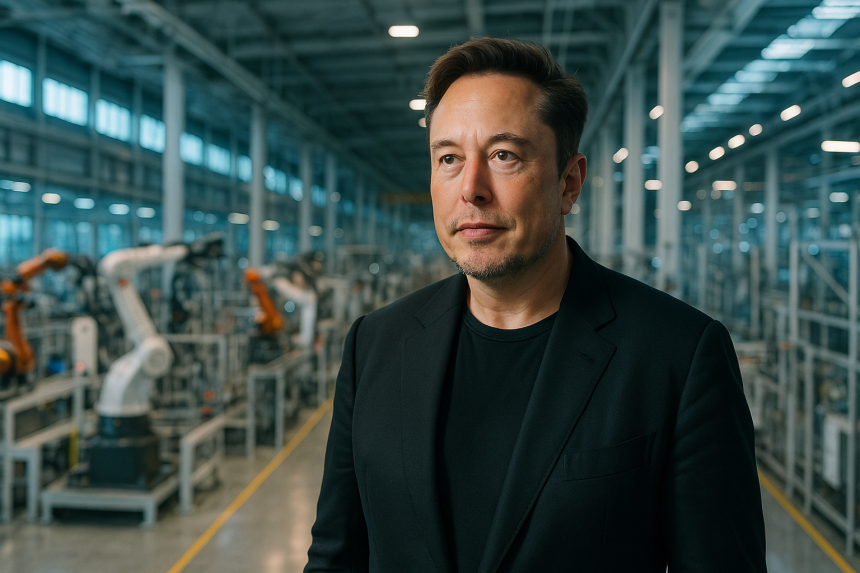
Elon Musk, primarily known for steering Tesla (NASDAQ:TSLA) towards electric vehicle prominence, showcases an intriguing automotive history with a collection of iconic and vintage cars. His journey began with the purchase of a modest 1978 BMW 320i for $1,400, which he personally repaired. Progressively, his collection expanded to include rare gems like the Jaguar E-Type and the McLaren F1. These vehicles, although fossil-fueled, reflect not only his personal milestones but also a fascination with classic, high-performance engineering. This blend of past and present captures Musk’s unique vision of future technologies intertwined with historical influences.

 ETH
ETH
 SOL
SOL
 BSC
BSC
 ROBINHOOD
 USDT
USDT
 AAPL
AAPL
Previous reports have often centered on Musk’s association with Tesla’s modern advancements, with less emphasis on his eclectic past in automotive pursuits. Recent discussions, however, have begun to touch on his earlier interest in classic cars. This trend increasingly aligns with his current role, highlighting a progression from admiring vintage vehicles to pioneering cutting-edge electric technologies.
What articulates Musk’s shift to luxury?
The acquisition of vehicles such as the McLaren F1 underscores Musk’s shift towards more luxurious experiences following financial success. After selling his first startup, Musk invested heavily in a McLaren F1, displaying a preference for rare cars. On this, he highlighted his choice, “Watch this,” indicating a love for performance-driven machines. Musk’s commentary emphasized enjoyment over practicality, further illustrating his unique approach to automotive interests.

How have iconic cars inspired Musk’s ventures?
The classic Lotus Esprit from “The Spy Who Loved Me” exemplified how entertainment influenced his work. Acquired in 2013, the vehicle sparked ideas which reportedly influenced the design of Tesla’s Cybertruck. He noted, “I was disappointed to learn that it can’t actually transform,” revealing aspirations to merge utility with aesthetics in futuristic designs.
Beyond these pieces, Musk’s collection includes a Ford Model T, signifying an appreciation for mass production’s historical roots. Such vehicles connect the evolution of shared assembly-line innovations seen in Tesla’s operational strategies. This includes utilizing proceeds from high-performance models to fund affordable alternatives.
Musk’s dealings with his Porsche 911 and initiatives to convert it to electric further reflect his intent to bridge traditional and modern transportation. Despite the refusal from AC Propulsion to retrofit it, these efforts pointed discernibly towards his investment in Tesla. Despite affinity for gas-powered collectibles, his limited gasoline collection today juxtaposes his electric ambitions.
Overall, Musk’s car collection offers a lens into balancing nostalgia with aspirational advancements. The vehicles serve as markers in his personal and professional trajectory, blending personal significance with broader industrial insights. His strategic inspirations from these cars have indirectly fostered the innovation seen within Tesla’s lineup. By intertwining past fascinations with futuristic goals, Musk’s narrative demonstrates an evolution alongside automotive advancements.