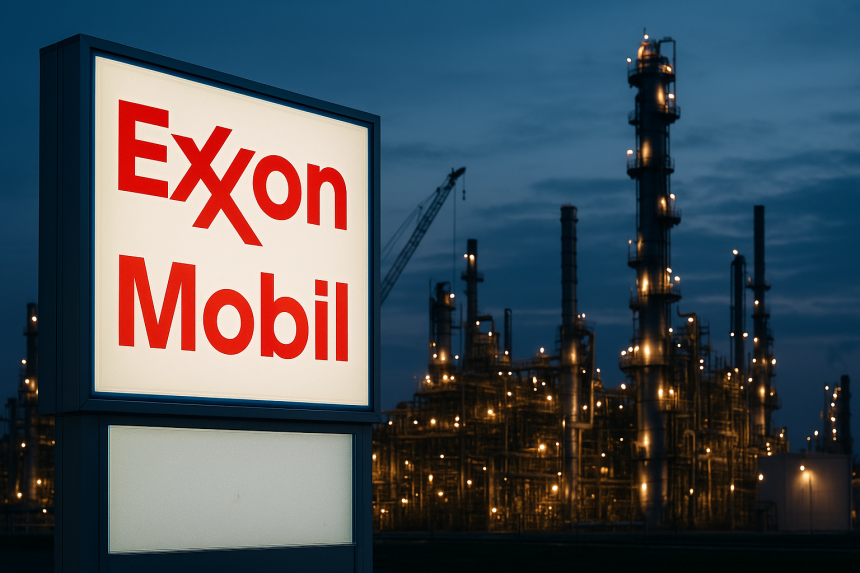
The first quarter of 2026 proved challenging for oil majors Exxon Mobil (NYSE:XOM) (NYSE:XOM) and ConocoPhillips (NYSE:COP) as they navigated a volatile oil market. The price of West Texas Intermediate (WTI) crude oil spiked dramatically early in the quarter, only to decline sharply by the end of June. Both companies have used divergent strategies to manage the situation, as they work toward maintaining shareholder returns despite fluctuating oil prices. The earnings reports for both companies reveal their tactics and offer insights into their future positions in uncertain oil markets.

Exxon Mobil’s integrated approach has allowed it to weather market volatility, with previous reports highlighting its substantial investments in refining and downstream operations. ConocoPhillips has focused on cost management and strategic buybacks, which it emphasizes in its current earnings report. The strategies underscore how different approaches are yielding varied results as each company seeks stability and growth amid market unpredictability.
How Did Exxon Perform Financially?
Exxon’s Q1 2026 earnings report indicates a mixed financial performance. Despite a headline decline in net income to $4.18 billion, which included significant financial hits, underlying earnings rose to $8.77 billion. Guyana operations and refining margins contributed to these results, while Golden Pass LNG started shipping its first cargo. CEO Darren Woods emphasized the company’s resilience, stating,

“ExxonMobil is a fundamentally stronger company than it was just a few years ago, built to perform through disruption and across market cycles.”
What About ConocoPhillips’ Q1 Results?
ConocoPhillips reported adjusted earnings per share (EPS) of $1.89, surpassing expectations through disciplined financial management. Its focus on operational processes allowed it to manage costs effectively, though realized prices per barrel of oil equivalent decreased. The Willow project and the significant progress in Alaska are highlighted, reinforcing its commitment to cash returns, with Chairman Ryan Lance noting the company’s objective to return a significant portion of cash flow to shareholders:
“reiterating our objective to return 45% of CFO to shareholders this year.”
Strategies and Market Challenges
Exxon’s vertical integration, involving its upstream, refining, and chemical operations, diversifies its revenue streams. Meanwhile, ConocoPhillips remains a focused exploration and production entity, now with LNG capabilities. This differentiation shapes their operational and financial strategies, influencing shareholder outcomes amid fluctuating oil prices. Exxon and ConocoPhillips also employ different capital expenditure strategies, with Exxon planning $27B to $29B for 2026, highlighting its expansive operations.
Market reactions to these strategies are apparent in investor sentiment. Exxon shares decreased by 11.3%, and ConocoPhillips fell by 14.92% since April, demonstrating how closely linked their stock values are to crude oil prices. Both companies face the ongoing challenge of maintaining investor confidence with consistent returns, despite market-induced volatility.
As the energy market continues to change, investors must consider the varying prospects of Exxon and ConocoPhillips. Exxon’s diverse operations and strategic financial planning offer some security amidst market chaos. In contrast, ConocoPhillips’ focus on efficient production and cash returns might appeal to those anticipating stronger crude oil price recoveries. Understanding these dynamics can guide investment decisions tailored to different risk tolerance levels and market outlooks.