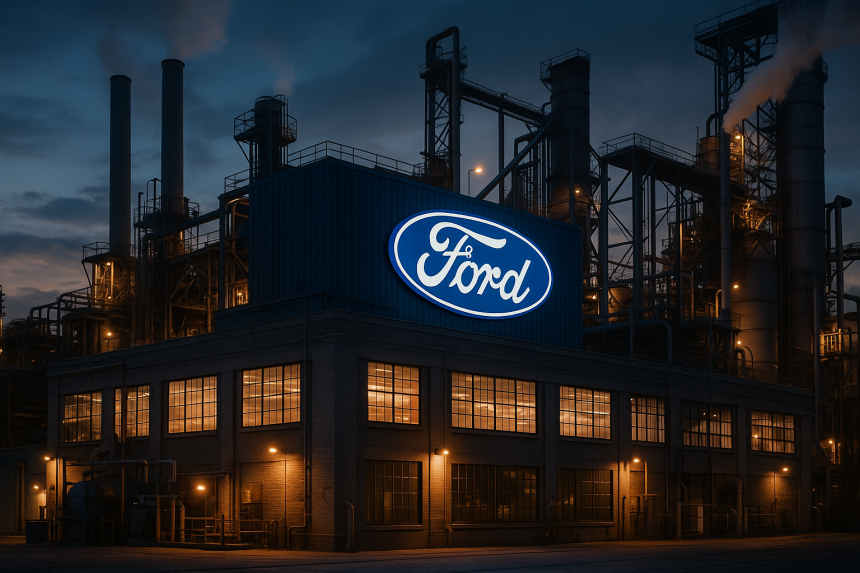
In recent developments, Ford made a strategic move by rehiring approximately 350 veteran engineers following unsatisfactory outcomes from its automated quality systems and AI-driven inspection tools. This decision coincided with Ford reclaiming its position at the top of the JD Power Initial Quality Study for mainstream brands, a distinction it hadn’t achieved since 2010. The automotive giant had initially leaped into automation, integrating AI heavily across various facets of its manufacturing processes, including deploying 900 AI-powered cameras within its plants to pinpoint quality issues. These measures, however, did not meet the intended improvements in manufacturing standards, compelling Ford to recalibrate its strategy.

 ETH
ETH
 SOL
SOL
 BSC
BSC
 ROBINHOOD
 USDT
USDT
 AAPL
AAPL
A reflection on Ford’s past reveals that the company’s previous heavy reliance on AI was a significant shift in its operational strategy. CEO Jim Farley had discussed AI’s transformative potential on employment structures within the company. Despite these initial enthusiastic projections, Ford’s leadership learned the hard way that AI systems, when left largely unassisted, fail to preemptively address design issues, leading to costly problems later. The financial implications and reputational impact have prompted a reevaluation of the balance between AI-driven processes and the indispensable role of human expertise.
What triggered Ford’s reconsideration?
The realization that AI could not entirely replace human input was a pivotal factor in Ford’s decision to rehire. Charles Poon, Ford’s vice president of vehicle hardware engineering, highlighted the company’s prior misjudgment regarding automation’s capabilities. Describing the company’s challenge, he stated,

“We underestimated the complexity of issues that required expert human intervention.”
The automation approach had not significantly reduced costs as anticipated, as warranty and recall expenses did not decrease to the levels expected from such high-tech investments.
How is Ford adjusting its AI strategy?
Post-rehiring, veteran engineers are now integral to Ford’s revised AI approach, wherein their expertise is utilized to fine-tune AI tools for enhanced production efficiency. While automation remains a key focus, the role of these experts now involves mentoring younger staff and overseeing the recalibration of previously implemented AI systems. These efforts reflect a strategy that combines technology with tactics aimed at optimizing results.
“We are re-aligned on leveraging AI where it complements our human workforce,” Ford’s COO Kumar Galhotra explained.
The broader industry landscape signifies that Ford’s case may not be an isolated incident. Oracle, for example, recently made reductions in staff to allocate resources toward AI infrastructure, highlighting a prevalent corporate trend. However, Ford’s contrasting approach of publicly admitting the limitations of AI serves as a discussion point for other enterprises exploring similar technological transitions. Here, the importance of maintaining a knowledgeable workforce to steer the effective deployment of AI becomes evident.
This decision to rehire experienced engineers is pivotal for global manufacturers debating AI’s role in quality assurance. Ford’s case emphasizes that while automation offers numerous benefits, human oversight and experience remain critical. The reassessment of AI’s role highlights an industry-wide realization that refining and supplementing technology with skilled human input can yield better results.
The strategic recalibration by Ford highlights the limitations of over-reliant automation and underscores the need for skilled human intervention in maintaining quality. The gradual integration of AI into manufacturing promises increased efficiency, yet Ford shows that this requires a balanced approach interlaced with human expertise. Companies must thus carefully plan AI strategies, ensuring they don’t undervalue their human assets, who play an essential role in achieving high production standards.