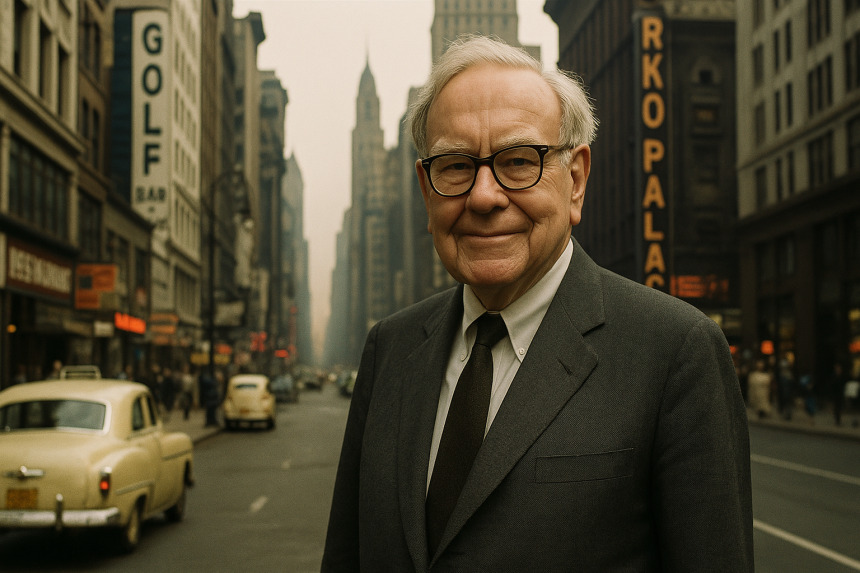
Warren Buffett, renowned for his strategic acumen, continues to counsel investors towards index funds despite the astounding success of Berkshire Hathaway (NYSE:BRK.A). With a return of 39,000 times since 1965, Berkshire Hathaway has set benchmarks in the investment domain. While such performance might invite investors to mimic such strategies, Buffett advocates for a different approach, emphasizing simplicity and cost-effectiveness in investing. His perspective offers a level-headed view in a market environment where quick profits often overshadow long-term growth strategies.

Berkshire Hathaway’s financial trajectory speaks volumes, yet Buffett champions a modest approach for typical investors. Historically, the SPDR S&P 500 ETF has provided a substantial, though less impressive, return compared to Berkshire’s exponential growth, aligning more closely with the financial paths of average market participants. This consistent advocacy for index funds underscores Buffett’s belief in their potential to outperform the majority of active managed investments.
Why Favor Index Funds?
Buffett’s consistent endorsement of index funds stems from their ability to deliver reliable results over time. Active managers, faced with the challenges of market speculation and higher fees, often find themselves lagging behind these low-cost funds. With extensive data supporting this viewpoint, Buffett’s recommendation remains steady: “The best way to own common stocks is through an index fund that charges minimal fees.” He demonstrated this through a well-publicized bet, famously won by a Vanguard S&P 500 fund against selected hedge funds.

How Significant is Berkshire’s Portfolio?
The significance of Berkshire’s vast portfolio remains undeniable, encompassing full acquisitions of companies like GEICO, Duracell, and Dairy Queen, along with major stakes in Coca-Cola (NYSE:KO), Bank of America and Apple (NASDAQ:AAPL). Despite its impressive journey, the past decade showed comparable returns between Berkshire and SPDR S&P 500 ETF, indicating a leveling playing field. Therefore, Buffett’s recommendation holds even in light of Berkshire’s diverse and high-performing assets.
Recent trends have shown increasing awareness among investors regarding the costs of active funds. The rise of online platforms simplified the investment process, making fee visibility clearer for individual investors. As a result, the wisdom of index fund investing has become more appealing for those seeking stable, long-term growth without the complexities and costs of managed funds.
Buffett’s strategic foresight and advice have remained consistent throughout various market phases. With Berkshire’s leadership transition in sight, the reassurance of his advice echoes, directing those unsure of repeating his success towards index funds. The legacy of his investment philosophy offers clarity in enshrining simplicity and patience as cornerstones of profitable investing.
In reflecting on Buffett’s enduring message, it becomes evident that index funds represent a prudent path for investors. In an industry marked by complexities, his recommendations provide a beacon of simplicity. Examining the relationship between cost and performance, the preference for index funds becomes clear as a smart strategy for navigating the stock market efficiently.