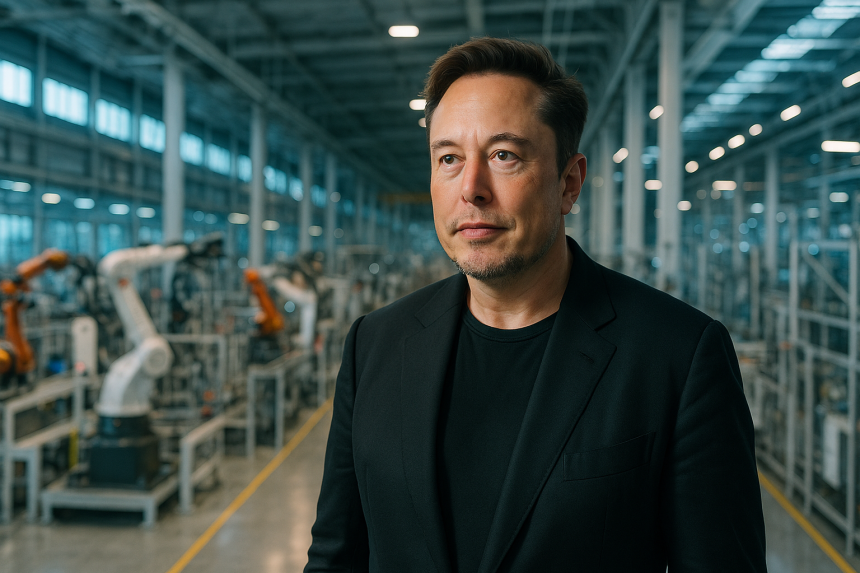
In a recent revelation, Elon Musk announced the launch of Terafab, a significant collaboration between Tesla (NASDAQ:TSLA), SpaceX, xAI, and Intel (NASDAQ:INTC). This initiative is set to advance the global AI landscape significantly, potentially changing how industries approach technological development. Located at the Seaholm Power Plant in Austin, the primary aim is to achieve an annual AI compute capacity of one terawatt. Such an endeavor could potentially reshape the critical semiconductor supply across the globe.

 ETH
ETH
 SOL
SOL
 BSC
BSC
 ROBINHOOD
 USDT
USDT
 AAPL
AAPL
The tech industry remembers times when semiconductor shortages posed challenges. In recent years, demands have exponentially grown, leading to more significant collaborations like the one Musk is spearheading. Terafab is poised to support the increasing needs of Musk’s ventures, which earlier faced challenges due to limited global chip production. Previously, reliance on companies like TSMC dominated the narrative, but new partnerships offer fresh potential.
Why is Compute Sovereignty Important?
The core reasoning behind Musk’s strategy is the anticipation of a vast scale of humanoid robot production, necessitating 100 billion to 200 billion chips. This projected demand significantly surpasses current global production capabilities, emphasizing the need for increased control over compute resources. With SpaceX’s orbital data centers also in the picture, relying solely on current suppliers would not be sustainable. Musk articulated,

“Our current capacity does not align with future ambitions.”
How is Tesla Addressing Economic Challenges?
Tesla faces considerable financial undertakings with Terafab’s construction costs soaring to potentially $119 billion but enters this phase backed by substantial liquidity and consistent revenue streams. Despite a noted drop in automotive revenue last year, Tesla has maintained cash reserves of over $44 billion. The company’s operational cash flow indicates a steady financial foundation.
Intel’s collaboration with Terafab highlights a strategic pivot towards supporting large-scale AI ventures. The company’s foundry resources are now being redirected to accommodate such extensive requirements. CEO Lip-Bu Tan expressed optimism, noting,
“Our partnership with Tesla marks a critical juncture for AI advancements.”
Intel’s recent performance, with a significant increase in its AI-related revenues, reinforces this partnership’s potential benefits.
Concerns from industry analysts remain. Some speculate on potential overreach, unsure if Musk’s ambitious targets are achievable within his projected timelines. The intricacies of regulatory hurdles and engineering demands compound skepticism, especially concerning large satellite deployments. However, the market remains divided, balancing hope for technological advancements and caution due to the risks.
Looking at the broader implications, Intel seems to have a lower-risk involvement. Its ability to instantly utilize foundry capacity provides immediate returns. For Tesla, the situation is more volatile, hinging on the AI and robotics market evolving swiftly to justify the capital expenditures. Observers will be closely watching the industry’s reaction to these developments, especially considering the impact on competing projects.
Musk’s decision to build the largest chip plant underscores an industry shift towards self-sufficiency and expansion of AI capabilities. As these efforts unfold, the tech industry will watch closely, assessing potential impacts and opportunities. The alignment between market needs and production capabilities remains crucial for future strategies in this domain.